Washington wants you to believe its tech blockade against Beijing is an airtight vault. It isn't. In fact, it has been leaking like a sieve, and Capitol Hill is finally losing its patience.
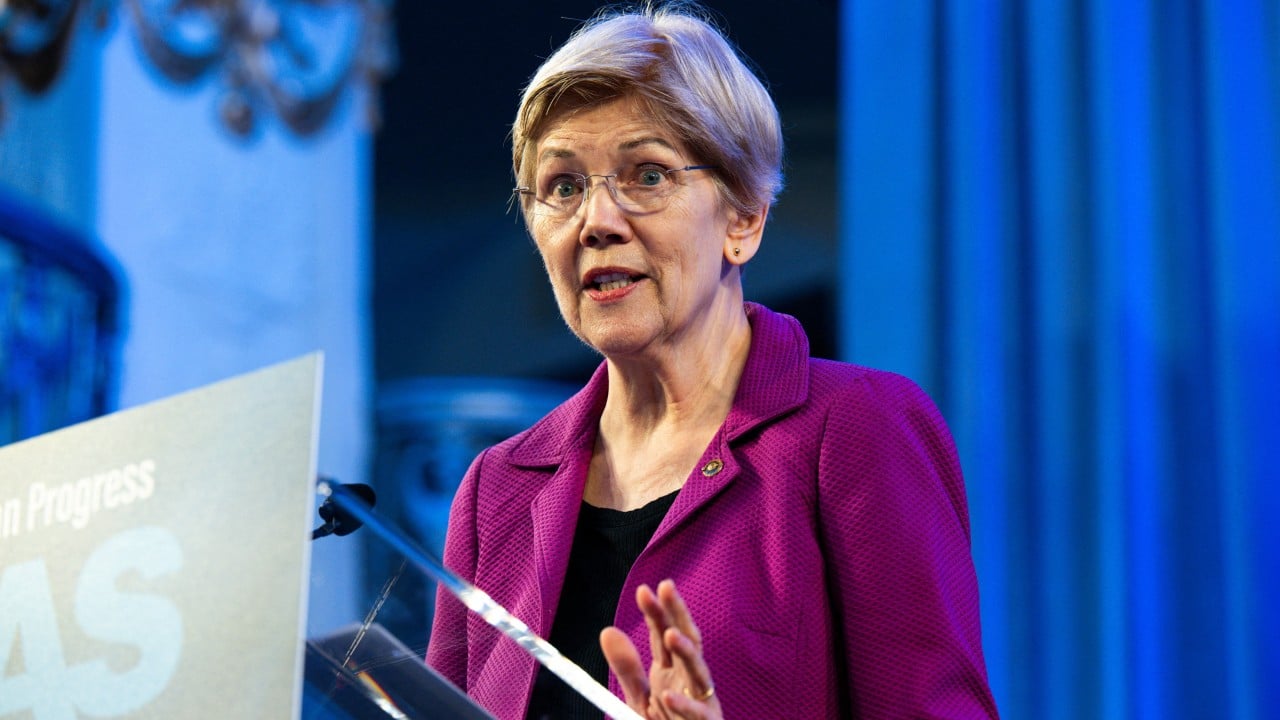
Democratic Senators Elizabeth Warren and Andy Kim just launched a furious broadside against the Trump administration. The reason? A glaring, year-and-a-half-long failure to patch a massive export control loophole. This policy gap essentially gave Chinese tech giants a back-door pass to acquire America’s absolute best silicon. We aren't talking about low-tier legacy hardware here. We're talking about Nvidia’s prized Blackwell processors, the foundational engine of next-generation artificial intelligence.
The drama boiled over after the Department of Commerce quietly issued Sunday afternoon guidance to clamp down on exports heading to overseas subsidiaries of Chinese firms. For critics, the move wasn't a triumph of proactive governance. It was a panicked, long-overdue confession of a major national security blunder.
How the Subsidiary Backdoor Actually Worked
Export controls sound intimidating on paper, but the mechanics of dodging them were remarkably straightforward.
When the original restrictions dropped, they banned the direct sale of advanced AI hardware to entities operating within mainland China. If a company in Shanghai wanted to order ten thousand high-end graphics processing units (GPUs), US customs blocked the shipment.
But what if that exact same parent company had a registered corporate unit in Singapore, London, or Dubai?
Until Sunday's abrupt policy pivot, the Bureau of Industry and Security (BIS) treated those international subsidiaries with a much lighter touch. US tech vendors could legally ship advanced hardware to these overseas outposts. Once the hardware landed in a friendly, non-embargoed jurisdiction, tracking the final destination of those physical units became an absolute nightmare.
The loophole wasn't a secret. Industry insiders knew it, logistics firms knew it, and Beijing definitely knew it. It took the Trump administration nearly 18 months to finally formalize restrictions covering these international shell branches, a delay Senator Warren blasted as "reckless mismanagement."
The High-Stakes Battle Over Blackwell and Rubin
To understand why lawmakers are furious, you have to look at the specific hardware at stake. This isn't about chips for consumer laptops or video game consoles.
Nvidia’s Blackwell architecture and the newly teased Rubin platform represent the absolute pinnacle of computational power. These processors are designed to train large language models that require massive clusters of synchronized GPUs. If you control the supply chain for these chips, you control the speed at which AI models can scale.
- Military Applications: Advanced AI isn't just for building smarter chatbots. The Pentagon and the Chinese People's Liberation Army (PLA) both view AI as the definitive tool for autonomous drone swarms, predictive battlefield logistics, and hyperspeed cyber warfare.
- The Compute Chokepoint: By leaving international corporate branches unregulated, the US effectively allowed Chinese firms to build up compute clusters outside their borders, or worse, slowly smuggle the physical hardware back home.
Commerce Secretary Howard Lutnick is now facing intense pressure to testify before the Senate Banking Committee. Lawmakers want a full accounting of exactly how many high-end processors slipped through the cracks while the administration dragged its feet on updating the export rules.
Silicon Diplomacy at the Trump-Xi Summit
The sudden regulatory panic stands in stark contrast to the optics of recent diplomacy. During the high-profile summit between President Donald Trump and Chinese President Xi Jinping in Beijing, artificial intelligence was the elephant in the room that nobody wanted to properly handle.
Instead of dealing with thorny tech sovereignty issues, the American delegation treated the meeting more like a standard trade show. Trump focused heavily on traditional economic metrics, pressuring China to buy more American oil to offset the trade deficit. Meanwhile, tech executives like Nvidia CEO Jensen Huang traveled with the presidential entourage, hunting for windows to sell modified, compliant chips like the H200 to the massive Chinese market.
While the suits were talking trade totals in Beijing, intelligence reports were painting a completely different picture back in Washington. Internal memos circulating through the White House warned that foreign entities were actively exploiting US firms, distilling proprietary AI models, and copying core American tech frameworks.
The administration’s mixed signals have created a messy environment. One week the White House condones trade talks with tech CEOs in tow; the next week the Commerce Department is rushing out emergency Sunday declarations to stop Chinese subsidiaries from hoovering up American silicon.
What Happens Next for Tech Supply Chains
The era of easy workarounds for international subsidiaries is officially over. If you are tracking the semiconductor market or managing a tech portfolio, the operational landscape just got significantly more complicated.
First, expect immediate compliance audits. Companies like Nvidia and AMD will have to completely overhaul their customer vetting processes. It is no longer enough to verify that a buyer is located in Western Europe or the Middle East. Compliance teams must now trace the ultimate beneficial ownership of every single buyer to ensure there is no corporate tie back to a parent entity headquartered in mainland China.
Second, watch for the inevitable pushback from alternative trade hubs. Jurisdictions like the UAE and Saudi Arabia have been investing heavily in building their own AI data centers, often relying on US tech. Stricter corporate ownership tracking will inject massive friction into these regional tech ecosystems.
If you are running an enterprise reliant on global hardware logistics, you need to audit your downstream partners immediately. Ensure your vendor agreements include ironclad end-user certificates that account for this expanded definition of prohibited entities. The regulatory crosshairs are shifting from geographic borders to corporate org charts, and the penalties for looking the other way will be severe.
The United States and China are navigating an incredibly messy decoupling phase. While both superpowers try to maintain profitable trade in non-sensitive areas, the definition of what constitutes a "national security risk" keeps expanding. Sunday's policy shift proves that when it comes to the global AI race, Washington is willing to choke off corporate loopholes, even if it disrupts billions of dollars in global tech commerce.
To get a clearer picture of how these hardware restrictions alter the geopolitical playing field, watch US Closes Nvidia Chip Loophole as AI Battle With China Intensifies. This video provides an excellent breakdown of the tech rivalry and the specific challenges Nvidia faces with its Blackwell chips.