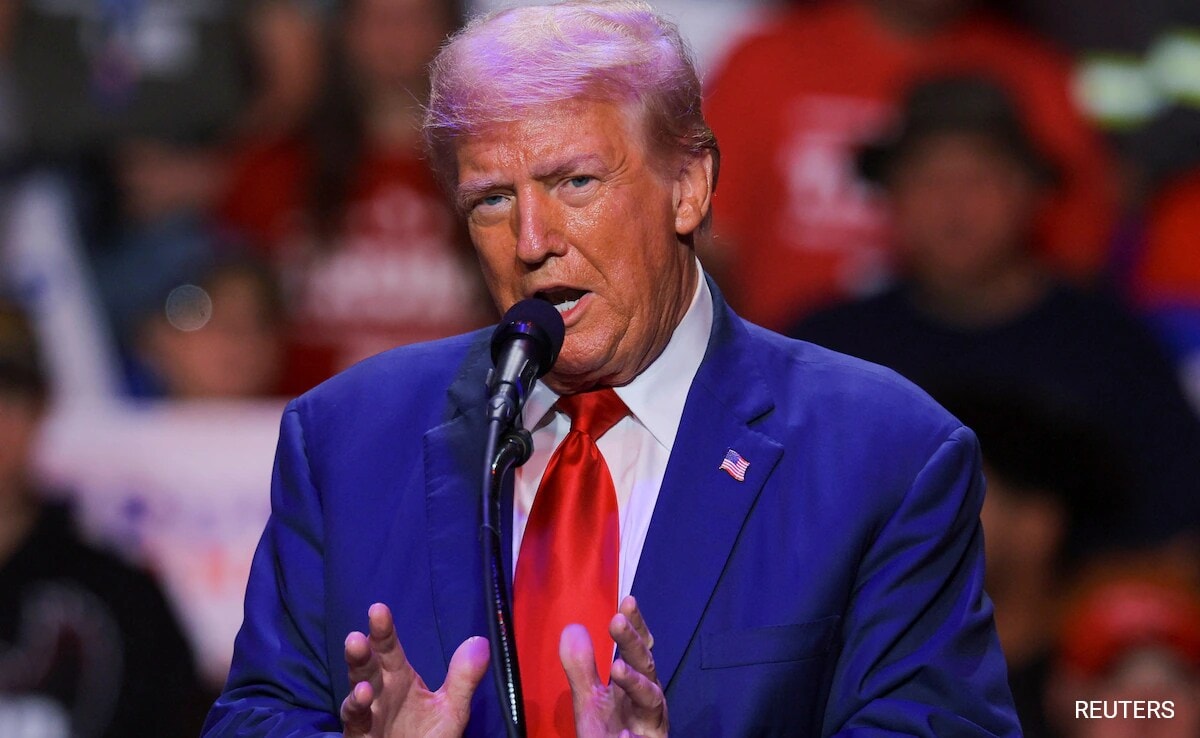
Trump says "Don't do it," and the world stops to debate the optics of a football match. The headline-grabbing friction between the Australian government’s diplomatic courtesy and Donald Trump’s isolationist rhetoric regarding the Iranian women’s national team is more than just a sports story. It is a masterclass in how we use athletes as cheap pawns in a geopolitical game that nobody is actually winning.
The lazy consensus suggests that hosting or playing against an Iranian national team is a tacit endorsement of the regime in Tehran. It assumes that by isolating female athletes, we are somehow punishing the morality police. This is a fundamental misunderstanding of how soft power works and a total failure to recognize the agency of the women on the pitch.
The Myth of the Moral Boycott
Isolation is the bluntest tool in the diplomatic shed. It is also the least effective. When Western commentators and politicians call for the exclusion of Iranian teams, they aren't "standing up for human rights." They are performing. They are checking a box of moral superiority that costs them nothing while stripping Iranian women of one of the few international platforms they have left.
I’ve seen this play out in corporate boardrooms and international federations for decades. The logic is always: "If we stop engaging, they will change." It never happens. Isolation doesn't create reform; it creates a vacuum. In that vacuum, the most hardline elements of a regime thrive because they no longer have to worry about the "contaminating" influence of international standards, media scrutiny, or the shared humanity of a 90-minute match.
Let’s look at the data of sporting boycotts. Apartheid South Africa is the favorite example for the pro-boycott crowd. But South Africa was a unique case of a global, decades-long, multifaceted economic and cultural strangulation. Dropping a single football match or refusing to host a team for a friendly doesn't mirror the 1970s; it mirrors the performative theater of the Cold War where nothing changed and the athletes simply lost their careers.
Sport as a Subversive Tool
If you want to actually challenge a restrictive regime, you don't ban their women from playing. You make them play. You give them the stage. You force the regime to deal with the reality of their citizens being cheered by thousands of fans in Perth or Sydney.
The Iranian women’s team isn't the regime. To conflate the two is to do the work of the censors for them. When these women step onto a pitch in a foreign country, they are participating in a global culture that is fundamentally at odds with the most restrictive interpretations of their home laws. They see the world, and the world sees them.
By telling Australia "Don't do it," Trump is leaning into a brand of hyper-isolationism that views every interaction as a zero-sum game. If they play, we lose. If we host, they win. This is a binary view of the world that ignores the nuance of cultural osmosis. The most dangerous thing to a closed society isn't a closed border; it's a window. Sport is that window.
The Financial Hypocrisy of "Ethical" Sport
We love to get high-and-mighty about who we play on the grass, yet we ignore where the money comes from in the stands. The same voices calling for a boycott of a women's football match are often silent when sovereign wealth funds with questionable human rights records buy up entire leagues or sponsor the very stadiums the games are played in.
If we are going to apply a "Human Rights Filter" to international sport, let’s be consistent. If the Iranian women’s team is "radioactive" because of their government, then half the teams in the FIFA rankings should be playing in empty stadiums. We don't do that because it’s inconvenient. It’s much easier to pick on a women’s team that lacks the massive commercial lobbying power of a men’s World Cup squad.
Dismantling the "Sanctity of the Game" Argument
People ask: "Should politics stay out of sports?"
The question itself is flawed. Sport has never been separate from politics. From the 1936 Berlin Olympics to the 1972 Summit Series, the pitch has always been an extension of the war room. The mistake isn't that sport is political; the mistake is thinking that sports officials are qualified to be diplomats.
When a government intervenes to tell a football federation who they can and cannot play, they are setting a precedent that will eventually be used against them. If Australia bars Iran today based on political pressure from a US candidate, what happens tomorrow when another nation demands Australia be barred because of its own domestic policies or historical grievances?
We are moving toward a fractured sporting world where "The West" only plays "The West," and the rest of the world forms its own siloed competitions. This doesn't help the women in Tehran. It just makes us feel better while we ignore them.
The Real Cost of Canceling
Imagine you are a 22-year-old midfielder from Isfahan. You have trained in conditions that would make most Western athletes quit in a week. You have fought for the right to represent your country. You finally get a chance to play on the international stage, to show that you are more than a headline, more than a victim.
Then, a politician thousands of miles away decides your existence is "too controversial" for a friendly match.
The "Don't do it" mentality doesn't hurt the Iranian leadership. They don't care about women's football. They would probably prefer if the team stayed home and out of the spotlight. By canceling the match, you are doing the regime's job for them. You are silencing the very people you claim to support.
Stop Asking the Wrong Questions
The media is obsessed with asking: "Does hosting this game validate the regime?"
The real question is: "Does canceling this game provide a single tangible benefit to the women of Iran?"
The answer is a resounding no. It provides a headline for a news cycle. It provides a talking point for a rally. But it leaves the athletes in the dark.
If we want to be "industry insiders" who actually understand the mechanics of global influence, we have to stop falling for the dopamine hit of the boycott. We need to embrace the messiness of engagement. We need to accept that playing a game isn't a handshake with a dictator; it’s a handshake with the people the dictator is trying to suppress.
Australia shouldn't listen to the "Don't do it" crowd. They should host the match, fill the stadium, and let the football do the talking. Anything else is just cowardice dressed up as conviction.
The next time a politician tells you to boycott a team to "send a message," ask yourself who is actually receiving that message. It’s never the people in power. It’s always the people on the pitch.
Don't cancel the game. Cancel the performance.