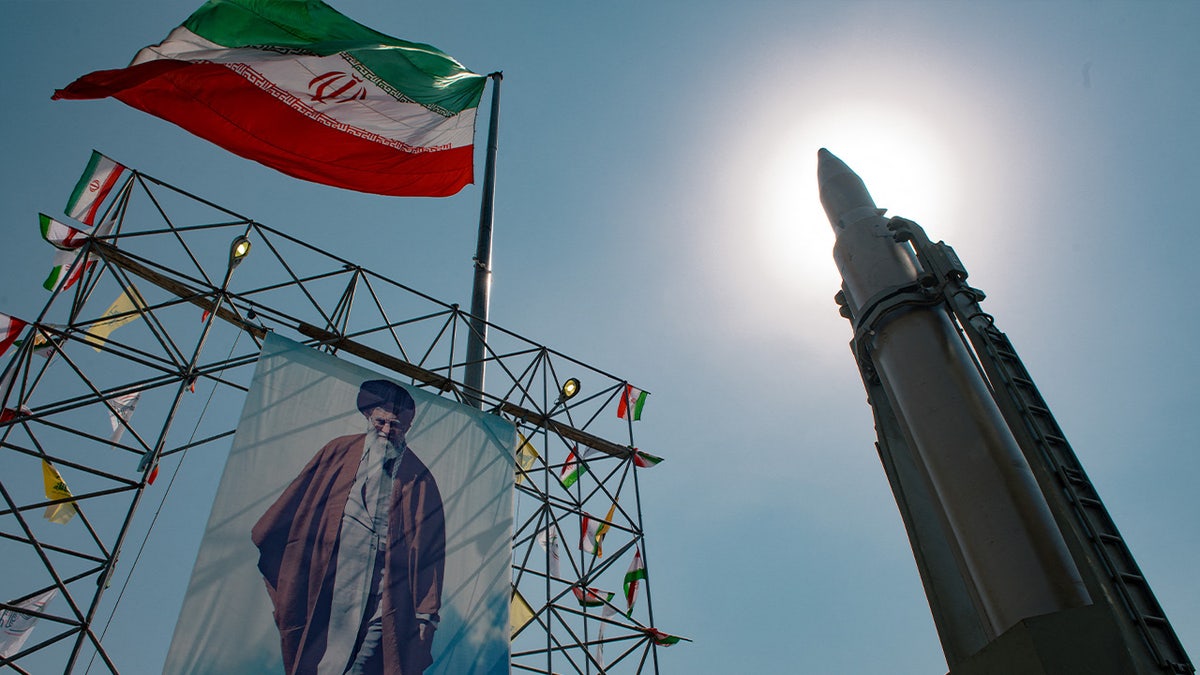
The recent pronouncements by Mohammad Bagher Ghalibaf, Speaker of the Iranian Parliament, regarding "Netanyahu’s delusions" represent more than regional rhetoric; they signify a calculated attempt to re-establish a deterrence equilibrium that has been systematically eroded. To analyze this friction, one must look past the emotive language of "resolve" and "delusion" to identify the underlying strategic calculus: Iran is attempting to decouple U.S. regional interests from Israeli kinetic actions while simultaneously signaling the high marginal cost of a direct confrontation.
The Triad of Iranian Deterrence Logic
Iran’s current posture rests on three specific pillars of influence designed to constrain Israeli decision-making and U.S. support. Each pillar operates as a variable in a larger cost-benefit equation that Tehran presents to the West.
- Proximal Kinetic Saturation: This involves the use of the "Axis of Resistance" to create a multi-front threat environment. The objective is not necessarily total victory in a conventional sense but the imposition of a "attrition tax" on Israeli resources and domestic stability.
- The Threshold Capability: By maintaining a nuclear program at a high level of enrichment, Iran creates a "Damocles Sword" effect. Every Israeli strike is framed as a potential catalyst for Iran to cross the final technical threshold into weaponization.
- Strategic Depth via Asymmetry: Since Iran cannot match the technological sophistication of the IAF (Israeli Air Force) or U.S. Central Command in a vacuum, it utilizes geographical breadth and buried infrastructure to ensure that any first strike results in diminishing marginal returns for the attacker.
Deconstructing the Netanyahu Delusion Framework
Ghalibaf’s specific reference to "delusions" serves a tactical purpose in psychological operations. In the Iranian view, the "delusion" is the Israeli belief that surgical strikes can permanently degrade Iranian influence without triggering a total regional conflagration. From a consultant’s perspective, this is a disagreement over Escalation Dominance.
Escalation Dominance is the ability to increase the stakes of a conflict to a level where the opponent is unwilling or unable to follow. Israel seeks escalation dominance through superior intelligence and precision munitions. Iran seeks it through "unacceptable risk"—the threat that even a successful Israeli operation will lead to the destruction of critical energy infrastructure in the Persian Gulf, thereby crashing global markets.
The Mechanism of the Warning
When a high-ranking official like Ghalibaf speaks, the intended audience is rarely the public; it is the U.S. Department of Defense and the intelligence community. The logic follows a specific sequence:
- Identification of the Catalyst: Pointing to Prime Minister Netanyahu as an individual actor seeks to create a wedge between Israeli security objectives and U.S. regional stability goals.
- The Credibility Gap: By warning the U.S. not to test their resolve, Iran is attempting to address the "credibility gap" created after previous strikes went without a proportional Iranian response.
- The Red Line Definition: The rhetoric aims to define any further encroachment on Iranian sovereignty or its top-tier leadership as a "terminal event" for the current status quo.
The Cost Function of Regional War
To quantify the stakes, we must examine the economic and military variables that dictate the "Price of Conflict." A direct war between Iran and Israel, involving the United States, does not follow a linear progression. It is a complex system with several feedback loops.
Energy Market Volatility
The Strait of Hormuz remains the ultimate economic choke point. Roughly 20% of the world's total oil consumption passes through this waterway. If Iranian "resolve" translates into the mining of the Strait or the targeting of desalination plants in the Gulf, the cost of Brent Crude would likely undergo a parabolic move. This creates an "Economic Deterrent" that Iran uses to influence U.S. policy, as the U.S. executive branch is historically sensitive to domestic fuel prices during election cycles or periods of high inflation.
The Missile-to-Interceptor Ratio
A primary constraint for Israel and its allies is the "Interceptor Deficit." While systems like Iron Dome, David’s Sling, and Arrow are highly effective, the cost of a single interceptor missile (ranging from $40,000 to over $2 million) vastly exceeds the cost of the incoming "kamikaze" drones or ballistic missiles produced by Iran.
$$Cost_{Defense} >> Cost_{Offense}$$
This imbalance means that in a prolonged saturation attack, the defender’s inventory is depleted faster than the attacker’s production capacity. Iran’s strategy is built on this mathematical inevitability.
Structural Constraints on Iranian Response
While the rhetoric is aggressive, the Iranian state faces significant internal and external bottlenecks that limit its ability to execute on its threats.
- Economic Sanctions Saturation: The Iranian economy is already heavily decoupled from Western markets. While this makes them resilient to further sanctions, it limits the capital available for a sustained high-intensity conventional war.
- Internal Legitimacy: The Iranian leadership must balance external projection of power with internal stability. A miscalculated war that brings direct strikes onto Iranian soil could catalyze domestic unrest.
- The China-Russia Variable: Iran relies on China as a primary oil customer and Russia as a strategic partner. Neither Beijing nor Moscow desires a total collapse of the regional order, which would disrupt Chinese energy security and divert Russian focus from other theaters. These powers act as a "soft ceiling" on Iranian escalation.
The Intelligence Dilemma
The primary risk in the current environment is a Miscalculation Loop. This occurs when one side interprets a "signaling strike" as a "decapitation strike."
- Signal: Israel strikes a specific IRGC facility to show reach.
- Perception: Iran perceives this as the beginning of a regime-change campaign.
- Reaction: Iran launches a mass-scale ballistic response.
- Counter-reaction: The U.S. is drawn in to protect regional assets.
Ghalibaf’s statement is an attempt to interrupt this loop by asserting that the "Signal" phase has already been exhausted. He is communicating that the Iranian leadership now views any further action not as a signal, but as a casus belli.
Strategic Recommendation for Regional Stakeholders
The path forward requires a shift from "Crisis Management" to "Architecture Design." Relying on reactive rhetoric is a failing strategy for all parties involved.
The U.S. must establish a clear, private channel of communication that defines the exact parameters of "unacceptable action" while simultaneously pressuring the Israeli cabinet to define its "End State." Without a defined end state, military actions become aimless, leading to the very "delusions" Ghalibaf warns against.
For Iran, the strategic play is to leverage its current enrichment levels and regional proxy strength into a new security framework that recognizes its influence without requiring constant kinetic friction. However, this requires a pivot from revolutionary rhetoric to state-level diplomacy—a transition the current Parliament remains hesitant to fully embrace.
The most effective move for Western intelligence is to focus on the Logistics of the Axis. Rather than responding to the Speaker's words, the focus must remain on the physical flow of components that enable the missile-to-interceptor imbalance. Deterrence is not restored through speeches, but through the demonstrable neutralization of the opponent’s cost-imposition tools. If the U.S. can show it has the capacity to sustain interceptor stocks or neutralize launch sites faster than they can be replaced, the "resolve" Ghalibaf speaks of becomes a moot point.
The immediate tactical requirement is the deployment of integrated layered defense systems across the "Land Bridge" combined with a diplomatic "Off-Ramp" that allows the Iranian leadership to claim a rhetorical victory without initiating a kinetic catastrophe.
Would you like me to map out the specific logistics chains of the Iranian drone manufacturing sector to identify these pressure points?