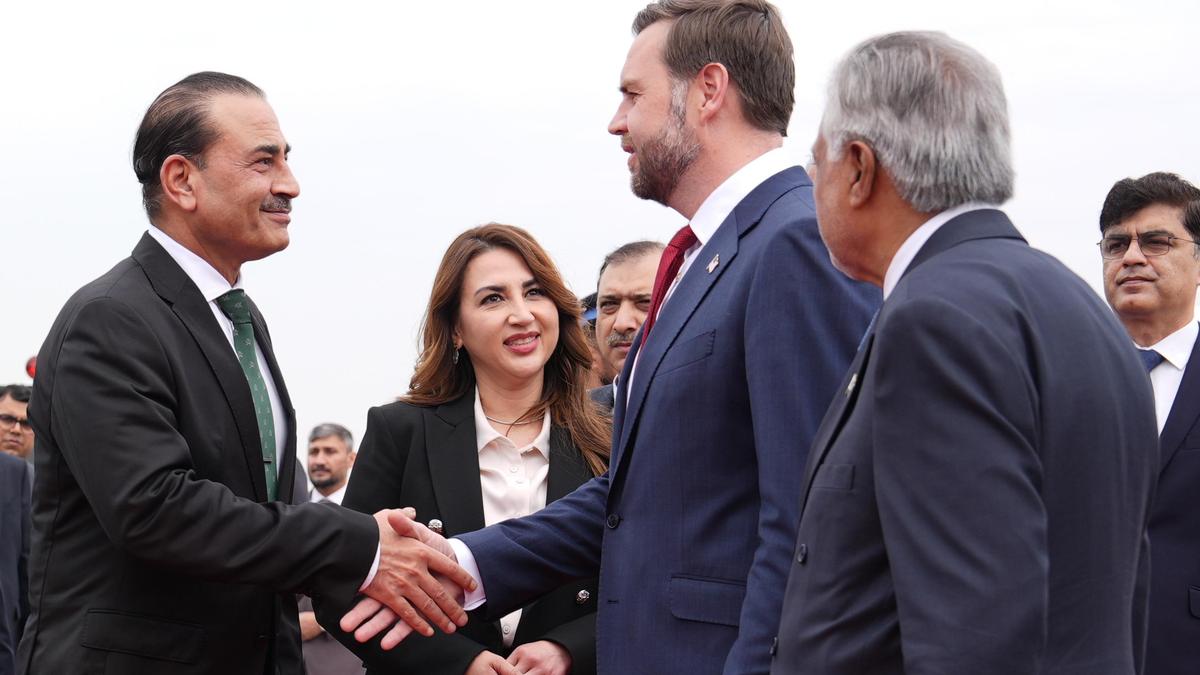
The strategic utility of Pakistan as a diplomatic conduit between Washington and Tehran rests on a fragile alignment of regional security imperatives and economic necessity. While recent discussions between Pakistani leadership and U.S. envoys signal a desire for a second round of structured talks, the efficacy of this channel is governed by a rigid tripartite logic: internal Iranian factionalism, the U.S. "maximum pressure" residual framework, and Pakistan’s own fiscal dependence on global lending institutions. To understand the viability of these negotiations, one must move beyond the surface-level rhetoric of "regional stability" and analyze the specific structural bottlenecks that prevent a diplomatic breakthrough.
The Architecture of Pakistani Intermediation
Pakistan’s position as a facilitator is not born of a unique ideological affinity with either party but rather of its geographic and functional necessity. Islamabad occupies a specific niche in the geopolitical "Cost-Benefit Function" of both the U.S. and Iran. For the United States, Pakistan provides a low-stakes atmospheric channel that avoids the political baggage of direct engagement in a pre-election cycle. For Iran, Pakistan serves as a "safety valve" to signal a willingness to talk without appearing to capitulate to Western dictates.
The current push for a second round of talks functions across three primary operational layers:
- Border Security and Counter-Terrorism Synchronization: The immediate catalyst for engagement is the stabilization of the Sistan-Baluchestan border. Both Tehran and Islamabad face insurgent threats (notably Jaish al-Adl) that have previously led to cross-border missile exchanges. A stable border is a prerequisite for any broader diplomatic movement.
- Energy Infrastructure and Sanctions Compliance: The stalled Iran-Pakistan (IP) gas pipeline project represents a massive sunk cost for Islamabad. Pakistan faces potential multi-billion dollar penalties for non-completion, yet cannot proceed without a U.S. sanctions waiver. This creates a direct causal link between diplomatic facilitation and Pakistani fiscal survival.
- The Afghan Variable: Both the U.S. and Iran have divergent but overlapping interests in a stable Afghanistan. Pakistan remains the primary intelligence and logistical node for this theater, making it the only actor capable of hosting a multi-vector dialogue that addresses the spillover effects of the Taliban-led administration.
The Bottleneck of Credibility and Command
A primary failure in standard reporting on these diplomatic efforts is the assumption of monolithic intent within the negotiating parties. In reality, the success of a second round of U.S.-Iran talks via Islamabad is subject to the Internal Cohesion Variable.
In Tehran, the foreign ministry’s mandate is often at odds with the operational priorities of the Islamic Revolutionary Guard Corps (IRGC). When a Pakistani minister meets a U.S. envoy, they are negotiating with a State Department that is constrained by Congressional oversight and an Iranian executive that may lack the authority to enforce security guarantees. This creates a "Double-Agency Problem" where the intermediaries (Pakistan) are speaking to representatives who cannot fully commit their respective military or intelligence apparatuses.
The mechanism of failure in the first round of talks was not a lack of will, but a lack of Verifiable Reciprocity. For a second round to yield more than a photo opportunity, it requires a "Small-Wins Framework." This involves:
- Partial sanctions relief specifically targeted at humanitarian or energy infrastructure.
- The release of dual-national detainees.
- Formalized intelligence sharing on border insurgencies.
Economic Constraints as a Diplomatic Lever
Pakistan’s role is heavily influenced by its current engagement with the International Monetary Fund (IMF). The fiscal reality is that Islamabad cannot afford to antagonize Washington, as U.S. support is crucial for the continuation of Extended Fund Facilities. This creates a "Strategic Asymmetry" where Pakistan is not an impartial mediator but an actor whose survival depends on maintaining a specific equilibrium with the U.S. Treasury.
This financial dependency dictates the limits of the Iran-Pakistan gas pipeline. While Tehran pressures Islamabad to fulfill its contractual obligations, the U.S. maintains a veto through the threat of secondary sanctions. The "Cost of Non-Compliance" for Pakistan—losing access to dollar-denominated markets—far outweighs the "Utility of Energy Security" provided by Iranian gas. Therefore, Pakistani diplomatic efforts are often an attempt to negotiate a "carve-out" or waiver, positioning their role as a mediator as a form of "Diplomatic Equity" to be traded for economic leniency.
The Strategic Shift from Multi-Alignment to Zero-Sum Risks
The regional environment has shifted from a period of "Competitive Stability" to one of "Zero-Sum Risk." The increasing involvement of China in Middle Eastern diplomacy, evidenced by the Saudi-Iran rapprochement, has forced the U.S. to re-evaluate its reliance on traditional partners like Pakistan. If Islamabad fails to facilitate a meaningful dialogue, it risks being bypassed by Beijing-led initiatives that offer Iran an alternative path to regional integration without Western preconditions.
The "Incentive Structure" for the U.S. in these talks is centered on containment. Washington seeks to prevent a wider regional conflagration while Iran’s nuclear program advances. Pakistan’s value is its ability to offer "Tactical Transparency"—providing the U.S. with insights into the Iranian leadership's internal red lines. However, this value diminishes if the Iranian side perceives Pakistan as being too closely aligned with the U.S. security architecture, particularly in the context of the Indo-Pacific strategy.
Operational Impediments to a Second Round
Several friction points increase the "Probability of Failure" for the proposed second round of talks:
- The Nuclear Escalation Threshold: Iran’s increased uranium enrichment levels reduce the "Decision Window" for the U.S., making slow-moving diplomatic channels through Islamabad less attractive than direct, back-channel communications in Oman or Qatar.
- The Domestic Political Cycle: With the U.S. entering a high-intensity election year, the Biden administration has zero appetite for "High-Risk Diplomacy" that could be characterized as weakness. Any engagement facilitated by Pakistan must be framed strictly as a security/stabilization effort rather than a "Grand Bargain."
- The Proliferation of Intermediaries: Pakistan is competing in a "Market of Mediators." Qatar and Oman have more established track records of hosting high-level U.S.-Iran breakthroughs. Pakistan must differentiate itself by focusing on the Integrated Security Model—linking Iranian stability to the broader South Asian and Afghan security matrix.
The Mechanics of a Sustainable Dialogue
For these discussions to move from "Ministerial Rhetoric" to "Operational Reality," a shift in the diplomatic protocol is required. The current model of "Ad-Hoc Facilitation" must be replaced by a "Permanent Working Group" structure that includes technical experts on sanctions and military attaches.
The logic of "Equilibrium Diplomacy" suggests that Pakistan will continue to play both sides, using the threat of Iranian energy cooperation to gain concessions from the U.S., and the promise of U.S. diplomatic recognition to gain concessions from Iran. This is a high-stakes balancing act with a narrow margin for error.
The strategic play for the upcoming months is the "Phased De-escalation Protocol." This involves Islamabad hosting lower-level technical teams to solve localized border issues, which serves as a proof-of-concept for higher-level political engagement. If these technical talks fail to reduce border skirmishes or illicit trade, the political will for a "Second Round" of broader talks will evaporate. The focus should not be on a comprehensive deal—which is currently impossible—but on "Conflict Management," ensuring that the U.S.-Iran rivalry does not trigger a secondary crisis on Pakistan's western flank. Success will be measured not by a signed treaty, but by the absence of an escalation that forces Islamabad to choose a side.