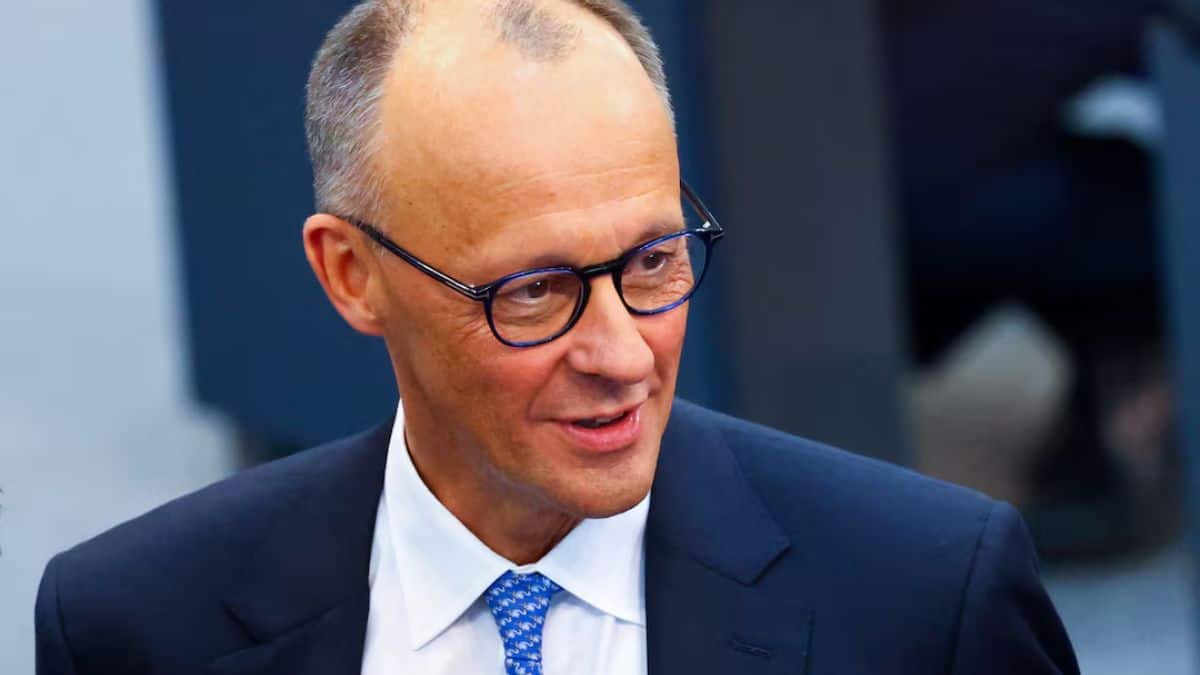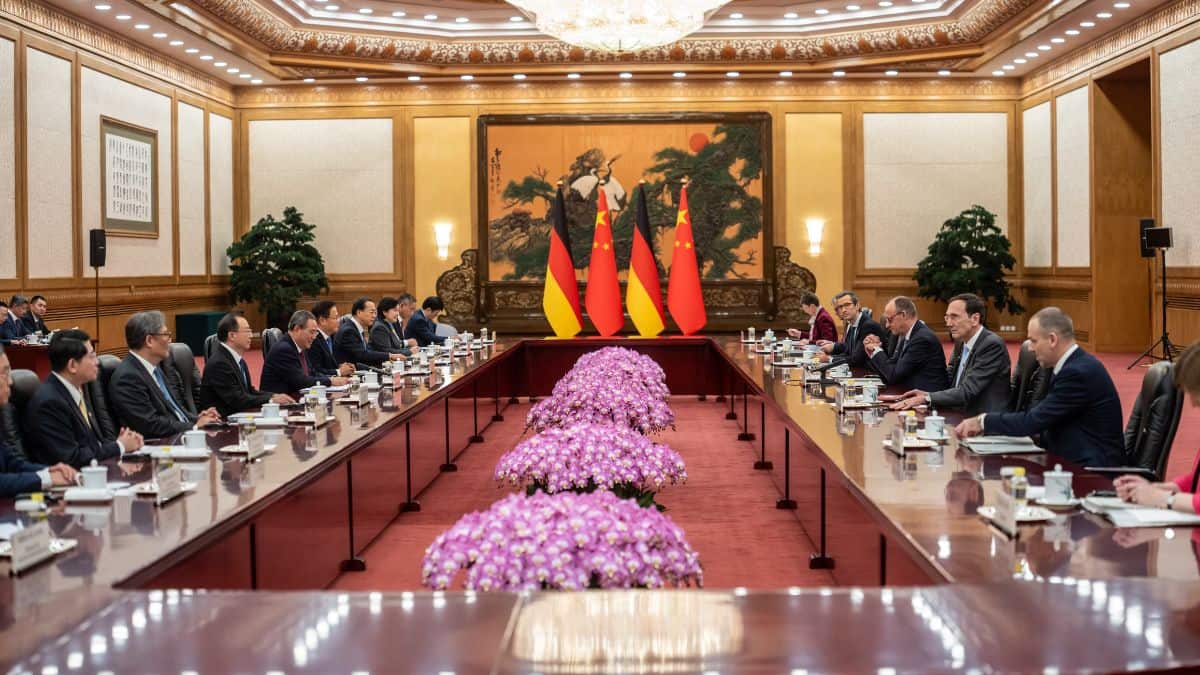
Friedrich Merz didn’t go to Beijing to secure the future of German industry. He went there to administer hospice care to an economic model that died in 2022.
The mainstream press is currently obsessed with "fair trade" and "level playing fields." They treat these diplomatic meetings like a high-stakes chess match where a stern look from the Chancellor might suddenly make BYD stop innovating or convince Xi Jinping to prioritize Siemens over local champions.
It is a fantasy.
The "fair trade" narrative is a pacifier for German CEOs who spent two decades outsourcing their R&D to the very people now eating their lunch. Merz is asking for permission to compete in a market that has already decided it doesn't need him. If you think a few signed memorandums in the Great Hall of the People will save the German automotive sector, you aren't paying attention to the math.
The China Trap is a Skill Issue
For thirty years, Germany operated on a simple, arrogant premise: we provide the high-end engineering, China provides the cheap labor and the middle-class consumers.
That era ended the moment China stopped being a factory and started being a laboratory.
When Merz calls for "deeper ties," he is effectively asking to deepen a dependency that has become a structural weakness. The German DAX is essentially a leveraged bet on Chinese infrastructure and consumer spending. But China’s internal economy is pivoting toward self-sufficiency. They don't want "deeper ties" with German combustion engines; they want the global market share those engines used to occupy.
I’ve watched boards in Munich and Stuttgart hand over intellectual property for short-term quarterly gains for twenty years. You cannot "negotiate" your way out of a technological deficit.
The Subsidy Myth
The loudest complaint from the Merz delegation involves Chinese state subsidies. The logic goes: "If China stopped subsidizing their EVs, we would win."
Wrong.
Even if you stripped away every yuan of state support, German manufacturers would still be lagging in software integration, battery chemistry, and speed-to-market. China isn't winning just because they are "cheating"; they are winning because they are iterating at three times the speed of a German bureaucracy.
While Berlin discusses the ethics of data privacy for the hundredth time, Shenzhen has already deployed the third iteration of the tech in question. Merz is bringing a briefcase full of 20th-century grievances to a 21st-century tech war.
The Decoupling Delusion
The "De-risking" buzzword is the most dangerous piece of fiction in modern geopolitics.
You cannot de-risk from your primary customer and your primary supplier simultaneously without collapsing your standard of living. Merz knows this. His "tough talk" on trade is performative art for a domestic audience that is increasingly terrified of de-industrialization.
Behind closed doors, the desperation is palpable. Germany needs China to keep buying machines to build the things that will eventually destroy German industry. It is a suicide pact dressed up as diplomacy.
Why "Fair Trade" is a Dead Language
In the world of realpolitik, "fair" is a term used by the side that is losing.
- Trade is about leverage, not equity.
- China holds the minerals. Germany holds the legacy brands.
- Legacy brands evaporate when the product is no longer superior.
If Merz wanted to be bold, he wouldn't be asking Xi for fairness. He would be at home dismantling the energy regulations and bureaucratic hurdles that make it impossible for a German startup to scale. He is trying to fix the external symptom because he is too afraid to perform the internal surgery.
The Cost of Professional Politeness
The competitor reports suggest that "dialogue is the first step toward stability."
Stability is the last thing Germany needs. Stability in the current trajectory means a slow, managed decline into being a museum of industrial history.
Merz is playing the "Statesman" role. He looks the part. He speaks the language of the old Atlanticist guard. But the Atlanticist guard has no answer for a world where the East isn't just a market, but the undisputed center of gravity for applied physics and digital infrastructure.
Imagine a scenario where Germany actually pivoted. Instead of begging for market access in China, it focused on becoming the high-tech hub for a diversifying India or a growing Southeast Asia. But that requires risk. It requires admitting that the China-Germany "Special Relationship" was a historical fluke based on a temporary technological gap that has now closed.
The Brutal Reality of the "Level Playing Field"
People also ask: "Can Germany regain its edge in China?"
The answer is a hard no, unless Germany is willing to endure a decade of economic pain to reinvent its core competencies.
The "playing field" will never be level. China is a command economy disguised as a market; Germany is a social democracy disguised as a powerhouse. You are comparing a marathon runner to a guy in a sports car. No amount of "diplomatic pressure" makes the runner faster than the engine.
The Real Export: Inflation and Anxiety
What Merz is actually exporting to China is German anxiety. Every time a high-ranking European official lands in Beijing to complain about overcapacity, it signals to the CCP that their strategy is working.
Overcapacity isn't a "problem" for China; it’s a feature. It’s a tool for global market dominance. By complaining about it, Merz confirms that German industry has no answer for it other than asking nicely for them to stop.
Stop Asking for Permission to Exist
The most "pro-business" thing Merz could do is stop pretending that China is a partner that can be reasoned with via trade missions.
China is a competitor that must be out-innovated.
The focus on "fair trade" is a distraction from the reality that German energy costs are too high, the labor market is too rigid, and the digital infrastructure is a joke. Merz is trying to win an away game when his home stadium is falling apart.
If you are a business leader, ignore the headlines about "improved relations." Those relations are being improved on China's terms.
- Diversify now. Not because of "values," but because of math.
- Stop trusting the "Made in Germany" halo. It doesn't mean anything to a 25-year-old in Shanghai.
- Invest in software. Because hardware is becoming a commodity, and China owns the commodity market.
Merz is a 1990s solution to a 2030s problem. He is chasing a version of China that no longer exists—one that was content to be the world’s workbench. That China is gone. In its place is a superpower that views the German industrial machine not as a peer, but as a legacy asset to be acquired or bypassed.
Stop looking for "fairness" in a geopolitical cage match.
The only fair trade is the one where you have the better product at a better price. Everything else is just expensive theater.
Build something better or get out of the way.