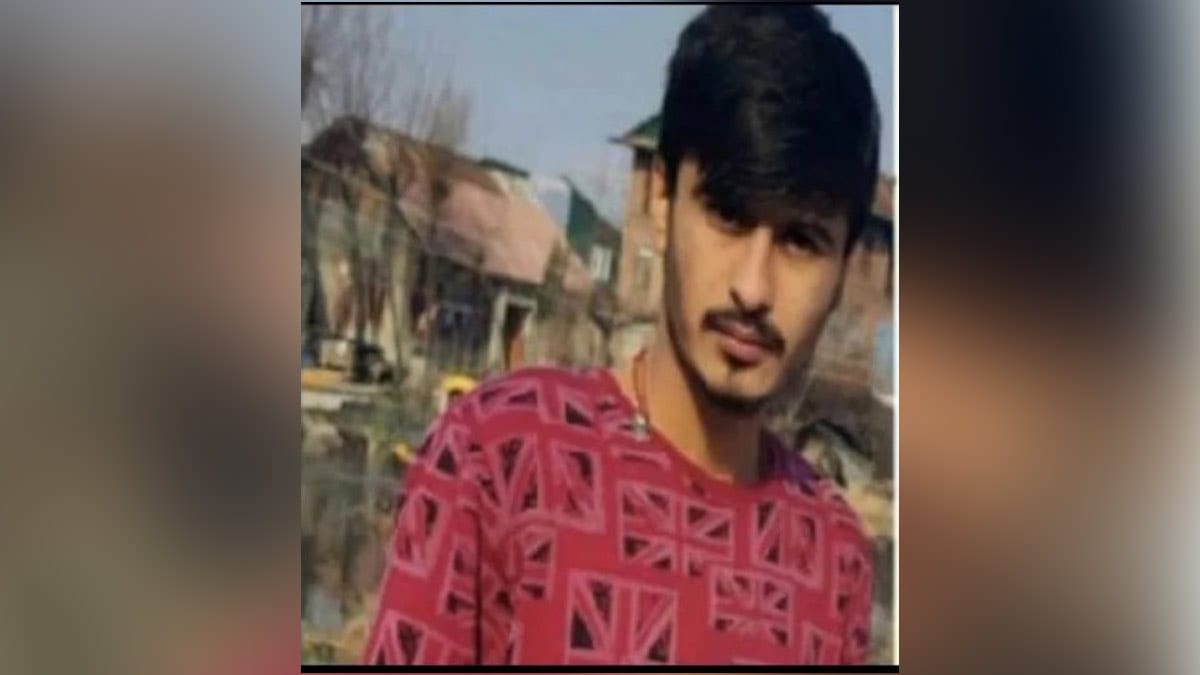
Himanshu Bhau is a twenty-something fugitive from Haryana who rose from a teenage juvenile offender to one of India’s most wanted syndicate bosses before federal authorities finally caught up with him in the United States. Running a brutal extortion and murder enterprise from safe houses thousands of miles away from New Delhi, he became the face of a terrifying new breed of remote-control organized crime. His arrest marks a rare, hard-won victory for Indian intelligence agencies struggling to contain an insurgency of young, tech-savvy gangsters operating entirely beyond their physical jurisdiction.
For years, the Indian underworld followed a predictable, almost cinematic script. Dons grew old in Mumbai slums or Dubai penthouses, relying on decades of street loyalty, political patronage, and analog communication networks to move money and men. Then came the post-pandemic shift in northern India. A generation of hyper-ambitious youths from the agrarian belts of Haryana, Punjab, and Rajasthan realized they did not need to survive a twenty-year turf war to sit at the top of the food chain. They just needed a fake passport, an encrypted messaging app, and a willingness to outsource murder to desperate teenagers back home.
Himanshu Bhau perfected that formula before he was even old enough to legally rent a car in the countries he fled to.
From Rohtak Farms to the Red Corner
To understand how a kid from Ritoli village in Haryana’s Rohtak district ended up on an Interpol Red Corner Notice, you have to look at the mechanics of rural grievance and sudden status in northern India. Bhau did not inherit a criminal empire. He built one out of thin air through sheer, calculated recklessness.
His rap sheet began while he was still a minor. In 2020, facing charges of attempt to murder and illegal weapons possession, he was sent to a juvenile observation home in Hisar. To the state, it was a correctional facility. To Bhau, it was a networking seminar. Within months, he orchestrated a daring escape, vanishing into the chaotic sprawl of the National Capital Region before anyone realized the scale of what he was building.
Most escaped fugitives keep their heads down. Bhau did the exact opposite. He treated crime like a direct-to-consumer brand launch. Every extortion demand, every broad-daylight shooting outside a luxury car showroom or a sweet shop, was immediately claimed on social media platforms. The messaging was always identical, written in blunt Hindi and Haryanvi dialect, tagging rival gangs and mocking the Delhi Police Special Cell.
By 2022, the pattern was undeniable. Bhau had forged a tactical alliance with the Neeraj Bawana and Naveen Bali syndicates—established heavyweights of the Delhi-NCR underworld—while simultaneously declaring open war on the Lawrence Bishnoi and Goldy Brar networks. In the fractured geography of Indian gangland, alignments shift faster than monsoon winds, and Bhau positioned himself as the aggressive, unpredictable disruptor willing to pull triggers that older bosses hesitated to touch.
The Architecture of Remote-Control Terror
How does a fugitive in his early twenties command dozens of armed shooters across three Indian states without ever setting foot in the country? The answer lies in the commodification of violence and the weaponization of modern consumer technology.
Traditional organized crime requires massive overhead. You have to pay retainers, maintain safe houses, bribe local beat constables, and manage supply chains for ammunition. Bhau stripped away the bloat. His syndicate operated on a gig-economy model that would make a Silicon Valley venture capitalist wince.
Here is how the machine actually worked on the ground:
- Encrypted Command: Bhau and his immediate lieutenants operated exclusively over end-to-end encrypted platforms like Signal, Telegram, and Wickr, routing calls through virtual private networks and burner VoIP numbers registered in Eastern Europe and North America.
- Disposable Foot Soldiers: Instead of maintaining a standing army, the gang recruited unemployed youths aged eighteen to twenty-two via Instagram and Facebook. These recruits were often promised a fraction of a lucrative extortion payout, a chance at viral notoriety, or assistance in securing a visa to move abroad.
- Decentralized Logistics: The shooter rarely knew who supplied the weapon. One local cell would steal a motorcycle; another would drop a country-made pistol or a smuggled Glock at a dead-drop near a highway toll plaza; a third would conduct reconnaissance on the target. The shooter simply picked up the tools, executed the hit, and vanished.
- Hawala Settlement: Extortion money collected from real estate developers, liquor barons, and auto dealers in Delhi and Haryana never touched a conventional bank account. It moved through traditional hawala networks—informal, trust-based money transfer systems—converting rupees in Karol Bagh into dollars or euros within hours.
This compartmentalization made traditional policing almost useless. When the Delhi Police arrested a teenager after a shootout in Tilak Nagar or Rajouri Garden, the suspect often had no idea which country his boss was sitting in. He only knew a handle on Telegram and a voice note promising fifty thousand rupees if he emptied a magazine into a showroom's glass facade.
The Burger King Hit and the Breaking Point
For a long time, law enforcement treated Bhau as a regional nuisance—dangerous, certainly, but one of dozens of mid-level extortionists clogging the dockets of northern Indian courts. That perception shattered in June 2024.
Inside a crowded Burger King outlet in West Delhi’s Rajouri Garden, two gunmen walked up to a man named Aman Joon and fired nearly forty rounds at point-blank range. It was not a quiet assassination in a dark alley. It was a public execution under fluorescent lights, captured on CCTV, designed to send shockwaves through the capital’s business community.
Hours later, a social media post attributed to Himanshu Bhau claimed responsibility, framing the murder as revenge for the killing of a rival gang associate years earlier.
The Rajouri Garden shooting changed the political and operational calculus in New Delhi overnight. High-profile murders in commercial hubs carry an immediate political cost. When wealthy businessmen in West Delhi and Gurugram began receiving WhatsApp voice notes demanding crores of rupees in protection money—accompanied by clips of the Burger King CCTV footage—the pressure on the Ministry of Home Affairs reached a boiling point.
The National Investigation Agency (NIA) stepped in, attaching properties, freezing suspected front accounts, and placing a substantial bounty on Bhau’s head. Suddenly, he was no longer just a state-level headache. He was classified alongside cross-border narco-terrorists as a primary threat to internal security.
The Phantom Trail Across Borders
Tracking a fugitive who moves on forged documents is like chasing smoke through a ventilation shaft. Following his escape from India, intelligence dossiers tracked Bhau’s digital footprint across a dizzying itinerary.
He initially surfaced on the radar in the United Arab Emirates, a historic transit hub for Indian fugitives. From there, intelligence intercepts suggested movements through Southeast Asia, before he allegedly utilized forged passports—obtained through corrupt regional passport offices and unscrupulous travel agents in Punjab and Haryana—to slip into Europe. For several months, agencies believed he was operating out of Portugal or Spain, regions that have quietly become preferred sanctuaries for Indian gangsters due to complex extradition treaties and large South Asian diaspora networks where a newcomer can easily blend in.
Yet Bhau did not stay put in Europe. Driven either by paranoia that European intelligence services were closing in or by the sheer hubris that defined his entire career, he made his way across the Atlantic.
The mechanics of how Indian fugitives enter the United States have become an open secret among border enforcement officials on both sides of the globe. Utilizing the infamous "donkey route"—a grueling, expensive illegal immigration pipeline running through Latin America and across the southern US border—or arriving on fraudulent visas, dozens of wanted men from Punjab and Haryana have attempted to vanish into the vast geography of North America. Once inside, many file bogus asylum claims, gaming a backlogged immigration court system that takes years to process a single case, buying themselves legal breathing room while they continue running extortion rackets back home.
Bhau thought the sheer size of the United States would swallow him whole. He was wrong.
Why His Capture Exposes a Deeper Flaw
The arrest of Himanshu Bhau by US authorities—the culmination of months of joint intelligence sharing between Indian central agencies, Interpol, and American federal law enforcement—is undeniably a major operational coup. It proves that the diplomatic wall protecting fugitives in the West is finally starting to crack. Over the past two years, New Delhi has aggressively lobbied Washington, Ottawa, and London, arguing that sheltering gangsters under the guise of asylum or due process directly fuels violent crime and terror financing on Indian soil.
When the Burger King shooting turned Bhau into a top-priority target, Indian intelligence handed over precise digital signatures, financial trails, and biometric matches to their American counterparts. Once federal agents locked onto his location, the endgame was swift.
Yet celebrating this arrest as the end of the syndicate would be a catastrophic misreading of how modern organized crime actually functions.
Cutting the head off a centralized mafia family used to paralyze the organization for years. Cutting the head off a decentralized, cloud-based extortion network simply creates a temporary power vacuum. Within hours of news breaking about Bhau’s detention in the US, rival gangs were already jockeying to absorb his extortion territories in Rohtak, Jhajjar, and West Delhi. Meanwhile, his surviving lieutenants—scattered across safe houses in Europe and North America—still hold the encrypted group chats, the lists of terrified businessmen, and the hawala channels.
More importantly, the underlying economic engine that produces a Himanshu Bhau remains completely intact. As long as rural youth in northern India face stagnant agricultural returns, chronic unemployment, and a social media ecosystem that glamorizes hyper-violence as the fastest route to fame and wealth, there will always be another twenty-year-old ready to pick up a burner phone.
The Long Road to Extradition
Securing a fugitive in handcuffs on American soil is only the first inning of a grueling legal match. Bringing Himanshu Bhau back to a courtroom in New Delhi will test the endurance of bilateral diplomacy.
The US extradition process is notoriously deliberate, governed by strict evidentiary standards and multiple layers of judicial review. Unlike deportation for immigration violations—which can sometimes be expedited if the fugitive entered the country illegally without a pending asylum claim—formal extradition under the 1997 US-India treaty requires Indian prosecutors to prove probable cause for every specific charge listed in the warrant.
Defense attorneys representing high-profile fugitives routinely weaponize human rights arguments, claiming their clients face torture, extrajudicial execution, or inhumane prison conditions if returned to India. Overcoming those objections requires airtight diplomatic assurances from New Delhi, including guarantees of solitary confinement safety and strict adherence to trial protocols.
While lawyers argue over treaties and detention conditions in a federal courtroom thousands of miles away, the real battle is happening in the dusty lanes of Haryana and the crowded markets of West Delhi. Police forces there have a narrow window of opportunity—while Bhau’s network is disoriented and cut off from its founder—to dismantle his local logistics cells and dry up his hawala pipelines.
If they fail to seize this moment, Himanshu Bhau’s arrest will be remembered not as the death of a syndicate, but merely as the day a new boss took over the chat room.