The wind on the Aleutian chain does not blow; it hammers. It smells of salt, rotting kelp, and a dampness that seeps straight through heavy wool into the marrow of your bones. If you stood on Adak Island in the winter of 1958, you would not see trees. You would see slate-grey water crashing against black basalt, low-slung military barracks rattling against gale-force gusts, and a sky the color of a bruised thumb.
Listen.
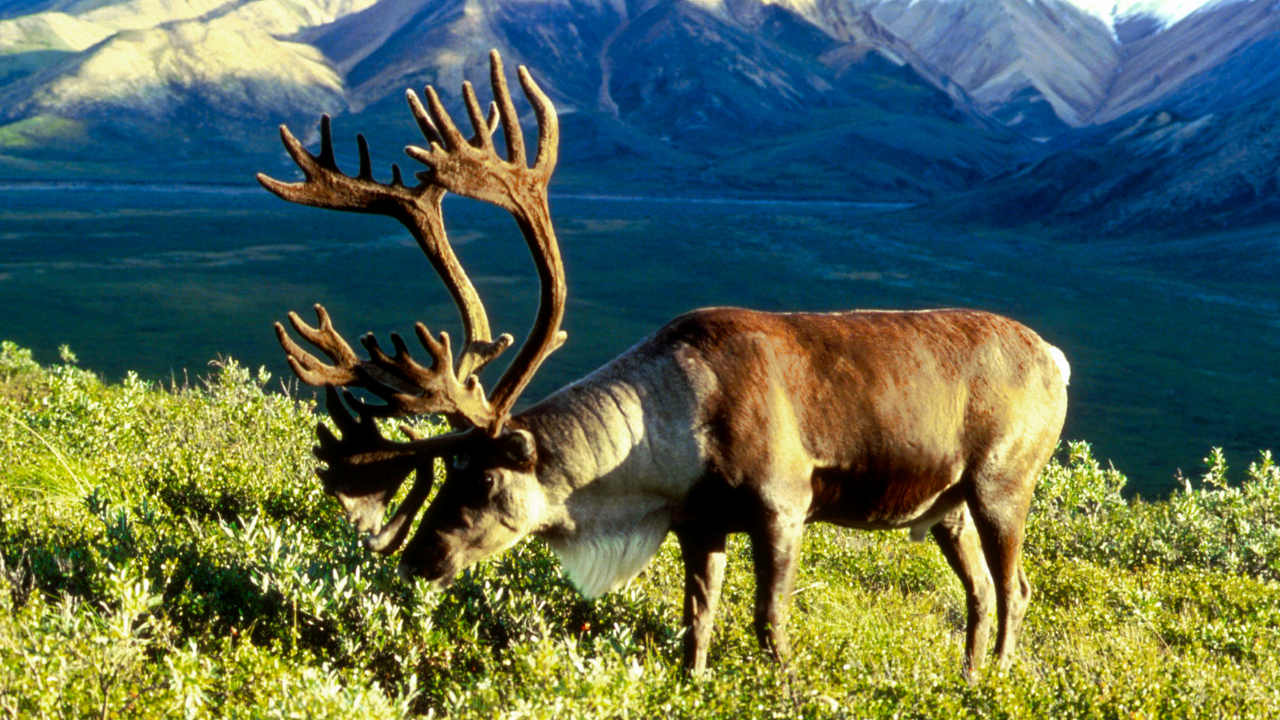
That is the sound of an engine idling. A twin-engine Douglas DC-3, chartered by the United States Air Force, fighting the crosswinds just to set its wheels down on a gravel strip at the edge of the world. Inside the cargo hold, shifting in the dim, freezing dark, are twenty-five caribou.
They do not know they are cargo. They only know the metallic stench of aviation fuel, the violent banking of the hull, and the terror of a strange, roaring confinement.
To understand why those animals were crammed into a metal tube and flown over the Bering Sea, you have to understand the peculiar loneliness of the Cold War military machine. Adak was a linchpin. It was a heavily fortified submarine base and weather station, thousands of miles away from the supply lines of the contiguous United States. When the sea lanes froze over, or when a violent winter storm grounded cargo ships for weeks at a time, the mess halls ran low. The canned rations tasted of tin and monotony. Morale dropped with the barometer.
Fresh meat was currency. Fresh meat was survival.
So someone, sitting in a warm, wood-paneled office in Washington or Anchorage, looked at a map of the Aleutian Islands and saw a blank space. They saw an ecological puzzle piece waiting to be dropped into place. Caribou had thrived on nearby islands centuries ago before hunting wiped them out. Why not restock? Why not turn a barren volcanic rock into a live-stock pantry for the boys in uniform?
It was a brilliant logistical fix on paper.
Reality is notoriously stubborn.
Imagine the moment the crate doors finally slammed open on Adak. The twenty-five caribou stumbled out onto a landscape utterly alien to them. No sweeping lichen plains of the Arctic interior. No endless horizons of tundra. Instead, they found steep, boggy slopes choked with waist-high ferns, rocky outcrops, and a complete absence of natural mammalian predators.
There were no wolves. There were no grizzly bears. There were only soldiers with rifles and a rapidly shifting geopolitical landscape.
Within a few years, the military footprint on Adak began to contract. Bases closed. Personnel were redeployed. The emergency food supply left behind in the 1950s suddenly found itself entirely unmanaged.
And they did what life always does when left to its own devices. They multiplied.
By the 1980s, the herd had exploded into the hundreds. By the turn of the century, thousands of caribou roamed the rugged hills of Adak, carving deep, muddy trails into the fragile tundra. They had become kings of an empty kingdom. Without wolves to keep them moving, they overgrazed the delicate alpine vegetation. The pantry had outgrown the kitchen. The emergency rations had turned into an ecological ghost story, roaming the mist-shrouded peaks like phantoms of a forgotten military experiment.
We love to treat nature as an inventory sheet. We tally animals like spare parts in a warehouse, moving them from column A to column B as if ecosystems were interchangeable LEGO blocks. We think we can engineer our way out of isolation, or hunger, or logistical failure, by simply dropping twenty-five living breathing creatures into a gale and walking away.
The caribou of Adak did not ask for the flight. They did not ask to be a footnote in a defense department memo. They simply adapted, survived, and in doing so, accidentally rewrote the biology of an island.
Today, the military presence on Adak is a ghost town of rusting hangars and empty homes reclaimed by the relentless coastal weather. But the descendants of those original twenty-five travelers still navigate the ridges, their silhouettes cutting sharp and dark against the fog, a living monument to a time when men tried to feed an army by air-dropping the wild.