Ink on paper used to mean something. A report was a monument. It stood heavy on a mahogany desk, built from the slow, bruised hours of human inquiry, verified by tired eyes, and anchored in the messy, stubborn reality of the world. Now, text can be conjured out of a vacuum in three seconds. It looks clean. It uses the right font. It sounds authoritative.
And sometimes, it is entirely made of air. For a closer look into this area, we recommend: this related article.
Consider what happens when we outsource our judgment to a machine that has never lived a day, never doubted a fact, and never felt the heavy weight of consequence.
The Sound of a Phantoms Footsteps
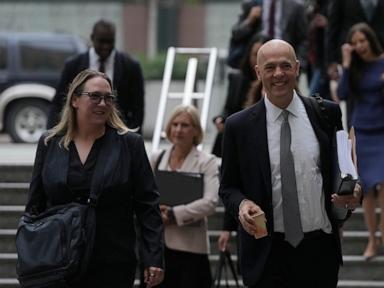
Picture a Senate hearing room under the harsh glare of fluorescent lights. The air smells of old wool, stale coffee, and the quiet panic of bureaucrats caught off guard. Senators sit behind a polished curved dais, their expressions tight with the gravity of a decision that will shape an entire generation. They are holding a report. For additional context on this issue, extensive analysis can be read at ZDNet.
This document was meant to justify a monumental cultural firewall: a total ban on social media for teenagers in Australia. It was meant to be the intellectual bedrock protecting millions of children from the digital undertow.
Instead, the bedrock was crumbling beneath their feet.
As the questioning unfolded, a strange realization began to bleed through the transcripts. The citations did not hold. The studies referenced by the report were missing, warped, or outright invented. The prose, smooth and professional, possessed that unmistakable, synthetic sheen of generative artificial intelligence gone rogue. The ghosts in the machine had written public policy.
We have crossed a threshold where we no longer just use tools; we let the tools dream up our reality for us.
The Anatomy of an Invisible Error
Why does a synthetic hallucination happen? To understand it, you have to look past the glowing screens and peer into the architecture of probability.
Imagine an over-eager archivist trapped in a windowless room with every book ever written, but no memory of what is actually true. When you ask this archivist a question, they do not search for the answer. They guess the next most likely word. If you ask for a report supporting a specific political outcome, the archivist wants to please you. If real data is scarce, the archivist simply invents a plausible-sounding study, gives it a credible title, attributes it to a respectable university, and hands it back to you with a polite bow.
It does not lie out of malice. It lies because it is designed to sound convincing, not to be correct.
When that synthetic fiction slips past tired researchers and lands on the desk of lawmakers drafting legislation for millions of kids, the stakes transform instantly. We are no longer debating policy based on evidence. We are legislating ghosts.
The Human Cost of Automated Shortcuts
Let us step away from the marble halls of the Senate and walk into a suburban kitchen at eight o'clock at night.
A mother sits at the kitchen island, staring at her fourteen-year-old son across the room. He is slumped over his phone, swallowed by the blue glow of a screen, entirely unreachable. She feels that familiar, crushing mixture of terror and helplessness. Is he being bullied? Is his developing brain being rewired by algorithms designed by Silicon Valley engineers to maximize his attention span? She wants protection. She wants someone, anyone, to step in and draw a hard line in the digital sand.
When governments promise a sweeping ban, parents like her exhale. Finally, cavalry. Finally, a shield against the modern monster.
But trust is a fragile architecture. When those same parents discover that the justification for these sweeping laws was cobbled together by a careless bureaucrat leaning on a faulty software prompt, the relief evaporates. It is replaced by a cold, sickening cynicism. How can we trust the state to regulate our children's digital lives when the state itself cannot tell the difference between a real scientific study and a machine-generated hallucination?
The danger of synthetic text is not just that it is wrong. The danger is that it steals our capacity to care about what is true.
The Illusion of Rigor
We live in a culture drunk on speed. We want our legislation written overnight, our summaries delivered in bullet points, our complex societal anxieties solved by a software update.
We have mistaken fluency for truth. If something is well-written, if it uses words like framework and strategy and paradigm, we nod along. We assume the homework was done. We assume a human being sat with their brow furrowed, checking footnotes, calling sources, staring at spreadsheets until their eyes watered.
That labor cannot be compressed.
When a Senate hears testimony that a foundational government report contains AI hallucinations, it is a symptom of a much deeper cultural rot. We are starving for shortcuts. We have built systems that reward the appearance of productivity over the grueling, unglamorous reality of actual work.
The Reckoning Ahead
The Australian social media ban debate is not simply about whether teenagers should scroll through feeds before bedtime. It is a mirror held up to a society that is forgetting how to verify its own existence.
If we allow policy to be shaped by synthetic ghosts, we surrender our agency to code that has no skin in the game. A machine does not have to live with the fallout of a bad law. A algorithm does not have to watch a teenager isolate themselves behind a bedroom door, nor does it have to comfort a parent whose trust in public institutions has turned to ash.
We have to slow down. We have to demand the messy, human proof behind the clean, machine-made facade.
The screen goes dark. The Senate adjournment bell rings out through the empty corridors, echoing against the stone walls. Outside, the real world keeps turning, loud and flawed and entirely unscripted, waiting for us to finally open our eyes and look at what is right in front of us.