The ocean is big, but it is not private. On any given afternoon, a digital map of the world’s shipping lanes looks like a frenetic ant farm. Thousands of yellow icons—tankers, bulk carriers, and container ships—crawl across blue screens in offices from Singapore to Houston. We track them with a precision that borders on the divine. We know their speed, their draft, and their destination.
Until we don’t.
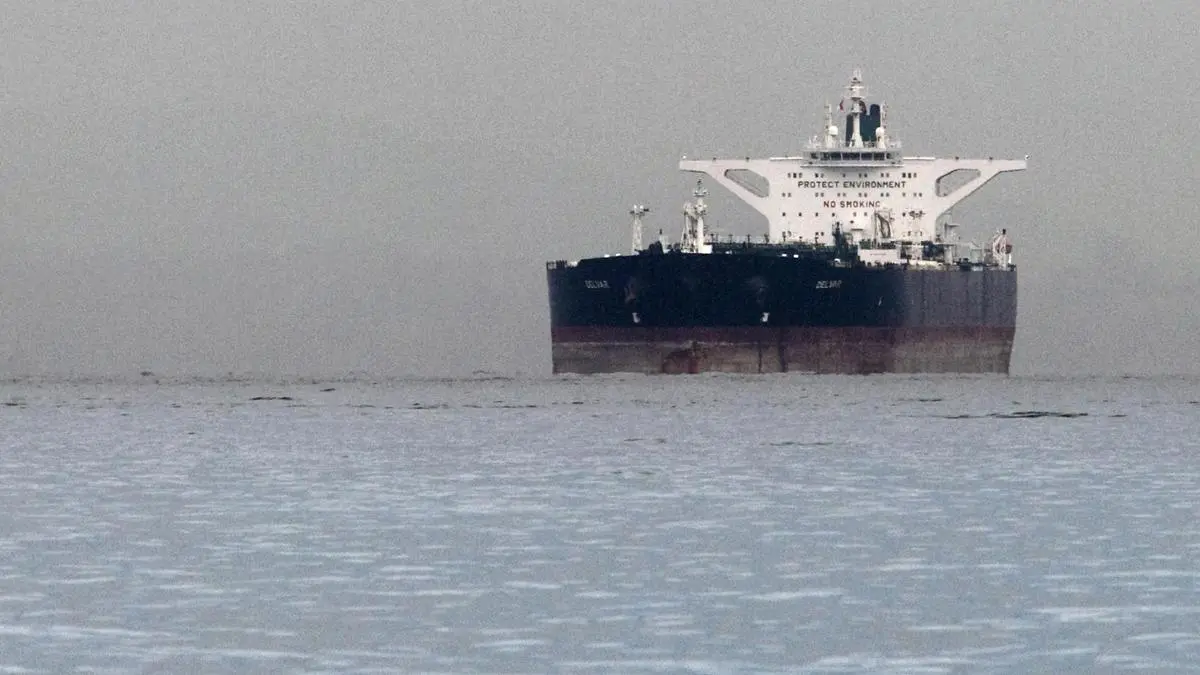
Somewhere in the humid expanse of the Middle East, a captain stares at a console. He isn't just navigating waves; he is navigating a geopolitical minefield. His ship, an Iranian supertanker laden with two million barrels of crude oil, is a pariah. To the global financial system, this vessel is a ghost. To the crew on board, it is a floating fortune worth roughly $150 million, and it is currently being hunted by the most sophisticated surveillance network ever built.
The story of how this ship breached a "blockade line" isn't about steel and diesel. It is a story about the desperate, high-stakes game of hide-and-seek that keeps the world’s underground economy breathing.
The Weight of Two Million Barrels
To understand the scale, you have to stop thinking of oil as a liquid and start thinking of it as gravity. Two million barrels of crude oil is a staggering amount of energy. It is enough to power a medium-sized city for weeks. It is also incredibly heavy, sitting deep in the water, making the ship slow, sluggish, and impossible to hide from a simple visual check.
When a tanker of this size is fully loaded, it sits low. The waterline creeps up the hull, a physical tell that it is carrying a full belly of "black gold." For a country under heavy international sanctions, this oil is the lifeblood of a struggling economy. But to sell it, they have to get it past the watchers.
The watchers are everywhere. They are the analysts at maritime intelligence firms who spend their lives staring at satellite imagery. They are the naval patrols that skirt the edges of international waters. Most importantly, they are the Automatic Identification System (AIS) transponders—the digital "heartbeat" that every major ship is required to broadcast for safety.
But heartbeats can be faked.
The Digital Smoke Screen
Imagine a man walking through a crowded market. Everyone knows he is there because he is wearing a bright red hat. To disappear, he doesn't just take off the hat; he hands it to a stranger and walks away in the shadows.
This is the essence of "spoofing."
For weeks, the Iranian tanker operated in a gray zone. It likely engaged in what mariners call "dark activity." This involves turning off the AIS transponder entirely, effectively vanishing from the digital world. One moment, the ship is there, pinging its location off the coast of an allied port. The next, the signal dies. The ant disappears from the map.
While the digital world sees a void, the physical ship is moving. It meets another tanker in the dead of night—a "ship-to-ship transfer." In the rolling swells of the open sea, massive hoses are connected. The two vessels groan against their fenders as millions of gallons of oil are pumped from one hull to another.
This is the moment of maximum danger. A single spark, a failed valve, or a sudden change in weather could lead to a catastrophe that would stain the coastline for a generation. The sailors doing this work aren't thinking about global politics. They are thinking about the tension in the lines and the dark water churning between two steel giants.
Crossing the Line
The "blockade line" isn't a physical wall. It is a shifting, invisible boundary defined by patrol routes and the range of land-based radar. Breaching it is an act of calculated defiance.
When the tanker reappeared on the scanners, it was lighter. Its draft was higher in the water. The two million barrels were gone, delivered to a buyer who doesn't mind the paperwork being a little blurry. The ship had crossed back over the line, empty and emboldened.
The success of such a maneuver sends a ripple through the global markets. It proves that despite the "maximum pressure" of sanctions, the world remains thirsty. It proves that the "invisible line" is porous.
Consider the perspective of a commodity trader in London. To them, this isn't a story of adventure; it's a data point. It suggests that the supply of oil is more flexible than the official numbers say. It means the price of a gallon of gas at a station in Ohio or a liter of petrol in Berlin is being influenced by a ghost ship that technically didn't exist for three weeks.
The Human Cost of the Ghost Fleet
We often talk about these events in the abstract—"nations," "regimes," "sanctions." But these ships are manned by people.
The crew on an Iranian tanker exists in a strange limbo. They are mariners by trade, but they are treated like smugglers by the international community. They spend months at sea, often unable to dock at major ports for fear of the ship being seized. They are the gears in a machine that is trying to bypass a global financial system that has locked them out.
There is a psychological toll to sailing a ship that the world is actively trying to stop. Every radar blip on the horizon is a potential threat. Every overhead satellite is an unblinking eye. When they finally breach that line and head for home, there is no hero’s welcome. There is just the quiet relief of a job done in the dark.
The Mirage of Control
This breach reveals a fundamental truth about our modern world: our control is an illusion. We have built the most interconnected, monitored, and regulated society in human history. We can track a package from a warehouse in Shenzhen to a doorstep in Seattle with meter-level accuracy. We have mapped the seafloor and the stars.
Yet, a 300-meter-long steel behemoth carrying enough oil to cause an environmental disaster can still slip through the cracks.
The technology of evasion is evolving just as fast as the technology of surveillance. For every new satellite launched, there is a new way to mask a signal. For every new maritime law, there is a new flag of convenience. The ocean remains the last great frontier where the rules are often what you can get away with.
As the tanker sails back toward the Persian Gulf, its wake fades into the vastness of the sea. The analysts will write their reports. The politicians will issue their condemnations. The oil will find its way into engines and furnaces, its origin scrubbed clean by a dozen middlemen.
The line was crossed. The oil moved. The map remains, but it only tells the story we are allowed to see. In the deep water, the ghosts are still moving, and they have no intention of staying in the light.
The blue screen in the office shows a yellow icon. It’s back. It’s pinging. It looks like every other ship on the map. But for those who know how to look, the ghost has already told its story.