The Arctic wind does not care about international maritime law. It howls across the icy fjords of Svalbard, biting at the hull of the Professor Molchanov, a Russian-owned expedition vessel now sitting still and silent in the port of Barentsburg. For months, quiet lawyers had been watching this ship. They tracked its coordinates across gray northern seas just as a hunter tracks a deer through deep winter snow, waiting for the exact moment it crossed into a jurisdiction that still believed in the binding power of a court order.
That moment arrived with the thump of a heavy stamp on a Norwegian district court document.
To understand why a research and cruise vessel is currently stranded at the top of the world, we have to wind the clock back to the spring of 2014. Back then, borders shifted by force on the Crimean Peninsula. Offices changed hands. Armed men walked into corporate headquarters, and multi-billion-dollar energy assets—lucrative gas fields, pipelines, and drilling rigs belonging to Ukraine’s state-owned energy company, Naftogaz—were absorbed overnight. To the architects of that takeover, it was a permanent acquisition carved out by geopolitical gravity.
Paperwork, however, has a longer memory than flags.
Naftogaz did not pick up rifles. They picked up ledgers. They took their grievance to a permanent court of arbitration in The Hague, laying out the exact value of the stolen steel, the lost subterranean pressure of drained gas fields, and the cold calculations of international expropriation. Years passed, marked by briefs, testimonies, and quiet legal warfare. By 2023, the tribunal rendered its verdict: Moscow owed $4.22 billion.
An international award is a strange kind of wealth. It is absolute in theory and invisible in practice. If the losing party simply shrugs and refuses to pay, the winning party is left holding a massive, expensive piece of paper. Russia paid nothing. The billions remained an abstraction, a digital debt recorded in European courtrooms that seemed destined to haunt legal textbooks forever.
Enforcement requires teeth.
Imagine trying to collect a multi-billion-dollar bar tab from someone who owns half the town but refuses to reach for their wallet. You cannot raid their house; you have to find property that wanders away from home. You have to wait for commercial ships to dock in friendly ports, for frozen accounts to flicker on foreign banking screens, for movable wealth to cross an open border.
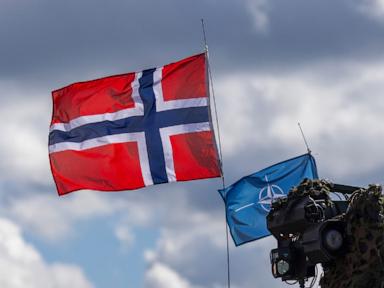
This is where the quiet hunt turns into high-stakes global chess. Lawyers working on behalf of Naftogaz mapped out the movements of Russian state-owned commercial assets across the globe—in France, the United Kingdom, the United States, and Finland. But the Arctic presented a unique theater. When the Professor Molchanov dropped anchor near the Russian mining settlement of Barentsburg on the Svalbard archipelago, local enforcement authorities acted swiftly on the Nord-Troms and Senja District Court's order. The Norwegian Coast Guard stood watch. The ship was officially arrested.
Moscow reacted with immediate fury, condemning the move through diplomatic channels as a politically motivated violation of international law and labeling the seizure an act of piracy. To the Kremlin, a civilian vessel plying Arctic routes being held for a debt originating in Crimea is an unacceptable escalation, a blurring of lines between commercial navigation and economic warfare.
Yet, for Ukraine, this is not about piracy. It is about a fundamental, stubborn insistence on accounting.
Every seized asset, whether it is a research vessel in the high north or a frozen bank account in a Western capital, chips away at the notion that borders can be redrawn without financial consequence. It turns a war fought purely with kinetic violence into a grinding war of balance sheets. It proves that theft on a national scale leaves a trail that can be followed across oceans, tracked by satellite, and pinned down by a local judge with a stamp and a mandate.
The Professor Molchanov sits in the subzero harbor, its passengers accommodated locally, its future tangled in an impending web of appeals. It is only one ship. It represents a tiny fraction of the staggering multi-billion-dollar ledger. But as the ice thickens around its hull, it stands as a monument to a new reality: empires can conquer territory overnight, but the bill always catches up in the end.