The Algorithm Never Knew Who It Was Pushing
A screen glows in a quiet room. Someone taps a thumb. A voice comes through the speaker—calm, gravelly, almost conversational—describing how to make a car disappear in the mountains outside Medellín, or how a single phone call could erase a politician's family before breakfast.
Click.
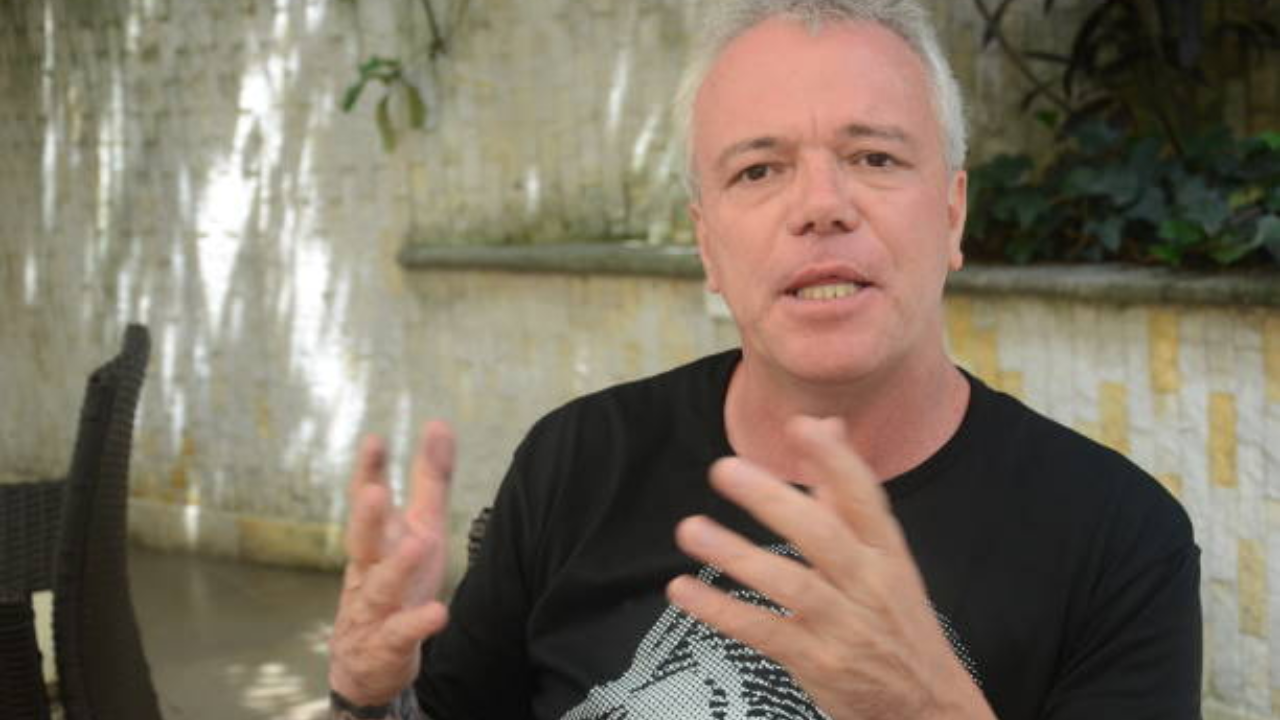
To the recommendation engine, it is just engagement. Watch time. Retention. A sharp-featured man in his fifties talking directly into a lens, answering questions like a retired shopkeeper reminiscing about old tools.
Except the tools were submachine guns and car bombs. And the man holding the camera was Jhon Jairo Velásquez Vásquez, known to the world as Popeye, Pablo Escobar's chief assassin.
When a mass murderer opens a YouTube channel, what are we actually watching? Are we watching repentance, dark entertainment, or a mirror held up to an internet that treats horror as content?
Let us be honest from the start: stories like this make normal people squirm. I have spent years studying how violent histories get repackaged for modern screens, and every time a figure from a real war walks out of a prison gate and straight into the glow of a ring light, the moral math feels broken. You look at the numbers—over 250 direct killings confessed, around 3,000 deaths coordinated or linked to the Medellín Cartel's campaign of terror—and your brain tries to balance that ledger against twenty-two or twenty-three years behind bars and a vlog. The ledger does not balance. It cannot.
Two People Watching the Same Screen
To feel the weight of what happened when Popeye stepped onto social media in the mid-2010s, picture two people sitting miles apart in Colombia. Both are hypothetical stand-ins, created to show how the same broadcast lands in different lives.
Hypothetical Character One: Mateo, twenty-two, in a cramped apartment in Bogotá. Mateo was a toddler when the worst of the cartel bombings shook the city. To him, the 1980s and early 1990s feel like black-and-white cinema—dramatic, distant, almost mythic. When a video pops up with a man claiming he helped coordinate thousands of killings for Escobar, Mateo watches out of morbid curiosity. The man speaks bluntly. He critiques modern politicians. He sounds streetwise and unfiltered. Without realizing it, Mateo is watching history flattened into personality.
Hypothetical Character Two: Lucía, forty-eight, in a quiet house in Antioquia. Lucía does not need a screen to remember the sound of a car bomb detonating in a crowded street. She remembers the names whispered at funerals. She remembers how fear used to sit at the dinner table like an uninvited guest. When she hears that the man who enforced that fear is now gathering subscribers, cracking jokes, and calling himself a changed man or a YouTuber, her stomach knots. For her, the past is not a true-crime binge. It is an open wound that never got stitches.
Both Mateo and Lucía are real in spirit, even if their names are invented here for clarity. Their collision—between those who experience violence as lore and those who carry it as grief—is the invisible stake running underneath every view count.
How a Boy Becomes a Hitman
Velásquez was not born a monster in a vacuum. Born in Yarumal in 1962, he grew up in a country already straining under political violence, poverty, and shifting power. Before becoming Escobar's trusted lieutenant, he briefly spent time in military and police training environments—places built around hierarchy, obedience, and force.
Metaphor Alert: Think of a young man like dry timber stacked beside a roaring hearth. The spark does not have to be huge to catch.
When Velásquez entered Escobar's orbit, loyalty to the boss became a religion. In the brutal logic of the Medellín Cartel, human life was treated like currency—spent freely to protect smuggling routes, silence rivals, terrorize judges, and pressure the state. Velásquez took part in high-profile kidnappings, helped plan devastating attacks including the 1989 bombing of Avianca Flight 203 that killed 110 people, and carried out hundreds of murders himself.
What chills listeners most in his interviews is not melodrama. It is flatness. Asked in past interviews about killing people—including a bus driver over a dispute involving an associate's mother, or even arranging the death of a woman he was involved with after Escobar suspected her of being an informant—Velásquez often spoke with eerie detachment, claiming he had lost no sleep over his crimes even while insisting he wanted to warn young people away from that life.
Stop and sit with that contradiction. A man can say, "Don't follow my path," while describing slaughter without a tremor in his voice. Which message actually reaches a lonely, angry teenager watching at midnight? The warning, or the swagger of someone who survived at the top of a lethal pyramid?
Why Does a Killer Become a Creator?
People often ask a sharp question when a notorious criminal starts posting online: How is that even allowed?
The answer is less cinematic than people expect. After turning himself in around 1992 and serving over two decades in prison under Colombia's legal system—which capped maximum sentences at thirty years at the time and allowed conditional release after serving a major portion of the term—Velásquez was released on parole in August 2014.
Walk outside those prison gates in 2014 and look at the world he re-entered. The cartel was long shattered. Escobar had been dead for more than twenty years. Yet the myth of Escobar had grown bigger on screens worldwide. Meanwhile, Velásquez faced a practical problem that sounds almost mundane after decades of infamy: how do you earn a living when traditional banks will not touch you and your name is synonymous with terror?
A friend suggested YouTube.
At first, the numbers ticked up slowly—a thousand followers, then two thousand—before some clips drew hundreds of thousands of views. He launched a channel styled around being a "repentant" former hitman, wrote books, gave interviews, and weighed in on politics, including sharp attacks on figures in Venezuela's government.
Here is the uncomfortable truth about digital media: attention is blind to justice. A platform rewards whatever holds human eyes. Controversy holds eyes. Infamy holds eyes. A man who once commanded fear with a pistol learned to command curiosity with a webcam.
Can Someone Who Ordered Thousands of Deaths Really Change?
Another question lingers every time a story like this surfaces: Was his reinvention genuine, or just another hustle?
Even experts who study crime and rehabilitation often hesitate to give a neat "yes" or "no" to a single individual, because human motives are rarely pure. While in prison, Velásquez pursued studies and spoke about wanting to steer youth away from cartel glamour—famously remarking that young men should not trade their lives for luxury cars or fleeting status. He also expressed admiration for Escobar that many critics found deeply unsettling, even as he claimed he would never kill for hire again.
Then came the twist that shattered whatever fragile redemption narrative he had built.
In May 2018, Velásquez was arrested again, accused of extortion and criminal conspiracy—allegedly shaking down former associates tied to old cartel assets. The former assassin who had rebranded himself as a cautionary YouTuber was back behind bars. Two years later, on February 6, 2020, he died in a Bogotá hospital at age 57 from esophageal cancer while incarcerated.
Think about what that arc reveals. Change is not a press release. It is not a YouTube bio or a polished interview. Real change is tested quietly, in the dark, when nobody is filming and nobody is clapping.
The Quiet Cost of Turning Infamy Into Content
Why do articles about figures like Popeye keep circulating years after their deaths? Because the tension they expose never went away.
Every week on the internet, violent history gets sliced into short clips. Cartel bosses, gangsters, serial offenders, and warlords become familiar faces on phones. We tell ourselves we are learning history. Sometimes we are. Often, though, we are just feeding our appetite for extremes while forgetting the real people whose lives were cut short in the margins of those headlines.
Victims' families do not get algorithms working in their favor. The people killed on flights, in streets, or in quiet ambushes do not have channels. Their silence is the heaviest part of the story.
If there is a lesson to carry out of a story this dark, it is simple, unglamorous, and entirely within our control: who we give our attention to shapes what our culture rewards.
A camera does not wash blood off hands. A subscriber count does not rewrite a ledger of grief.
A screen flickers off in a quiet room, leaving only the memory of voices that can no longer speak.