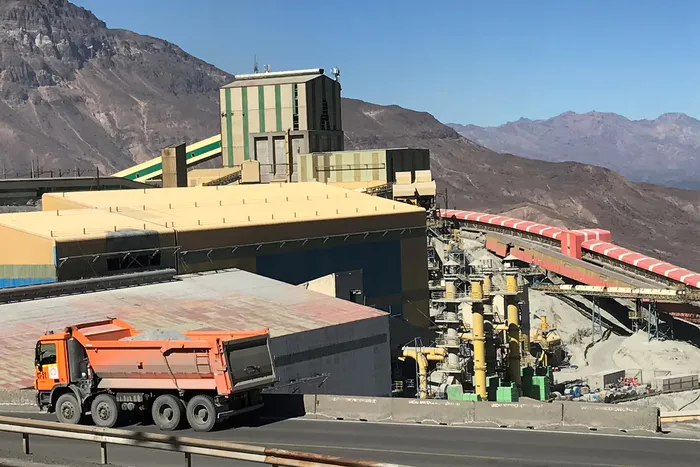
The gold is there. The question that has haunted the Bradshaw Mountains for over a century is whether anyone can actually keep it.
Recent sampling at the historic McCabe-Gladstone mine complex in Arizona has returned values as high as 34.7 grams per tonne (g/t) of gold. To the uninitiated, that number is electric. In an era where open-pit mines often scrape by on 1 g/t, hitting double digits in an underground vein suggests a high-grade treasure chest. But for those of us who have spent decades watching junior miners tilt at windmills in the desert, these assays are merely the first chapter of a very difficult book. The dirt in Yavapai County is rich, but the history of the McCabe mine is a graveyard of capital and broken equipment.
Investors are currently staring at results from a 48-sample grab program conducted by Gold79 Resources. The data confirms that the mineralized system remains intact. It hasn't been "mined out." However, the path from a high-grade rock chip to a profitable gold bar is blocked by the ghosts of 1900s engineering, complex metallurgy, and the brutal economics of narrow-vein mining.
The Geology of High Stakes
The McCabe-Gladstone system is not a simple deposit. It is a series of shear-hosted quartz-sulfide veins. These veins are narrow, dipping steeply into the earth, and they don't give up their contents easily.
In the early 20th century, the mine produced roughly 60,000 ounces of gold, along with significant silver and copper. Miners back then followed the "high-grade" by hand, chasing the richest strings of ore while leaving the lower-grade material behind. This leaves modern explorers with a Swiss-cheese problem. They have to figure out what the old-timers missed, what they couldn't reach, and if the remaining pockets are large enough to justify the massive cost of modern dewatering and shaft stabilization.
The recent sampling focused on the Gladstone vein, where researchers found surface expressions of mineralization extending far beyond the old workings. One specific sample yielded 34.7 g/t gold and 78 g/t silver. Another hit 14.9 g/t gold. These are not "average" grades across a wide area; they are targeted samples of the vein material itself. The technical challenge isn't finding the gold—it is proving that these veins have the continuity to support a mechanized mining operation.
The Problem with Grab Samples
We need to be honest about the data. Grab samples are, by definition, selective. A geologist walks up to an outcrop or a waste pile, sees a piece of rock that looks promising, and puts it in a bag. While these results prove the fertility of the system, they do not represent the average grade of the entire mountain.
The industry refers to this as "nugget effect" or "sampling bias." To move the needle, a company needs to drill. They need to prove that the 34 g/t gold isn't just a localized pocket but part of a consistent "shoot" that carries that grade for hundreds of meters. Without diamond drilling to intersect the vein at depth, these high-grade surface hits are just bright lights in a dark room.
The Shadow of Environmental Liability
You cannot talk about mining in Arizona without talking about water. The McCabe mine has been dormant for long stretches, and its underground workings are likely flooded.
Bringing a historic mine back to life involves a regulatory gauntlet that the prospectors of the 1900s never faced. Any plan to reopen the shafts requires a massive water-management strategy. You have to pump the water out, treat it to modern standards, and ensure that the legacy tailings—the crushed rock left over from previous eras—don't leak heavy metals into the local watershed.
The Bradshaw Mountains are rugged and beautiful. They are also increasingly populated by people who moved there for the scenery, not for the sound of crushers and haul trucks. The "Social License to Operate" is often more expensive than the diesel fuel. A company can have the best gold grades in the world, but if they cannot navigate the National Environmental Policy Act (NEPA) or satisfy the Bureau of Land Management (BLM), that gold stays in the ground.
Metallurgy is the Silent Killer
High-grade gold is often "refractory," meaning it is locked inside sulfide minerals like pyrite or arsenopyrite. You can't just pour some chemicals on it and expect the gold to pop out.
In the old days, they used primitive smelters or mercury amalgamation. Today, the process is far more clinical and expensive. If the gold at McCabe is tied up in complex sulfides, the "recovery rate" becomes the most important number in the spreadsheet. If you find $2,000 worth of gold in a ton of rock but it costs $1,800 to get it out because of complex chemistry, you don't have a mine. You have a very expensive hobby.
The recent report mentions "sulfide-rich quartz veins." This is a signal to those who know the industry. It means the processing plant will need a flotation circuit or perhaps even more intensive treatment to separate the precious metals from the base metals.
The Arithmetic of the Narrow Vein
Modern mining loves scale. Companies prefer to blast massive amounts of low-grade rock because they can use giant trucks and automated systems to keep costs down. McCabe is the opposite.
Narrow-vein mining is a surgical procedure. It requires skilled labor, smaller equipment, and a much higher degree of precision. You are essentially trying to follow a thin ribbon of wealth through a mountain of waste rock. If the vein is one meter wide, but your machine is two meters wide, you are diluting your gold by 50% the moment you take a bite out of the wall.
This is why the grades must be high. A 5 g/t grade might work in a massive open pit in Nevada, but at a site like McCabe, you likely need consistent grades above 10 g/t to offset the "narrow-vein penalty." The recent 34.7 g/t sample is a great start, but the project needs to show that the vein doesn't pinch out or disappear after ten meters.
The Capital Chasm
Junior exploration companies operate in a cycle of "raise and spend." They raise money from investors, spend it on geologists and drills, and hope the results are good enough to raise more money.
The current venture capital environment for mining is cold. Investors are wary of the "historic mine" narrative because they have seen so many of them fail to reach commercial production. To bridge the gap from "high-grade samples" to a "feasibility study," Gold79 and its peers need millions of dollars in a market that currently prefers tech or energy.
Why Arizona Matters Again
Despite the hurdles, the location provides a distinct advantage. Arizona is one of the top mining jurisdictions in the world. There is a deep pool of local talent, a clear (if rigorous) legal framework, and a physical infrastructure that many remote Canadian or Australian projects lack.
The McCabe mine is located near Humboldt, within striking distance of power and roads. This reduces the "initial capital" required compared to a "greenfield" project in the middle of a jungle or a tundra. You aren't building a city; you are refurbishing a site that already has a footprint.
Furthermore, the rise in gold prices has changed the math. Gold at $1,200 an ounce made McCabe a fantasy. Gold sustained above $2,300 an ounce makes it a legitimate business proposition. The "margin of error" for these narrow veins expands as the price of the final product climbs.
The Investigative Verdict
We are seeing a classic "high-risk, high-reward" setup. The technical team has successfully proven that the mineralization at McCabe-Gladstone is not a fluke of history. The high-grade gold is physically present.
However, the "definitive" nature of this project will not be decided by a rock hammer or a grab sample. It will be decided by the drill bit and the balance sheet. If the upcoming drilling programs show that these veins have vertical and lateral continuity—meaning they are thick enough and long enough to be mined by machines—then Arizona might see a return to its glory days of underground gold production.
If the drilling shows the veins are "poddy" or disconnected, it will join the long list of historic mines that look great on a map but bankrupt anyone who tries to touch them.
The next six to twelve months of diamond drilling will be the moment of truth. Watch the "true width" of the intercepts, not just the "grade." A thin stringer of gold is a curiosity; a wide, continuous vein is a business.
The mining industry is littered with projects that had "high-grade" surface samples but nothing underneath. The McCabe mine has the pedigree and the recent numbers to suggest it is different, but the mountain doesn't give up its secrets for free. You have to pay in sweat, capital, and a massive amount of engineering patience.
The assays are the bait. The drilling is the hook. The metallurgy is the struggle to bring the fish onto the boat.
Gold79 is currently in the "bait" phase. It is an enticing lure, backed by genuine geological data, but the hard work of proving a resource is only just beginning. The Bradshaw Mountains have swallowed fortunes before, and they will only yield this time if the explorers respect the complexity of the Narrow-vein reality.
Stop looking at the 34.7 g/t headline and start looking for the core recovery percentages in the next technical report. That is where the real story of the McCabe mine will be told.