A single gram of gold fits easily on the tip of a finger. It is cold, heavy, and deceptively clean. To a trader in São Paulo or a jeweler in London, it represents stability. But follow the trail of that gram backward, past the middleman and the bush pilots, and you arrive at a wound in the earth that refuses to heal.
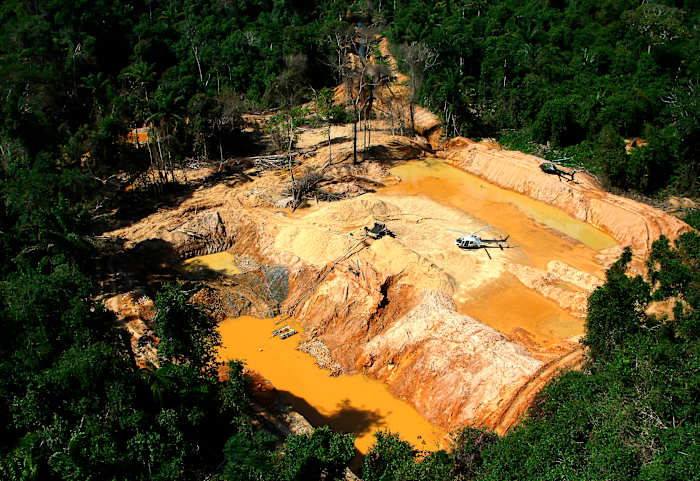
Beneath the canopy of the Brazilian Amazon, the ground is being flayed. This isn't the organized, industrial extraction of a corporate mine. This is the garimpo—wildcat mining. It is an anarchic, muddy rush for wealth that is currently swallowing the forest at a rate that defies logic.
Consider a man we will call João. He isn't a villain in a suit; he is a man with a rusted excavator and a desperate need to feed his family. He represents thousands of others who have traded the safety of the city for the fever of the jungle. João doesn't see "deforestation" as a statistic. He sees a wall of ancient mahogany and ceiba trees that stands between him and the vein of gold dust buried in the sediment.
So, he cuts.
The Architecture of a Scar
When the trees fall, the silence of the Amazon is replaced by the scream of diesel engines. The process of wildcat mining is visceral. Miners use high-pressure hoses to blast away the riverbanks, turning clear water into a thick, opaque soup of silt. This isn't just a local mess. The sediment travels. It chokes the gills of fish. It buries the spawning grounds of species that have existed since before the first human stepped foot in the Americas.
Data from satellite monitoring shows that the "scarring" isn't random. It follows the water. In the last few years, the footprint of these mines has expanded by over 400% in certain indigenous territories. The forest doesn't just disappear; it is replaced by a moonscape of craters and stagnant pools. From ten thousand feet up, the Amazon looks like a green velvet rug that someone has repeatedly burned with a cigarette.
The tragedy of the garimpo is that it is a temporary theft for a permanent loss. Once the topsoil is washed away and the mercury is introduced, the forest cannot simply "grow back" in a human lifetime. The complex fungal networks and nutrient cycles that sustain the jungle are pulverized.
The Liquid Silver Death
If the chainsaws are the teeth of this crisis, mercury is its blood.
Mercury is a fascinating, terrifying substance. It is the only metal that remains liquid at room temperature, shimmering like a fallen star. In the mines, it serves a single, crude purpose: it binds to gold. Miners mix liquid mercury into the muddy slurry by hand. The mercury finds the tiny, microscopic flakes of gold and clings to them, forming an amalgam.
Then comes the fire.
The miner takes this silver-gold ball and heats it with a blowtorch. The mercury evaporates into a toxic cloud, leaving behind a porous nugget of gold. The miner breathes that cloud. His children, playing nearby in the dirt, breathe it too. But the atmosphere is only the first stop. The vapor eventually cools, turns back into liquid, and falls into the rivers.
This is where the invisible stakes become lethal. In the water, bacteria transform elemental mercury into methylmercury—a potent neurotoxin. It enters the food chain at the very bottom. A small fish eats the bacteria. A larger fish eats a hundred smaller fish. By the time a Yanomami tribesman catches a predatory fish for his family's dinner, the concentration of mercury has been magnified thousands of times.
There is no warning. Methylmercury doesn't taste like anything. It doesn't smell. It simply waits. It crosses the blood-brain barrier. It crosses the placenta. In many indigenous villages along the Tapajós River, the impacts are already visible in the staggering gait of the elderly and the developmental delays of the young. A whole generation is being dimmed before they even reach adulthood, all for the sake of a metal they will never own.
The Myth of the Empty Forest
There is a persistent, dangerous idea that the Amazon is a "wilderness"—a vast, empty space waiting to be utilized. This perspective is what allows the mining rush to persist. But the forest is a crowded house.
When a mining camp moves into a