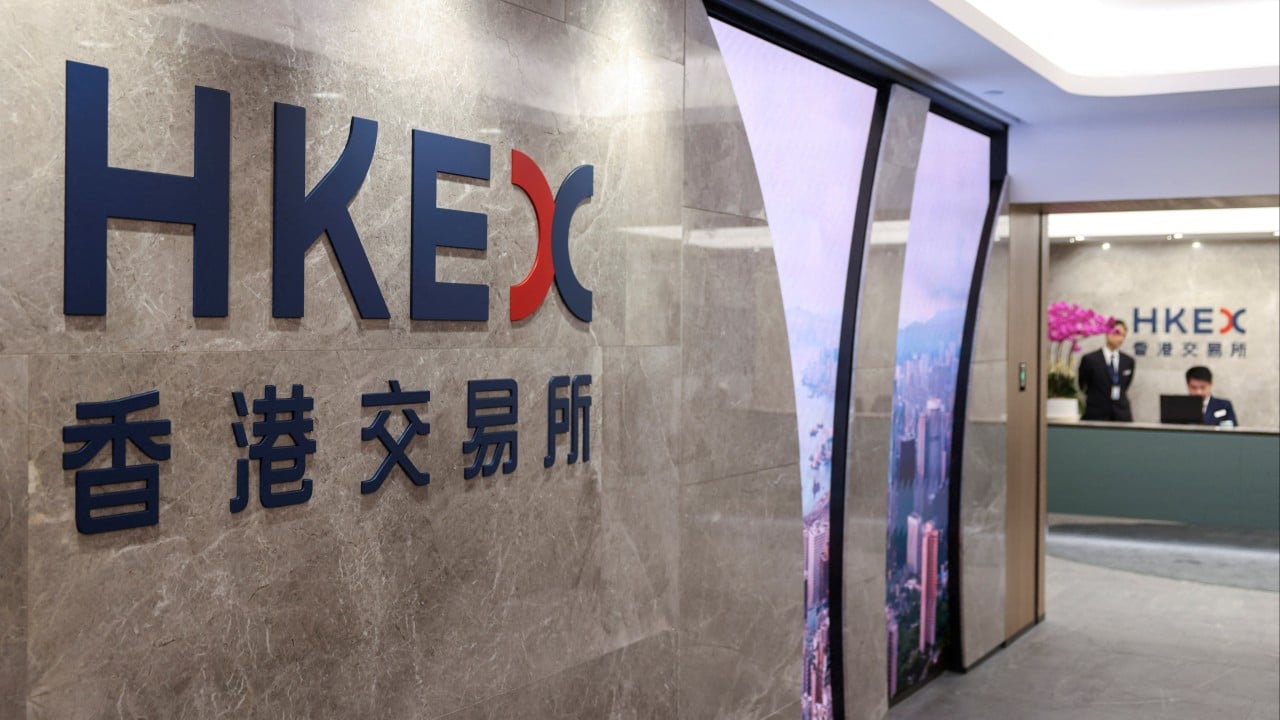
A humid Tuesday in Hong Kong usually tastes like diesel fumes and dim sum steam. But inside the glass-and-steel cathedral of the Hong Kong Exchanges and Clearing (HKEX), the air is filtered, chilled, and smells of nothing but quiet, high-stakes ambition. For decades, this room has been the playground of giants. If you weren't a multibillion-dollar bank or a global property developer with a lineage stretching back to the colonial era, you didn't just lack a seat at the table. You weren't even allowed in the building.
The gatekeepers had a rule. It was a simple, rigid metric: profit. To list on the main board, a company had to prove it could already spin straw into gold. This worked brilliantly for the old world. It favored the brick-and-mortar empires and the established shipping magnates. But it created a silent, suffocating vacuum for the dreamers.
Think of a founder—let’s call her Mei. Mei doesn't own a fleet of ships. She doesn't own a single square foot of Victoria Peak real estate. What she has is a laboratory in a cramped industrial building in New Territories and a patent for a specialist chip that could theoretically double the efficiency of quantum computing. She has intellectual property that could redefine the next century. What she doesn't have, yet, is a track record of massive annual profits.
Under the old rules, Mei was invisible.
To the exchange, she was a risk. To the global market, she was a ghost. This disconnect wasn't just a local technicality; it was a systemic failure to recognize where the pulse of the modern economy actually beats. The 2018 reforms were a start, opening the door for pre-revenue biotech firms. It was a crack in the dam. Now, the dam has finally broken.
The Weight of the New Rules
The HKEX has recently executed its most significant structural shift in half a decade, specifically targeting what they call "Specialist Technology Companies." This isn't just bureaucratic jargon. It is an admission that the definition of value has fundamentally changed. The exchange is now welcoming firms across five key sectors: next-generation IT, advanced hardware, advanced materials, new energy and environmental protection, and novel food and agriculture technologies.
The barrier to entry used to be a mountain. Now, it is a manageable hill.
For companies still in the "commercialization stage"—meaning they are making products but haven't hit the big leagues of revenue yet—the market capitalization requirement has been lowered to HK$6 billion. For those even earlier in the journey, the "pre-commercialization" firms, the threshold is HK$10 billion.
Compare this to the previous atmosphere of exclusion. Before these tweaks, a company like Mei’s would have been forced to look toward New York or perhaps the STAR market in Shanghai. They would have taken their talent, their patents, and their future tax contributions elsewhere. Hong Kong was watching its future walk out the door because it was too obsessed with its past.
The Invisible Stakes of the Listing Gap
Why does this matter to someone who doesn't trade stocks? Because an exchange is more than a scoreboard for the wealthy. It is an ecosystem. When a specialist tech firm lists, it isn't just about the founders getting a payout. It’s about the "liquidity event" that allows early-stage venture capitalists to get their money back so they can reinvest it in the next Mei. It’s about the thousands of high-skilled jobs created when a lab expands into a factory.
When the rules are too tight, the ecosystem suffocates.
We saw this play out in the mid-2010s. While Silicon Valley was minting unicorns that stayed private for a decade, Hong Kong remained a bastion of the "old way." The city was wealthy, yes, but it was becoming a museum of 20th-century success. The new reforms are an attempt to turn the museum back into a laboratory.
The challenge, however, is the "specialist" part of the name. These aren't your neighborhood businesses. They are complex. If a company claims to have a breakthrough in "novel food technology," how does a retail investor in a coffee shop in Mong Kok know if it’s a revolution or a scam?
This is where the HKEX has had to perform a delicate balancing act. They lowered the door handle, but they didn't take the lock off. To list under these new rules, a company must have at least two to five years of R&D investment history. They must prove that at least 15% to 50% of their total operating expenditure has gone toward research.
It is a filter designed to catch the pretenders while lifting the innovators.
The Human Cost of Caution
There is a specific kind of heartbreak in the tech world: the "Bridge to Nowhere." It happens when a brilliant team solves a massive problem—say, a way to recycle lithium-ion batteries with zero emissions—but runs out of cash six months before they can scale. They are too big for seed funding and too "unproven" for the public markets.
They die in the gap.
The HKEX reforms are, essentially, a bridge built over that gap. By allowing these firms to tap into the massive pools of global capital waiting in Hong Kong, the exchange is providing oxygen to industries that are traditionally "capital intensive." You cannot build a satellite constellation or a carbon-capture plant in a garage with a credit card. You need the public. You need the market.
Critics often point to the volatility of tech stocks as a reason to keep the gates closed. They remember the dot-com bubble. They see the wild swings of pre-revenue biotech. And they aren't wrong. Tech is messy. It is unpredictable. It involves a high rate of failure.
But consider the alternative.
A market that only lists "safe" companies is a market that is slowly dying. It is a garden where you only plant fully grown trees and wonder why nothing new ever sprouts. The risk of listing a specialist tech company that might fail is real, but the risk of not listing the next generation of global leaders is a mathematical certainty of irrelevance.
A New Geometry for the City
Walking through Central today, the landscape looks the same. The IFC towers still pierce the clouds. The Star Ferry still chugs across the harbor. But the underlying geometry of the city's wealth is shifting.
The "New Economy" now makes up a massive portion of the exchange's turnover. We are moving away from a world where "value" means a physical building you can touch and toward a world where "value" is an algorithm, a chemical formula, or a more efficient way to capture the sun's energy.
This isn't just about Hong Kong competing with Singapore or London. It’s about a fundamental realization that the winners of the next fifty years will not be the ones who owned the most land, but the ones who facilitated the most ideas.
The gatekeepers have stepped aside. They realized that the "small" firms they were keeping out were actually the giants of tomorrow, just viewed from a distance. The door is open. The air inside the exchange still smells like nothing, but for the first time in a long time, it feels like it’s crackling with the static of something new.
The ghosts are finally being invited in to lead.
Would you like me to look into the specific performance of the first wave of companies that have utilized these new listing rules?