The smell of unleaded gasoline does not wash out easily. It clings to the weave of cotton, settles into the creases of your knuckles, and sits heavy at the back of your throat long after the fumes have dispersed into the humid Georgia night.
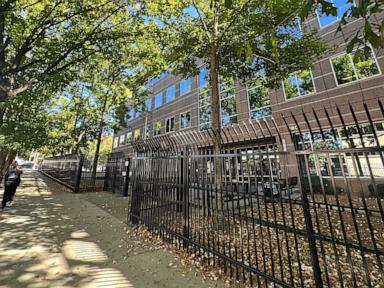
Imagine, for a moment, a man standing on a quiet stretch of concrete in downtown Atlanta. Let’s call him Marcus—a composite, a hypothetical stand-in for any citizen pushed to the edge of reason by the relentless churn of modern political outrage. It is past midnight. The city’s usual daytime roar has subsided into the low, metallic hum of interstate traffic and distant sirens. In his hand, Marcus holds a glass bottle filled with accelerant, a rag stuffed tightly into its neck. Across the street stands a squat, unremarkable office building housing field operations for U.S. Immigration and Customs Enforcement.
To Marcus, in that fractured second before a lighter flicks, the building is not concrete and drywall. It is a symbol. It is an abstraction onto which he has projected every headline, every cable news argument, every sleepless night spent scrolling through an endless feed of human misery and institutional coldness.
Then the glass shatters.
In the real world, far removed from any hypothetical mind-reading, federal prosecutors in the Northern District of Georgia filed charges against a local man accused of doing precisely that—hurling an improvised incendiary device, a Molotov cocktail, at an Atlanta ICE facility. The police blotters and wire reports reduced the event to its barest, coldest anatomy. A suspect arrested. A federal building targeted. Charges of arson and possession of an unregistered destructive device brought to bear. No injuries reported. Property damage contained.
Read those dry summaries and you might feel a flicker of shock, followed immediately by the numb, practiced shrug we have all developed to survive the daily news cycle. Another headline. Another extreme act. Move on.
We cannot afford to move on. Not because the fire burned the building down—it didn’t—but because of what happens to a society when glass and gasoline become substitutes for arguments, and when federal clerks and security guards become collateral damage in a war of symbols.
The Architecture of an Escalation
To understand how an ordinary Georgia resident ends up facing decades in federal prison over a homemade firebomb, you have to look at the slow, invisible erosion of how we process anger.
I have spent years covering federal courthouses and walking the perimeter of government buildings in the aftermath of civil unrest. You learn quickly that physical structures have a strange duality. From the outside, behind tinted glass and reinforced bollards, an ICE field office looks like a fortress—impenetrable, monolithic, indifferent. People pass by on their morning commute without glancing up. Yet step inside past the metal detectors, and that monolith dissolves into mundane reality. You find fluorescent lights humming over worn carpet. You find a night-shift security guard drinking lukewarm coffee from a thermos, checking the clock until he can go home to his kids. You find janitors emptying trash bins, administrative assistants filing paperwork, and detainees waiting in cold rooms for hearings that will decide the rest of their lives.
When someone throws a Molotov cocktail at a building like that, they are aiming at an idea, yet they are striking at flesh and blood.
Think of political rage like a pressurized boiler. In a healthy democracy, debate, protest, voting, and journalism act as relief valves. They let the steam escape noisily, sometimes messily, without rupturing the tank. Over the past decade, however, our information ecosystem has systematically welded those valves shut. Algorithms reward fury over nuance. Outrage becomes a currency, and nuance looks like cowardice. When every political disagreement is framed as an existential apocalypse, the human brain stops treating opponents as neighbors who are wrong and starts treating them as monsters who must be destroyed.
Under those conditions, an improvised incendiary device stops looking like a felony to the person holding it. It starts looking like a moral imperative.
What the Law Actually Sees
When the flames are extinguished and the yellow crime-scene tape goes up, the romanticism of rebellion evaporates instantly, replaced by the cold, mechanical weight of the federal justice system. Many people hear the phrase "Molotov cocktail" and picture a relic from twentieth-century newsreels—street skirmishes in distant capitals, black-and-white footage of barricades and smoke. They rarely grasp how severely American federal law treats the object itself.
Under the National Firearms Act and federal arson statutes, a glass bottle filled with gasoline and fitted with a wick is not categorized as a simple act of vandalism or even a standard weapon. The law classifies it as a destructive device—placing it in the exact same legal tier as a hand grenade, a landmine, or a pipe bomb.
Consider what happens next in a case like the one in Atlanta. The moment a lighter touches that rag, jurisdiction shifts from local municipal courts to the Department of Justice and the Bureau of Alcohol, Tobacco, Firearms and Explosives. There is no slap on the wrist. A conviction for maliciously attempting to damage or destroy federal property by fire carries a mandatory minimum sentence of five years in federal prison, stretching up to twenty years—and even higher if anyone inside is injured. Possessing an unregistered destructive device adds another decade to the ledger. Federal prison offers no parole. You serve at least eighty-five percent of the sentence, every single day, behind razor wire.
One impulsive night. Twenty years of silence.
It is a terrifying equation, yet people keep solving it the wrong way. Why? Because the distance between consuming extreme rhetoric online and committing an extreme act in the physical world is much shorter than we like to admit. We tell ourselves that violence belongs only to hardened ideologues or shadowy networks. The truth, documented repeatedly in federal indictments from Portland to Atlanta, is far more unsettling. Often, the person standing on the sidewalk with a bottle of gas is someone who had no criminal record six months prior—someone who simply stayed inside an echo chamber until the walls closed in.
The Night Shift on the Other Side of the Glass
Let’s return to the street outside that Atlanta facility, shifting our perspective from the sidewalk to the lobby just inside the doors.
Imagine Elena—another hypothetical figure, built from the real testimonies of federal security contractors who guard government buildings across the South. Elena works the graveyard shift, midnight to eight. She took the job because the pay covers her mother’s insulin and leaves her mornings free to take classes at a local community college. Her shift is mostly quiet: checking badges, watching the closed-circuit monitors, walking the perimeter with a flashlight to make sure the exterior doors are latched.
When a glass bottle hits the exterior wall or bounces across the entry plaza, Elena does not see a political statement about immigration policy. She hears an explosion. She sees a flash of orange light blooming against the reinforced glass, followed by the sudden, suffocating bloom of black smoke. Her training kicks in, heart hammering against her ribs, adrenaline flooding her veins as she reaches for her radio and checks the fire suppression panel. For ten agonizing seconds, she does not know if a second bottle is coming, if someone has a rifle across the street, or if the fire will catch the electrical conduit running along the facade.
By morning, the scorch marks on the concrete are scrubbed down. A maintenance crew sweeps up the shards of amber glass. The news anchors move on to the next segment.
Elena still flinches every time a delivery truck backfires on the interstate.
That is the invisible cost that never makes it into a three-paragraph wire story. Violence against public buildings is routinely defended by extremists on every side of the political spectrum as "victimless" because it targets property rather than people. That distinction is a lie. Fire does not read political manifestos. Gasoline does not check IDs at the door to separate policymakers from night-shift janitors, security guards, or the very immigrants detained inside the building who have no way to unlock their doors if smoke fills the ventilation shafts.
The Illusion of the Shortcut
History offers a brutal, consistent verdict on political arson: it never achieves what its perpetrators intend. Instead, it hands a blank check to the exact forces they claim to oppose.
Look back at the late 1960s and early 1970s in the United States, a period when bombings and arson attacks against federal buildings, draft boards, and corporate offices became tragically routine. Thousands of incendiary devices were planted across the country in the name of ending war or dismantling systemic injustice. Did those fires accelerate reform? No. They terrified ordinary working-class voters, discredited peaceful organizers who had spent years building coalitions, and triggered a massive expansion of federal surveillance and policing that lasted for generations.
Violence is an amplifier for the loudest, hardest voices in the room, and a silencer for everyone else. When a brick or a firebomb goes through a window in Atlanta, the legitimate, urgent debates surrounding immigration enforcement—debates about due process, family separation, border security, and humanitarian obligations—instantly vanish from the front page. Nobody talks about policy the morning after an arson attack. They talk about security perimeters, reinforced glass, and federal crackdowns.
The person holding the match thinks they are lighting a beacon. In reality, they are burning down the only bridge where genuine persuasion can happen.
Sitting With the Discomfort
I will be honest about something that troubles me whenever I write about incidents like this: it is deeply uncomfortable to hold two truths in your hands at the exact same time.
The first truth is that systems can fail people profoundly, and the anger people feel toward government institutions—whether over immigration, policing, taxation, or civil rights—often springs from real, agonizing pain. Dismissing that pain as mere madness is lazy.
The second truth is that the moment anger crosses the threshold into physical destruction, it ceases to be a force for justice and becomes an engine of cruelty.
We live in a cultural moment that hates holding two truths at once. We want heroes and villains, clean narratives where one side holds a monopoly on righteousness and the other deserves whatever comes its way. If you condemn the man who threw the Molotov cocktail, someone will accuse you of excusing every flaw of the agency he targeted. If you try to understand the desperation that drove him to the street that night, someone else will accuse you of justifying domestic terrorism.
Let them make the accusation. Clarity requires standing in the middle of that crossfire without flinching.
Real courage in a fractured republic is painfully unglamorous. It looks like showing up to tedious city council meetings. It looks like drafting legal challenges that take three years to wind through appellate courts. It looks like knocking on doors, registering voters, donating to legal aid clinics, and having difficult, respectful conversations with neighbors who see the world entirely differently than you do. None of those things produce a dramatic flash of light on a security camera at two in the morning. None of them go viral. They simply work, slowly and imperfectly, without leaving broken glass on the pavement.
What Remains After the Smoke Clears
Walk past that Atlanta building today and you would hardly know anything happened. Traffic moves briskly along the avenue. Pedestrians hurry past with headphones on, staring at their phones. The concrete has been power-washed, the air smells once again of exhaust and Georgia pine, and the gears of the federal bureaucracy grind forward without missing a beat.
Yet somewhere in a federal detention cell, a man is waking up to the realization that his life has been permanently severed into a before and an after. Somewhere across town, a night-shift worker is double-checking the locks on her doors before trying to sleep through the daylight hours. And across the country, millions of people are scrolling past the headline, feeling their own quiet reservoirs of resentment rise another millimeter toward the brim.
A glass bottle costs less than a dollar. A gallon of gasoline costs three. A plastic lighter costs ninety-nine cents. For less than five dollars, anyone can manufacture a weapon capable of ruining dozens of lives in under three seconds—and the only thing standing between our streets and that spark is the fragile, daily decision we make to keep talking instead of burning.