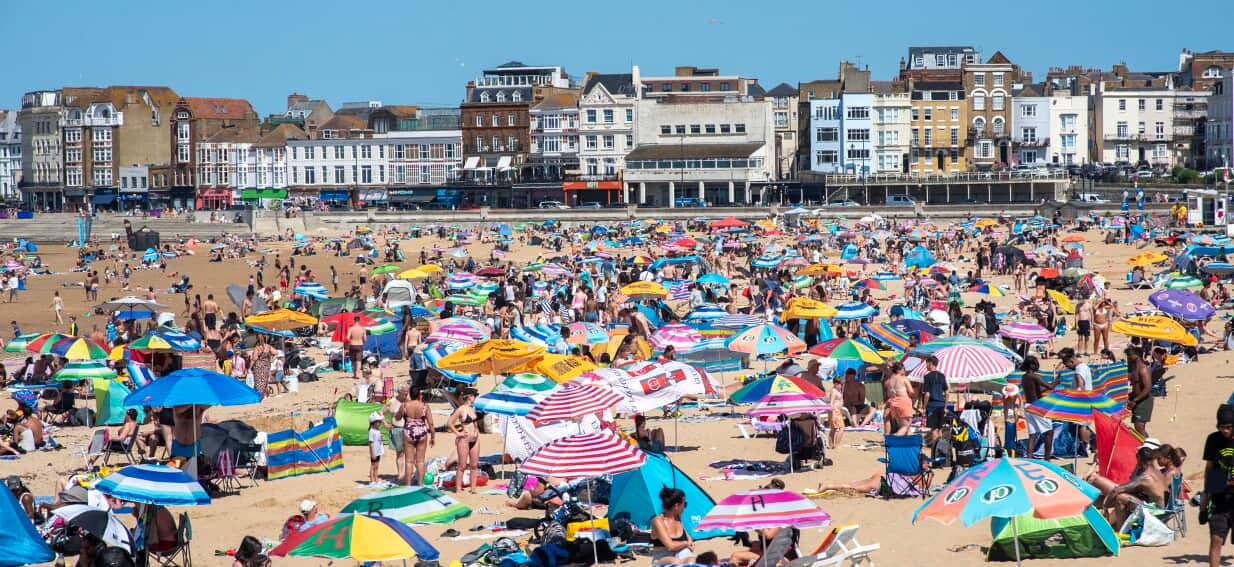
The UK is sweltering. Brick terraces have turned into ovens, tarmac is softening, and the rail network is buckling under temperatures the country simply wasn't built to handle. When an unprecedented heatwave hits Britain, the immediate reaction is often a mix of panic and a desperate scramble for portable air conditioning units. But relying solely on energy-hungry cooling tech is a trap.
We forget that humanity has built massive, thriving metropolises in some of the most punishing climates on Earth without a single volt of electricity.
Looking at how the world's biggest cities coped with extreme heatwaves in the past reveals that our ancestors weren't just sweating it out. They engineered their way through it. They used brilliant architecture, communal adaptations, and radical urban planning. If the UK wants to survive a permanently hotter future, it needs to stop looking forward to better tech and start looking backward at historical blueprinting.
The Persian Engineering That Defied Desert Heatwaves
Step into the history of Yazd. Located in central Iran, this ancient silk road city routinely sees summer temperatures soar past 40°C. Long before modern cooling, Yazd became a architectural marvel of climate adaptation.
The city survived by mastering the movement of air and water.
Architects built structures called badgirs, or windcatchers. These are vertical towers with openings at the top that catch even the slightest breeze high above the ground. The tower channels the cool air downward into the living spaces. At the same time, hot air inside the house rises and escapes through the opposite side of the tower. It is a completely passive, zero-emission ventilation system that runs 24 hours a day.
But they didn't stop at air. They combined windcatchers with qanats, which are subterranean aqueducts bringing snowmelt from distant mountains right under the city.
The windcatchers directed harsh desert air down into these underground water chambers. The air cooled rapidly through evaporation before entering the home. Think of it as a massive, city-wide geothermal cooling network built over a thousand years ago.
Western urban planners often dismiss ancient techniques as primitive. That's a mistake. The physics behind a Persian windcatcher work just as well in a warming European city as they do in the Middle East.
How Rome and Tokyo Kept Cool Through Social Rituals
Engineering is only half the battle. Surviving extreme heat also requires a cultural shift. Historical urban centers survived because their citizens changed how they lived, worked, and socialized during high-temperature months.
Take ancient Rome. The Mediterranean summer is brutal. Wealthy Romans fled to villas in the hills, but the working class stayed in dense urban insulae. To survive, Roman society adapted its daily rhythm. The city operated on a split-shift schedule. Work started at dawn and wrapped up by noon. The hottest hours of the afternoon were reserved for rest, a precursor to the Mediterranean siesta.
Public spaces were also designed for thermal relief.
The Roman empire poured immense resources into public baths (thermae) and monumental fountains. These weren't just places to get clean. They were vital cooling centers where thousands of citizens gathered daily to lower their core body temperatures. The constant flow of water through fountains created localized microclimates, dropping temperatures in crowded piazzas by several degrees through evaporative cooling.
Centuries later, Edo-period Tokyo (then called Edo) faced similar suffocating summer humidity. The Japanese urban working class relied on uchimizu.
This practice involved sprinkling water onto the streets outside homes and shops at dusk. It sounds simple. Kinda superficial, right? It actually relies on physics. As the water evaporates from the hot earth, it absorbs latent heat from the ground and the air, lowering the immediate neighborhood temperature.
More importantly, it was a collective civic duty. Entire neighborhoods stepped outside together to cool their shared environment. It created a psychological sense of community solidarity against the elements.
The Lost Vernacular of Pre-AC American Cities
You don't have to look back thousands of years to find smart heatwave strategies. Look at American cities in the late 19th and early 20th centuries. Before Willis Carrier invented modern air conditioning, cities like New Orleans, New York, and Charleston had to design for survival.
Southern American architecture thrived on the "shotgun house" design and the deep wraparound porch. Shotgun houses are long, narrow structures where the rooms are lined up one behind the other. Doors at the front and back line up perfectly. When a heatwave hit, residents opened every door and window, creating a wind tunnel effect that pulled air through the entire structure.
In crowded northern cities like New York, tenements were notorious death traps during heatwaves. The historic 1896 heatwave killed over 1,500 New Yorkers in ten days.
That disaster forced a radical shift in how city residents used urban space. Thousands of people abandoned their stifling indoor rooms to sleep on fire escapes, rooftops, and in public parks like Central Park and Battery Park.
The city government responded by keeping public parks open all night and turning on fire hydrants to cool down children in the streets. They recognized that when private housing fails to protect people from extreme weather, public infrastructure must step in as a safety net.
Why Modern Cities are Failing the Heat Test
Honestly, modern cities are going backward. We built a total reliance on mechanical air conditioning, which allowed architects to ignore local climates completely.
We started building glass towers in deserts and concrete jungles without shade. This created the Urban Heat Island effect.
Hard surfaces like asphalt and concrete absorb solar radiation during the day and radiate it back out at night. This prevents cities from cooling down after dark.
Worse, air conditioning units take the heat from inside a building and dump it right out onto the street. A study published in the journal Journal of Geophysical Research: Atmospheres showed that AC exhaust can raise outdoor evening temperatures in a city by more than 1°C. It is a vicious cycle. The hotter the city gets, the more people use AC, which makes the outside air even hotter.
The UK faces a specific vulnerability here. Its housing stock is among the oldest in Europe. Those thick brick walls are fantastic at retaining heat during a freezing winter. But during a prolonged summer heatwave, those same bricks bake in the sun all day and keep radiating heat indoors all night. Without retrofitting, these homes become dangerous.
Actionable Steps to Heatproof Your Environment Right Now
Waiting for national infrastructure upgrades takes too long. If you are dealing with unprecedented heatwaves, you can implement historical and modern passive cooling strategies in your own living space today.
- Master night-time purging: Do not keep windows open all day. That just lets hot air inside. Close windows and draw blinds the moment the outside temperature rises above your indoor temperature. Open everything up at night when the air cools down to flush the trapped heat out.
- Deploy DIY evaporative cooling: Hang wet sheets in front of open windows when a evening breeze picks up. The incoming air will drop in temperature as it forces the water to evaporate, mimicking the old Persian qanat system.
- Create a micro-shade barrier: If you have outdoor space or a balcony, pack it with leafy plants. Plants don't just block sunlight. They actively cool the air around them through transpiration, which is essentially plant sweating.
- Ditch the evening appliances: Incandescent bulbs, ovens, dishwashers, and large TVs generate massive amounts of internal heat. Turn them off. Eat cold meals during peak heat days to keep your indoor air baseline low.
Urban survival during a heatwave isn't a new challenge. The answers aren't hidden in future technologies that consume massive amounts of grid power. They are written clearly in the architecture of the past. Stop waiting for the AC to save you and start adapting your space.