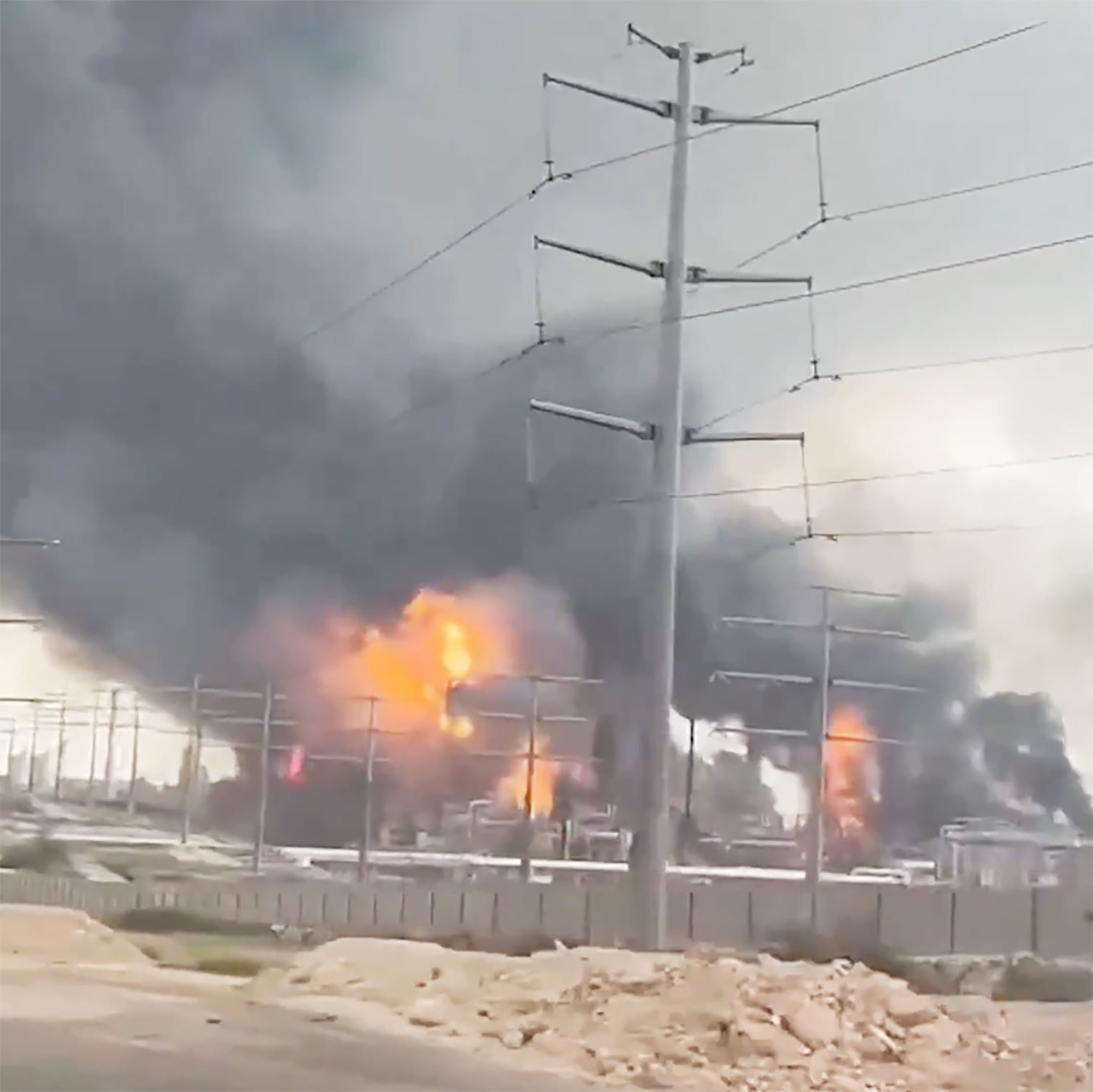
The global energy market just hit a tripwire. If you've looked at your local gas station prices or your heating bill lately, you're seeing the ripples of a much larger explosion. When key Iranian gas infrastructure goes up in flames, it isn't just a regional disaster. It's a supply chain heart attack. We aren't talking about a minor disruption here. We're looking at the potential for a full-scale recalibration of how the world pays for power.
Iran sits on the world's second-largest natural gas reserves. That's not a statistic to take lightly. When missiles or sabotage hit these facilities, the "risk premium" on every barrel of oil and every cubic foot of gas globally spikes instantly. Traders in London and New York don't wait for the fire to be put out. They buy. They hedge. And you pay the difference at the pump.
The Real Reason Your Energy Bill Is Spiking
Most people think energy prices are just about supply and demand. That’s a oversimplification. In reality, the market runs on fear and geography. Iran’s energy sector is the backbone of its economy, but it’s also a massive gear in the global machine. When tension in the Middle East escalates to the point of physical strikes on gas refineries, the market assumes the worst-case scenario is already happening.
The Strait of Hormuz is the world's most important oil transit chokepoint. About 20% of the world's total petroleum liquids consumption passes through it. But it's also a vital artery for Liquefied Natural Gas (LNG). If Iran decides to squeeze that transit point in response to hits on its own soil, the global economy enters a dark room with no flashlight.
We've seen this play out before, but the current escalation feels different. It’s more direct. It’s more kinetic. When a refinery in Asaluyeh or a pipeline in the Chaharmahal and Bakhtiari province gets hit, it sends a message that the era of "shadow wars" is over. We're in the era of infrastructure warfare.
Why Natural Gas Is the New Frontline
Oil gets all the headlines, but gas is what keeps the lights on and the factories running. For years, the world shifted toward natural gas as a "bridge fuel." It was supposed to be cleaner and more reliable. But that reliance created a vulnerability. Unlike oil, which you can throw on a tanker and send anywhere, gas often depends on fixed, rigid infrastructure.
Iran’s South Pars field is the largest gas field in the world, shared with Qatar. It's a massive target. If operations there slow down or stop due to conflict, the domestic Iranian market collapses, forcing them to divert what's left for survival rather than export. This creates a vacuum in the regional market that sucks in supply from elsewhere, driving up prices in Europe and Asia.
The Qatar Connection
Since Qatar shares the North Field/South Pars with Iran, any kinetic action in the Persian Gulf puts Qatari LNG at risk. This is the nightmare scenario for the European Union. After cutting ties with Russian gas, Europe became heavily dependent on Qatari and American LNG. If the "Iran war" spreads its wings over the Persian Gulf, Europe’s energy security vanishes overnight.
I’ve talked to analysts who say we’re one stray missile away from $150 oil and gas prices that would make the 2022 crisis look like a discount sale. It’s not hyperbole. It’s math.
The Infrastructure Vulnerability Nobody Talks About
We like to think of energy grids as these invincible, sprawling webs. They aren't. They're actually quite fragile. Iranian gas infrastructure is aging. It hasn't seen proper investment in decades because of sanctions. This means when a site gets hit, it doesn't just "break." It fails spectacularly because the safety systems are outdated or nonexistent.
Repairing these sites during an active conflict is nearly impossible. You can't just fly in parts from Siemens or General Electric when you're under a blockade or under fire. This leads to long-term outages. A hit that takes ten minutes to execute can take ten years to fully repair.
Mapping the Critical Hits
- Asaluyeh Hub: The nerve center of Iran’s gas industry. A major strike here would be the equivalent of taking out the power to a small country.
- The IGAT Pipelines: These are the veins of the country. If these are severed, the internal collapse of the Iranian state becomes a real possibility, leading to even more desperate military actions.
- Kharg Island: While primarily oil-focused, it’s a symbol of Iranian energy dominance. Its destruction would signal a point of no return.
How This Hits Your Wallet Directly
You might live 5,000 miles from Tehran, but your wallet is connected to their gas lines by a thousand invisible threads. When Iranian gas sites burn, the global "spot price" for LNG goes up. Even if your country doesn't buy a single drop from Iran, you're competing with the countries that now have to find a new supplier.
Think of it like a crowded restaurant. If one big table gets kicked out, they don't go home hungry. They go to the restaurant across the street—your restaurant. Now there's a line out the door, and the owner just doubled the price of the burger.
Energy is a global commodity. There’s no such thing as "energy independence" in a world where prices are set on global exchanges. If the Middle East is on fire, you're paying for the smoke.
Misconceptions About Energy Sanctions
A common mistake people make is thinking that sanctions have already "neutralized" the impact of Iranian energy. That’s wrong. Iran has been incredibly effective at using a "ghost fleet" of tankers and illicit pipelines to keep the cash flowing. They are still a major player.
Actually, the fact that they operate in the shadows makes the market more volatile. When an "official" source gets hit, we know the numbers. When a "shadow" source gets hit, the market panics because it doesn't know how much supply just vanished. Uncertainty is the primary driver of inflation.
The Geopolitical Chessboard
This isn't just about two countries fighting. It's a proxy war involving the world's largest economies. China is the biggest buyer of Iranian energy. If their supply is cut off, they start looking toward the Middle East or Russia with even more intensity.
The U.S. finds itself in a bind. On one hand, it wants to squeeze the Iranian regime. On the other, it can't afford a global energy price spike that would wreck the domestic economy during an election cycle or a period of fragile growth. It’s a tightrope walk over a pit of burning gas.
What You Should Do Now
Don't wait for the evening news to tell you that prices are going up. They already are. If you're a business owner, look at your energy contracts now. If you're a homeowner, consider that "efficiency" isn't just a buzzword anymore—it's a survival strategy.
- Lock in rates: If you have the option to lock in a fixed-rate energy contract, do it. The volatility we're seeing isn't a "blip." It's the new baseline.
- Diversify your exposure: If you're an investor, look at energy sectors that aren't tied to the Persian Gulf. Think renewables, nuclear, or North American midstream companies.
- Watch the Strait: Keep an eye on shipping insurance rates in the Strait of Hormuz. Those rates are the "canary in the coal mine" for the next big price jump.
The escalation in Iran is a signal that the old rules of energy stability are dead. We're moving into a period where energy is used as a primary weapon of war, not just a byproduct of it. Prepare for a long, expensive ride. The fires in Iran aren't just burning gas—they're burning the old economic order.
Keep your eye on the Asaluyeh hub and the daily tanker tracking data. That's where the real story is written. If the volume of transit through Hormuz drops by even 5% next week, expect a double-digit jump in your costs by the following month. There is no "back to normal" from here. There is only what comes after the smoke clears.