The air inside the concrete cage always smelled of old iron and dry paper. If you stood long enough on that corner in Wan Chai, you could hear the ghosts of wedding rings clinking against glass counters, surrendered for thirty days of breathing room.
For decades, the pawnshop was a punctuation mark of desperation. It was a looming, two-headed monster of granite and steel, shaped like a giant bat, swallowing jade bracelets, gold teeth, and heirloom cameras. People did not walk in with a smile. They walked in with their shoulders rounded, eyes fixed on the linoleum, trading their dignity for the bus fare home.
Then came the silence.
The shutters dropped. The neon bat went dark. The city, hungry and impatient, rolled its asphalt sleeves up and prepared to swallow another relic of old Hong Kong. We have all watched it happen. A neighborhood loses its skin, a family loses its anchor, and a parking lot takes the place of a memory. You can almost set your watch by the demolition crew.
Except this time, something strange happened in the dark.
Instead of turning into a glass tower of high-end luxury apartments or a sterile bank branch, the building refused to die.
The Architecture of Survival
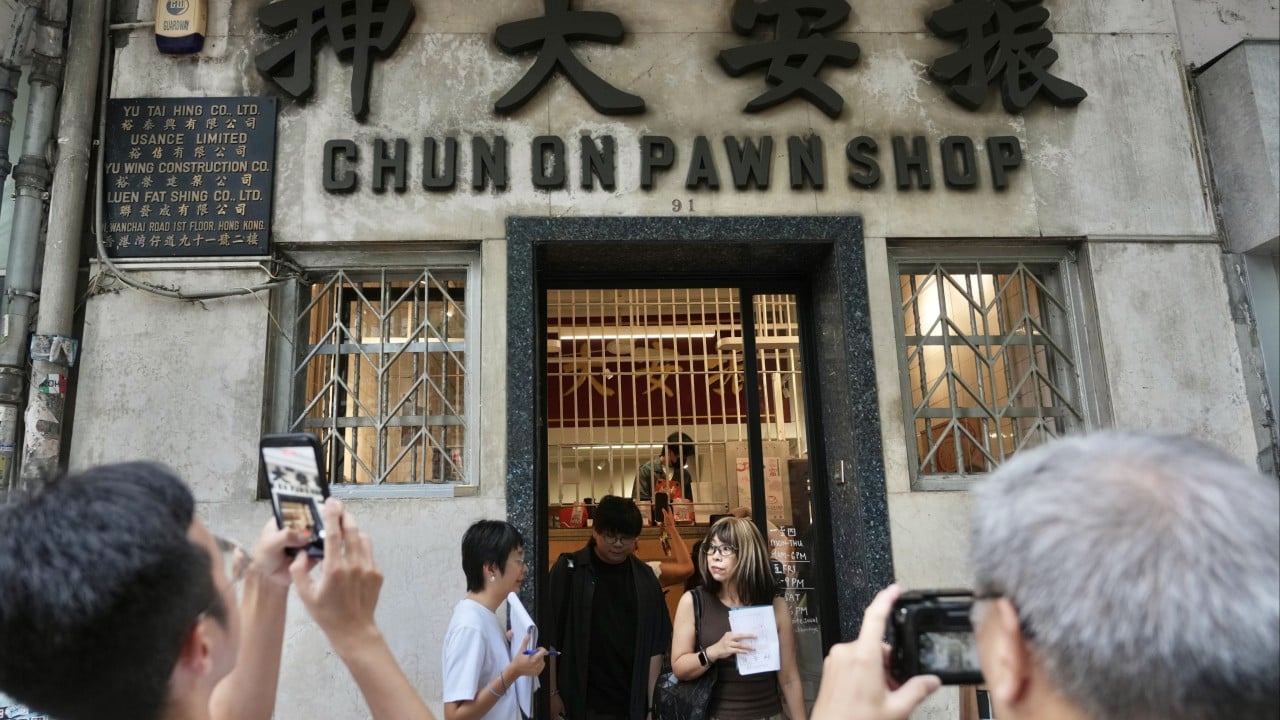
Let us talk about what a pawnshop actually is, stripped of the romantic fog. It is a machine for extracting liquidity from grief. The Woo Cheong Pawn Shop on Johnston Road was built in the 1920s, a stubborn artifact of Chinese-infused Western shophouse architecture. It stood when rickshaws ruled the asphalt. It stood through the roar of the tramways, the neon explosion of the seventies, and the dizzying, vertigo-inducing real estate booms that made Hong Kong one of the most expensive pinpricks of dirt on the globe.
To walk past it was to feel a strange, gravitational pull. The walls were thick enough to muffle the screams of a collapsing economy. The windows were small, defensive slits.
When the last pawn ledger closed, the building held its breath. Developers circled like sharks. Millions of dollars whispered against the foundation.
And then, the blueprint changed.
Imagine walking into that very same building today. The air does not smell of fear anymore. It smells of roasting coffee beans and damp cedar. The old counters where grandfathers traded gold for survival have transformed into communal tables. Where desperate whispers once bounced off iron grilles, the chatter of remote workers, neighborhood historians, and artists now fills the space.
It is a curious alchemy. We took a monument to human hard times and turned it into a living room.
A New Lease on Concrete
Change in a city like Hong Kong usually feels like a physical blow. You leave for a weekend, and a convenience store you loved is replaced by a gleaming storefront selling six-hundred-dollar lifestyle socks. Progress is a demolition derby.
Which is why the reinvention of this historic pawnshop feels like a small, quiet rebellion.
Preservation is rarely romantic in practice. It is expensive. It involves engineers arguing with municipal bureaucrats over load-bearing timber and fire codes. It requires someone to look at a structure that makes zero economic sense in a per-square-foot war zone and say: No. We keep this.
Hypothetically, let us look at the ledger. A modern glass box yields more rent. A parking lot turns a quicker profit. By every cold, algorithmic metric of modern urban capitalism, saving the Woo Cheong Pawn Shop was a terrible financial decision.
Yet, human beings do not live on spreadsheets alone. We starve without landmarks.
When a city erases its physical memory, its people begin to suffer from a collective amnesia. You cannot point to where your grandfather stood when he bought your grandmother an engagement ring with borrowed cash. You cannot trace the lineage of your own survival in a neighborhood made entirely of yesterday’s rubble.
By converting the space into a vibrant community hub—part cultural archive, part creative co-working space, part neighborhood coffeehouse—the city did something radical. It allowed the past to have a seat at the table.
The Weight of a Shared Roof
Step inside on a Tuesday afternoon. The light cuts through the narrow veranda windows, painting long, golden stripes across the wooden floorboards.
A university student sits in the corner, scanning old black-and-white photographs of the harbor when the water still touched the base of the hills. Near the entrance, an elderly man with a weathered cap points at a preserved iron screen, explaining to his granddaughter how business used to be conducted behind high counters designed to keep the pawnbroker safe from desperate hands.
The barrier is gone. The iron grille is now an open archway.
This is the hidden magic of adaptive reuse. It is not just about keeping old bricks upright. It is about changing the social contract of a space. A building that once profited from human isolation now manufactures connection.
We often talk about community spaces as if they grow naturally in the soil, like wildflowers. They do not. They are engineered through stubbornness. They require architects who care more about texture than maximum yield, and citizens who refuse to let their home become a giant, characterless hotel for capital.
The neon bat still hangs outside, casting a dull, resting glow over the street. It no longer warns of debt. It watches over a room full of strangers sharing a table, drinking coffee, and breathing new life into old stone.
The rain starts to fall outside, slicking the tram tracks on Johnston Road. Inside, the timber creaks, holding up the weight of a century, quietly proving that a city can grow forward without forgetting how to stand.