Silicon Valley loves a god complex. The tech industry thrives on the belief that code, algorithms, and a few million dollars can re-engineer biosphere dynamics overnight. The latest manifestation of this tech-savior obsession is Alphabet’s Verily deploying millions of lab-reared, Wolbachia-infected mosquitoes across the United States.
The mainstream press is eating it up. They paint a picture of a pristine, high-tech solution to vector-borne disease. They call it a revolution.
They are wrong.
Deploying modified insects to fight wild populations is not a flawless victory over nature. It is a brilliant public relations campaign masking a highly fragile, astronomically expensive experiment that fails to address the root causes of global disease transmission. I have watched tech giants burn billions on "moonshots" that ignore basic ecological principles, and this mosquito initiative is tracking down the exact same path. We are throwing tech money at a problem that requires infrastructure, not a software patch.
The Flawed Logic of the Biological Fix
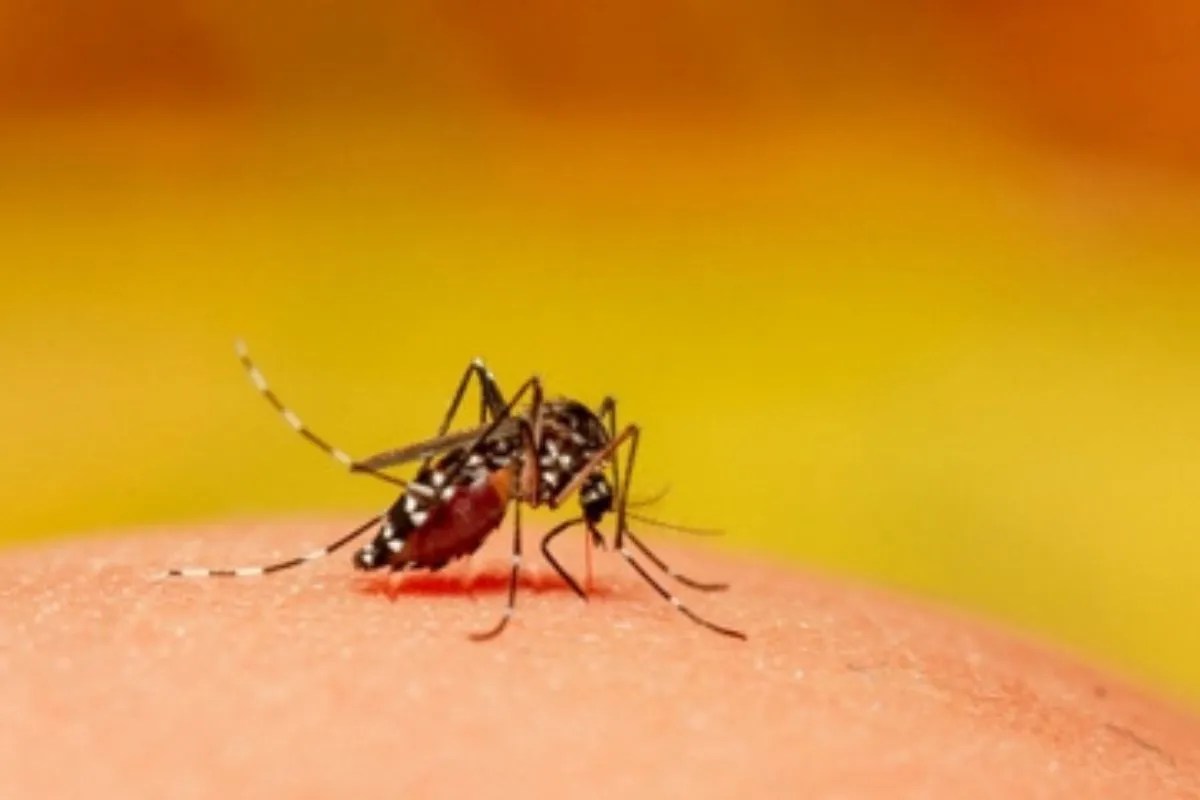
The premise sounds elegant. Scientists infect male Aedes aegypti mosquitoes with a naturally occurring bacterium called Wolbachia. When these lab-bred males mate with wild females, the resulting eggs do not hatch. Population collapse follows. No more mosquitoes, no more Dengue, no more Zika.
It is a beautiful theory that crumbles under the weight of evolutionary biology.
First, consider the scale of the target. Aedes aegypti is an incredibly resilient, highly adaptable urban survivor. They do not need massive swamps to breed; a bottle cap full of rainwater on a concrete balcony is enough. To achieve suppression, lab-bred males must continuously outnumber wild males by massive ratios—often ten to one.
This creates an immediate logistical nightmare. You are not building a sustainable solution; you are creating an industrial dependency. The moment the factory stops pumping out millions of specialized insects, the wild population bounces back. It is the biological equivalent of a SaaS subscription model. You never own the solution; you just keep paying Verily to rent temporary suppression.
The Resistance Trap
Evolution is smarter than any algorithm coming out of Mountain View. When you exert massive selective pressure on a population, nature finds a workaround.
- Assortative Mating: Wild females quickly learn to avoid lab-reared males. Studies on sterile insect techniques have historically shown that factory-raised insects behave differently, smell differently, and lose their competitive edge. Wild females reject them, choosing the rugged, wild-type survivors instead.
- Niche Replacement: Eradicating Aedes aegypti from an urban ecosystem does not leave a vacuum. It opens the door for competitors like Aedes albopictus (the Asian tiger mosquito), which can carry many of the same pathogens and is often even harder to control.
We are playing a high-stakes game of ecological whack-a-mole.
The Hidden Economics of Biotech Colonialism
Let us talk about the money. The competitor piece frames this as a historic experiment for public good. What they omit is the staggering cost per acre of this technology.
Rearing millions of mosquitoes, sorting them by sex with automated vision systems, and releasing them via specialized trucks or drones requires an immense amount of capital. It works in affluent test markets like Fresno, California or Singapore. But the areas hardest hit by Dengue and Zika are not wealthy tech hubs. They are underfunded municipal zones in the global south.
+-----------------------------------+-----------------------------------+
| Verily's Tech-Heavy Approach      | Traditional Public Infrastructure |
+-----------------------------------+-----------------------------------+
| High recurring capital expenditure| Fixed, long-term asset investment |
| Requires proprietary tech stack   | Utilizes local labor and materials|
| Vulnerable to supply chain shocks | Resilient, decentralized model    |
| Focuses on a single vector species| Addresses systemic sanitation issues|
+-----------------------------------+-----------------------------------+
When a tech company funds these trials, it is not philanthropy; it is market validation for a proprietary platform. If cities become dependent on patented biological tools to keep their citizens safe, public health spending shifts from basic infrastructure to corporate licensing fees.
I have seen this movie before. A flashy tech solution sucks all the oxygen out of the room, defunding boring, unsexy, proven interventions. Clean water infrastructure, effective waste management, and basic window screening do more to eliminate vector-borne disease than a billion-dollar insect factory ever will. But you cannot scale a window screen into an IPO.
Dismantling the Consensus
People frequently ask if this technology is safe for the ecosystem. That is the wrong question. Of course it is relatively safe in terms of toxicity—Wolbachia is already present in a vast percentage of insect species. The real question people should be asking is: Is this an efficient use of limited public health capital?
The answer is a resounding no.
The premise that we can control global disease vectors through continuous bio-manufacturing is a logistical fantasy. It ignores the reality of urban sprawl, political instability, and the sheer reproductive velocity of insects.
Imagine a scenario where a city spends five years and half its health budget suppressing mosquitoes via tech releases. A fiscal crisis hits, or a supply chain disruption halts production at the insect factory for three months. The population rebounds instantly, hitting a non-immune human population, potentially triggering a worse outbreak than if the virus had remained endemic and managed through traditional means.
The Uncomfortable Truth
We do not have a mosquito problem; we have a broken infrastructure problem.
Aedes aegypti is a domesticated mosquito. It lives where humans live, drinks our stored water, and hides in our closet shadows. It thrives because of unplanned urbanization, failing municipal water systems that force people to store water in open containers, and inadequate trash collection that litters the environment with plastic breeding vessels.
Fixing those issues requires political will, heavy engineering, and sustained civic investment. It requires doing the hard, manual work of rebuilding cities.
Alphabet's experiment is an attempt to bypass the hard work of civilization building with a high-tech silver bullet. It allows local governments to shirk their fundamental duties of sanitation and infrastructure management by promising a future where drones solve the problem from the air.
Stop looking at the skies for a tech savior. Turn off the mosquito factories. Build better drainage systems. Collect the trash. Fix the pipes.