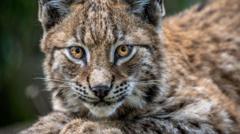
Local councillors are panicking about sheep. Conservationists are crying foul over backward rural politics. Both sides of the Eurasian lynx reintroduction debate are completely missing the point.
The recent political pushback against releasing apex predators into the British countryside isn't a triumph of agricultural common sense, nor is it a tragedy for biodiversity. It is a predictable symptom of a deeper structural delusion. We are trying to build an ecological penthouse on top of a crumbling foundation.
For years, I have watched well-meaning environmental groups pour millions into high-profile apex predator campaigns. They map out vast tracts of forest, print glossy brochures, and host heated town hall meetings. Then, the moment a local council objects or a farming union throws up a red flag, the entire project collapses into a messy culture war.
The lazy consensus tells you this is a battle between progress and stubbornness. It isn't. The lynx reintroduction plans are failing because the modern rewilding movement is addicted to high-profile public relations stunts while ignoring basic ecological mechanics.
The Myth of the Self-Healing Forest
The central argument for bringing back Lynx lynx relies on the concept of trophic cascades. Proponents look to Yellowstone National Park. They point out how introducing wolves controlled the elk population, regenerated willow trees, and altered the paths of rivers. It is a beautiful story. It is also completely irrelevant to modern Britain.
Yellowstone is an intact, contiguous wilderness spanning over two million acres. Kielder Forest, frequently cited as the prime UK candidate for a lynx trial, is a commercial timber plantation crisscrossed by roads, fences, and human infrastructure.
Imagine a scenario where we release ten lynx into a fragmented woodland. The theoretical model says they will hunt roe deer, thin out the overpopulated herds, and allow native flora to recover. The reality of a highly managed landscape is far messy. Animals do not respect the boundaries of conservation maps. They follow the path of least resistance.
When you drop a solitary ambush predator into a patchwork of commercial pine plantations and open sheep pasture, you are not restoring ancient ecological balance. You are conducting a high-stakes experiment in animal behavioral adaptation.
Fragmentation Is the Real Killer
A species cannot thrive where it cannot move. The European mainland has connected corridors allowing wildlife to migrate, find mates, and maintain genetic diversity. The British countryside is a grid of asphalt, high-speed rail, and suburban sprawl.
- Genetic Bottlenecks: A small, isolated population of reintroduced lynx in an isolated woodland will suffer from inbreeding depression within generations.
- Territorial Conflict: Male lynx require up to 300 square kilometers of home range. Without contiguous cover, younger males will wander directly into human-dominated spaces.
- Road Mortality: In countries like Spain, vehicular collisions are a primary cause of death for the endangered Iberian lynx.
By focusing the entire conversation on whether councillors are being too conservative or farmers are being too paranoid, we avoid facing the uncomfortable truth: we lack the physical habitat required to sustain these animals long-term.
Dismantling the People Also Ask Premise
When people look into this issue, they inevitably ask standard questions based on flawed premises. Let's dismantle them cleanly.
Do lynx pose a danger to humans?
No. This is the easiest objection to dismiss, yet local politicians lean on it constantly to whip up public anxiety. Lynx are notoriously secretive ambush hunters. There is virtually no record of healthy wild Eurasian lynx attacking humans in modern European history. Passing off a medium-sized cat as a threat to school children is cheap political theater. But using this factual defense to justify a release is equally dishonest because it ignores the actual economic friction.
Will lynx wipe out local sheep farming?
The farming unions claim the lynx will decimate their livelihoods. The rewilding advocates claim lynx almost exclusively eat deer and rarely touch livestock. Both assertions are wrong.
Data from Norway shows that lynx do kill sheep, particularly when livestock are left unattended in wooded areas. Conversely, data from Switzerland shows minimal sheep depredation because their husbandry methods are vastly different. If you drop a predator into a region where sheep have been bred for generations to be completely defenseless and free-roaming, losses will occur. Pretending the risk is zero is a lie designed to win a public relations battle.
The Economic Compensation Trap
To soothe the anxieties of local communities, conservation groups always offer the same solution: a robust financial compensation scheme for lost livestock.
I have analyzed these economic models in agricultural systems across Europe, and they fail for the same reason every time. They treat a cultural and systemic issue as a simple transaction.
Farmers do not want to be bureaucrats filing paperwork for dead ewes. A compensation scheme requires verification, veterinary inspections, and endless administration. It creates a adversarial relationship between the state, the conservationists, and the landowners.
Furthermore, these schemes fail to account for the indirect costs of predator presence:
- Stress-induced miscarriages in pregnant livestock.
- The cost of installing and maintaining predator-proof fencing.
- The labor hours required to shift from extensive free-roaming grazing to intensive night-penning.
When a local council votes down a lynx proposal, they aren't necessarily anti-nature. Often, they are looking at the uncompensated structural burdens that will fall squarely on their local economy while urban donors pat themselves on the back for "saving the planet."
The True Path to Rewilding
If we want actual, functioning ecosystems instead of expensive outdoor zoos, we have to flip the script entirely. Stop trying to drop charismatic megafauna into environments that cannot support them.
We must fix the baseline infrastructure first.
Step 1: Subsidize Connectivity, Not Just Contained Spaces
Before a single cat sets foot on British soil, we need to mandate and fund massive wildlife corridors. This means wide-scale hedgerow restoration, green bridges over major highways, and the reforestation of river valleys to connect isolated pockets of woodland.
Step 2: Overhaul Agricultural Subsidies
The current system encourages the intensive management of marginal land. We need to transition agricultural funding toward paying farmers directly for habitat creation, wetlands restoration, and scrubland tolerance. A farmer should make more money hosting a messy, wild wetland than they do grazing a handful of heavily subsidized sheep on a barren hillside.
Step 3: Start from the Bottom of the Food Chain
Everyone wants to talk about wolves and lynx because they look great on a website banner. No one wants to talk about dung beetles, wood ants, and mycorrhizal fungi networks. True ecological health is built from the soil up. If you do not have the insect biomass, the small mammal populations, and the complex structural undergrowth, your apex predator is nothing more than a highly vulnerable novelty.
The local councillors blocking these plans accidentally stumbled into the correct decision for the wrong reasons. They voted no out of localized self-interest and political posturing. But the project deserved to be halted regardless. Until we are willing to dismantle the fragmented nature of our managed landscape and fix the systemic flaws in our agricultural economy, reintroducing the lynx is just an exercise in environmental vanity.
Stop looking at the top of the food chain when the floor beneath our feet is completely hollow.