For generations, economic textbooks have peddled a tidy fairy tale about human progress. The standard script insists that capitalism burst onto the scene alongside smoke-spewing factory chimneys, steam engines, and the nineteenth-century industrial transformation. According to this view, ancient merchants and early modern financiers were mere historical warm-up acts before the grand arrival of the true market system.
Historical reality is far more uncomfortable. When examining pre-industrial archives, researchers encounter a striking paradox: capitalists flourished centuries before capitalism as an all-encompassing social and economic structure ever existed. If you enjoyed this article, you might want to look at: this related article.
The Anatomy of the Pre-Industrial Financier
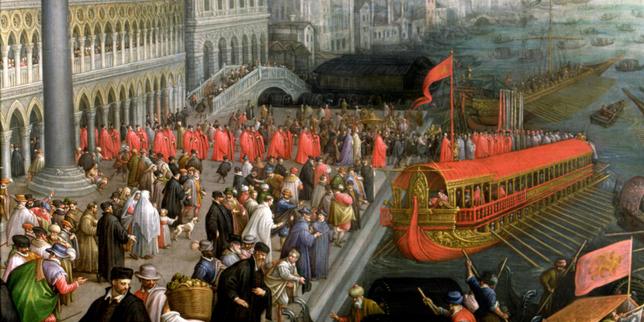
To understand this anomaly, one must look closely at how wealth operated in the Mediterranean and Northern Europe during the early modern era. Wealthy individuals accumulated vast fortunes, deployed risk capital into maritime trade ventures, and mastered complex credit networks. A merchant operating in sixteenth-century Venice or a financier backing a Spanish armada possessed every behavioral trait associated with modern investors. They sought profit, calculated risk, leveraged debt, and hoarded liquid assets.
Yet, these individuals operated within a world that lacked a generalized market economy. Land remained tied to feudal or jurisdictional privileges. Labor was bound by guilds, custom, and various forms of legal coercion rather than a free labor market. Production was decentralized and organized around domestic workshops or corporate monopolies. For another perspective on this development, refer to the recent coverage from Financial Times.
Consider a hypothetical merchant prince in seventeenth-century Marseille who finances a fleet of trading vessels bound for the Levant. This investor assumes enormous financial risk, pools resources with silent partners, and extracts steep returns on spice imports. On paper, the transaction looks entirely capitalist.
Zoom out to the broader society, and the structural differences become stark. The merchant's ability to trade did not stem from market competition, but from royal monopolies, diplomatic capitulations, and personal connections to sovereign power. The accumulation of capital was an isolated phenomenon, trapped inside a society governed by status, birthright, and arbitrary extraction.
Unraveling the Chronology of Markets
The core error of traditional economic history lies in confusing the actors with the system. Finding people who act like investors does not mean the entire social fabric is organized around capital accumulation.
Historians like Guillaume Calafat and other modern economic analysts emphasize that treating the industrial revolution as the zero-point of capitalism obscures centuries of sophisticated commercial evolution. Financial instruments, bills of exchange, and maritime insurance markets were robustly developed during the Renaissance. Italian city-states experimented with public debt and banking institutions long before Adam Smith put pen to paper.
These mechanisms existed to serve dynastic warfare, fiscal-military states, and elite enrichment, rather than a self-regulating market economy. Money moved across borders with surprising speed, but ordinary people did not survive by selling their labor in a competitive marketplace. The institutional preconditions for a universal market simply were not there.
Why the Distinction Matters Today
Dismissing this as an academic quarrel over semantics misses the point entirely. Misreading the origins of modern economic systems distorts how we analyze contemporary power dynamics. When observers assume that capital accumulation is a natural, eternal human instinct that merely needed the steam engine to unleash itself, they naturalize inequality.
History shows that capitalism required a massive, often violent restructuring of social relations, legal codes, and state power. Capitalists could hoard gold and fund fleets within feudal or mercantilist frameworks, but transforming the entire human experience into a marketplace took deliberate political coercion.
The factory floors of the industrial era did not invent the desire for profit. They institutionalized it, subordinating society to the logic of the market for the first time in human history. The financiers of the past were powerful, but they were prisoners of a world they could not fully remake.
The architecture of modern wealth was built by hands that could never have imagined the world they were slowly bringing into being.
Capitalisme : histoire d'un mot, avec Guillaume Calafat
This video provides additional historical context on how the vocabulary and structural definitions of capitalism evolved over centuries of European scholarship.