At the November 2026 summit in Phnom Penh under the theme "Reinvesting in Peace," the Organisation internationale de la Francophonie (OIF) confronted a structural failure: its peace rhetoric collided directly with armed conflict in the African Great Lakes region and an unprecedented deadlock over its leadership. Rather than resolving security crises among member states, the summit exposed the limits of a multilateral body that relies on consensus and donor alignment while facing active warfare in eastern Democratic Republic of the Congo (DRC).
A rigorous strategic analysis of this clash separates diplomatic declarations from institutional incentives. Understanding why an organization built around a shared language struggles to mediate armed conflict requires examining its funding architecture, its governance rules, and the security dynamics of the Great Lakes.
Deconstructing the Phnom Penh Tension
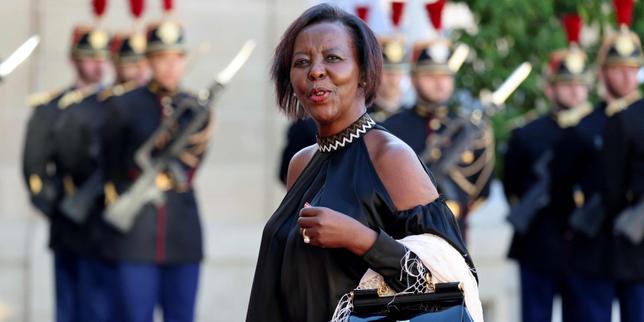
Reporting on the Phnom Penh gathering highlights a stark contrast between Cambodia's push to position peace and border stability at the center of the agenda and the political friction generated by the Great Lakes conflict. Phnom Penh sought to use its hosting role to highlight border tensions—including disputes with Thailand—and to frame itself as a bridge between Francophone states and Southeast Asia. Yet in the background, disputes involving the DRC and Rwanda over insecurity in eastern DRC complicated summit dynamics and contributed to deferring the election of the OIF Secretary-General for a year, extending Louise Mushikiwabo's term in the interim.
Standard commentary often treats this friction as a simple clash of personalities or national grievances. That framing misses the deeper institutional mechanics. A multilateral organization without enforcement powers, independent intelligence, or an autonomous rapid-mediation mandate cannot compel warring or rival member states to submit to its authority. When core security interests are at stake, states route serious negotiations through forums that carry military, economic, or regional leverage rather than linguistic affinity.
To evaluate how the OIF operates under stress, analysts can examine three structural pillars:
- Mandate versus instruments: The OIF charter references peace, democracy, and crisis prevention, yet the organization's operational toolkit centers on diplomatic statements, election observation, technical cooperation, and cultural or educational programs rather than coercive or high-stakes security mediation.
- Donor concentration: Institutional autonomy is constrained when a small number of major contributors provide the bulk of core funding. When key donors maintain complex bilateral relationships with rival parties, the secretariat faces strong incentives toward caution rather than assertive intervention.
- Sovereignty sensitivity: Member states across Africa, Asia, and the Americas guard their national sovereignty closely. Any perception of selective enforcement—such as suspending certain states after constitutional ruptures while appearing hesitant in other armed conflicts—erodes institutional legitimacy.
Why Peace Rhetoric Fails in the Great Lakes
The conflict in the Great Lakes involves entrenched security dilemmas, cross-border armed groups, contested sovereignty claims, and competing regional and external diplomatic tracks. In high-intensity security environments, declarations calling for dialogue or reaffirming international law rarely alter calculations on the ground unless backed by credible incentives, monitoring mechanisms, or security guarantees.
Consider a common analytical error: assuming that shared language or historical ties create a natural comparative advantage in conflict resolution. Shared language lowers communication friction at diplomatic tables, which is useful for cultural exchange, technical training, and youth or digital initiatives. However, shared language does not resolve security dilemmas when parties perceive existential threats to border security, regime stability, or territorial control. In those conditions, hard power and regional balance-of-power politics dominate.
This dynamic also explains why major diplomatic initiatives around eastern DRC have frequently gravitated toward regional or external formats rather than Francophone summits. Governments involved in or affected by the conflict look for formats that can influence troop movements, sanctions, regional security coordination, or diplomatic pressure. When an organization lacks those levers, its communiques risk becoming secondary to parallel tracks.
Known Facts Versus Educated Hypotheses
Distinguishing verified institutional realities from analytical interpretation prevents overreach:
- Known facts: The 20th Francophonie Summit took place in Phnom Penh in November 2026 under a theme centered on peace and stability; tensions linked to the Great Lakes conflict and the DRC-Rwanda dispute shaped the political atmosphere; and the decision on the Secretary-General role was pushed back by a year, keeping the incumbent in place temporarily. Furthermore, the OIF has previously faced legitimacy and membership pressures, including withdrawals by Sahel states.
- Educated hypotheses: The deferral of the leadership vote likely reflects a strategic calculation by member states that a contested ballot during acute regional polarization would fracture the organization further rather than heal it. Likewise, the gap between peace rhetoric and crisis management likely stems from structural under-resourcing in hard security mediation combined with divergent national priorities among major members.
The Cost Function of Institutional Paralysis
Every summit that produces broad peace language without operational follow-through carries measurable institutional costs. In strategic terms, the cost function of inaction rises across four dimensions:
- Credibility erosion: When member states see grand declarations paired with minimal crisis traction, expectations adjust downward. Over time, diplomats treat summits as ceremonial gatherings rather than problem-solving venues.
- Forum shopping: States seeking tangible outcomes direct their diplomatic bandwidth toward regional blocs, security guarantors, or bilateral partners, marginalizing the OIF on core geopolitical files.
- Internal polarization: Unresolved disputes among prominent member states—including major Francophone populations—turn leadership selections and summit resolutions into proxy battlegrounds.
- Opportunity cost: Leadership time and political capital spent managing internal gridlock cannot be used to strengthen practical cooperation in education, digital governance, mobility, or economic integration.
A practical illustration can be seen in how a mid-sized multilateral body responds to a border or regional crisis. If it issues a general call for restraint without a dedicated envoy, clear benchmarks, or coordination with regional mediators, both sides in the dispute can selectively cite parts of the text while ignoring the rest. The organization expends reputational capital without changing behavior on the ground.
Step-by-Step Institutional Diagnostic
Practitioners and policy analysts assessing whether an organization like the OIF can play a meaningful role in a crisis can apply a four-step diagnostic before recommending intervention:
- Map the leverage: Identify which actors control armed escalation, border access, and diplomatic concessions, and determine whether the organization holds any carrots or sticks over them.
- Audit donor alignment: Check whether major financial contributors share a unified policy line or hold conflicting bilateral priorities regarding the parties to the conflict.
- Test mandate fit: Compare the crisis requirements—such as ceasefire monitoring, humanitarian access, or constitutional negotiation—against the organization's legal mandate and staffing capacity.
- Define a narrow niche: If full mediation is out of reach, determine whether the body can add value in a bounded area, such as confidence-building track-two dialogue, post-conflict institution building, or humanitarian coordination support.
Limitations and Trade-Offs
No governance reform can turn a linguistically defined multilateral organization into a security guarantor overnight. Expanding a secretariat's political mandate without corresponding funding and political backing risks overpromising and underdelivering. Conversely, retreating purely into cultural and technical programming protects institutional harmony in the short term, yet leaves the organization vulnerable to irrelevance whenever major crises strike its member states.
Reforming leadership selection rules—such as term limits, rotation norms, or clearer appointment procedures—can reduce succession friction. However, rules on paper do not automatically create consensus among capitals with competing security interests. Institutional design shapes incentives, but political will remains the binding constraint.
Strategic Play for the Next Twelve Months
With the leadership decision deferred for a year, the OIF has a narrow window to align its ambitions with its actual capabilities. Rather than drafting broader peace resolutions that outrun its operational reach, the organization should use the coming year to codify transparent governance rules for the Secretary-General selection and establish a strictly bounded crisis-support protocol that coordinates with—rather than duplicates—established regional and international mediation tracks. Simultaneously, it should concentrate measurable execution on areas where multilateral networks hold genuine comparative advantage, such as higher education, digital skills, and cross-border economic and cultural exchange. If member states use the twelve-month runway solely to bargain over post-holder politics while leaving conflict-management mechanisms undefined, the next summit will confront the same credibility gap under a new label.