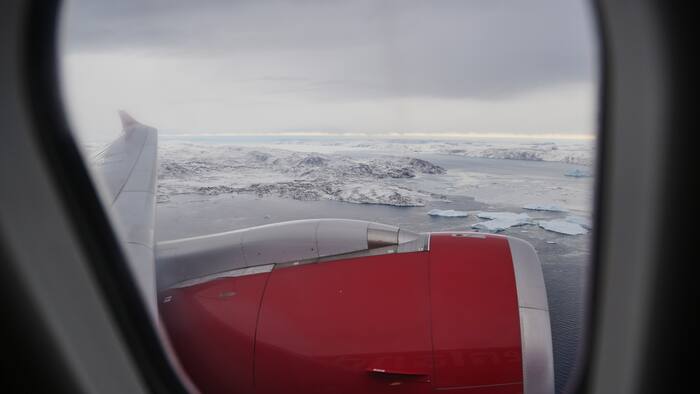
Getting to Nuuk used to be a logistical nightmare. For decades, anyone flying from North America or Europe to Greenland's capital had to land at Kangerlussuaq—a former US Cold War airbase sitting over 300 kilometers north of the city—and transfer onto a smaller regional turboprop just to reach the capital. That bottleneck vanished when Greenland officially opened its expanded international airport in Nuuk in late November 2024.
Most travel blogs treat this runway extension like just another bucket-list vacation upgrade. They're missing the real story. Yes, Nuuk's new 2,200-meter runway makes it vastly easier for tourists to see icebergs and humpback whales without enduring a multi-leg regional ordeal. The actual goal behind this massive concrete investment isn't just hospitality—it's economic sovereignty.
Greenland is an autonomous territory within the Kingdom of Denmark, and its leadership has been openly pushing toward full independence for years. You can't run an independent nation while relying on a single former colonizer to fund half your public budget. By opening direct international air routes, Nuuk is building the physical infrastructure required to break away from Copenhagen's financial gravity.
The Runway That Fixed a Cold War Mistake
To understand why this single airport matters so much, you have to look at how badly broken Greenland's aviation map used to be.
During World War II and the Cold War, the United States military built long runways in remote areas like Kangerlussuaq and Narsarsuaq because their flat terrain and inland weather offered reliable flying conditions. When commercial aviation took over, Greenlanders got stuck with an absurd transit system. Nuuk, home to roughly a third of the island's 56,000 residents, only had a 950-meter runway. Large commercial jets couldn't land there. Every international passenger and piece of air freight had to stop miles away from where people actually lived and worked, driving up ticket prices and causing brutal weather delays.
Kalaallit Airports, the state-owned company behind the overhaul, completely rebuilt the Nuuk facility to handle wide-body transatlantic jets. They didn't stop there. The broader infrastructure project also includes a brand-new international airport in Ilulissat—Greenland's crown jewel for iceberg tourism—scheduled to open in 2026, alongside a regional upgrade in Qaqortoq in the south.
Air Greenland immediately anchored the Nuuk hub with its Airbus A330-800neo flagship flying direct from Copenhagen. Even bigger news came from across the Atlantic. United Airlines launched direct seasonal flights between Newark and Nuuk starting in June 2025, giving North Americans their first direct commercial link to Greenland's capital in years. Icelandair and SAS also stepped up connections, turning a once-isolated outpost into a legitimate North Atlantic crossroads.
Tourism as an Independence Engine
Money talks, especially in Arctic politics. Right now, Denmark sends Greenland an annual block grant worth roughly 3.9 billion Danish kroner (around $560 million USD). That subsidy covers roughly half of the Greenlandic government's total public revenue.
If Greenland votes for independence tomorrow without replacing that cash, its economy collapses overnight. Public healthcare, schools, and basic infrastructure across 800,000 square miles of rugged coastline would grind to a halt.
That's where tourism enters the picture. Greenland's economy relies heavily on fishing—specifically cold-water prawns and halibut—which accounts for over 90% of its exports. Relying on one volatile industry leaves the nation vulnerable to climate shifts and global price swings. Mining rare earth minerals gets plenty of headlines in Washington and Brussels, yet strict environmental laws, fierce local opposition to uranium extraction, and extreme Arctic operating costs mean big mining payoffs remain years or decades away.
Tourism offers faster cash. Before the new runway opened, Greenland drew roughly 130,000 visitors a year, a huge chunk of whom arrived on cruise ships that barely spent money in local shops before sailing away. Fly-in tourists stay longer, book local guides, eat at Nuuk restaurants, and sleep in Greenlandic hotels.
By cutting travel time and ticket costs, Nuuk's international terminal aims to double land-based tourism revenue over the next decade. Every international boarding pass scanned at Nuuk is a tiny deposit toward paying off the Danish block grant.
What Most Travelers Get Wrong About Visiting Nuuk Now
If you're planning to book one of these new direct flights, slow down and look at the ground reality before you buy a ticket. A bigger runway doesn't magically create a thousand hotel rooms overnight.
Nuuk is still a small Arctic town of roughly 20,000 people. While new hotels and boutique accommodations have popped up to meet demand, peak summer capacity between June and August fills up fast. Honestly, the biggest mistake travelers make right now is assuming that easy flight access means spontaneous last-minute trips will be cheap or simple.
Here is what actually happens on the ground when you fly into the new hub:
- Infrastructure is playing catch-up. Runway concrete cures faster than towns can build sewage lines, hotels, and trained hospitality staff. Expect high prices for lodging and guided boat charters because supply remains tight.
- Arctic weather still owns the schedule. Modern instrument landing systems at Nuuk's new terminal drastically reduce cancellations compared to the old short runway, yet coastal fog and winter storms still scrub flights without warning. Never book a tight same-day international connection on a separate ticket.
- Nuuk isn't an iceberg theme park. People often confuse Nuuk with Ilulissat. Nuuk offers incredible fjord systems, world-class Inuit art at the Nuuk Art Museum, and sharp Nordic-Greenlandic dining, while massive cathedral-sized icebergs sit further north in Disko Bay. Until Ilulissat's own international runway opens in 2026, reaching the big ice still requires a domestic hop on Air Greenland.
The Geopolitical Tug-of-War Over Greenland's Concrete
Denmark didn't exactly cheer from the sidelines when Greenland first proposed building these airports. In fact, the project sparked one of the sharpest diplomatic rows between Nuuk and Copenhagen in modern memory.
Back in 2018, China Communications Construction Company—a Chinese state-owned enterprise—was shortlisted to build the airports. Washington panicked. US defense officials warned Copenhagen that Beijing could use infrastructure financing to gain a strategic foothold right next to North America and near the US Space Force's Pituffik Space Base in northern Greenland.
Under heavy American pressure, Danish Prime Minister Lars Løkke Rasmussen flew to Nuuk and offered a massive financing package—cheap loans and direct equity investments—to push the Chinese bidder out. Greenland took the Danish money, keeping Beijing out of the project while still getting its runways built.
That episode proved just how valuable Greenland's real estate has become. Sitting between North America and Europe along rapidly melting Arctic shipping lanes, Greenland holds massive strategic weight. Having direct international air links gives Nuuk direct access to American, Canadian, and European diplomats, investors, and business leaders without routing everything through Copenhagen first.
Managing the Overtourism Trap
Greenlandic leaders aren't blind to what happened in Iceland. Fifteen years ago, Iceland aggressively marketed itself as an easy transatlantic stopover and watched tourist numbers explode past two million visitors a year—more than six times its local population. Housing prices skyrocketed in Reykjavik, fragile moss landscapes got trampled, and locals started feeling priced out of their own neighborhoods.
Nuuk wants the revenue without the destruction. Under Greenland's 2024–2035 tourism strategy, the government introduced strict new rules requiring tour operators to hold majority Greenlandic ownership and meet strict safety and environmental standards. They also rolled out a passenger tax on cruise ships and air travelers to fund local trail maintenance and municipal infrastructure.
This isn't a free-for-all gold rush. Greenland is deliberately trying to attract high-spending, low-impact travelers who respect Inuit culture and fragile Arctic ecosystems rather than massive crowds looking for cheap weekend parties.
How to Experience Greenland Before the Crowds Catch Up
If you want to see Greenland while this historic shift is unfolding, treat the trip like an expedition rather than a standard European city break.
Book your flights and accommodations at least six to nine months in advance if you're aiming for the summer midnight sun season between June and August. Look at shoulder months like September or March—September brings crisp autumn tundra colors and early northern lights without peak summer prices, while March delivers deep winter dog sledding and snowmobiling under long daylight hours.
Skip international booking aggregators whenever possible and book directly with locally owned Greenlandic outfitters in Nuuk, Sisimiut, or Ilulissat. Your money stays inside the local economy—directly supporting the exact financial independence Greenlanders built this airport to achieve—and you get guides who actually grew up navigating these fjords.
.jpg)


