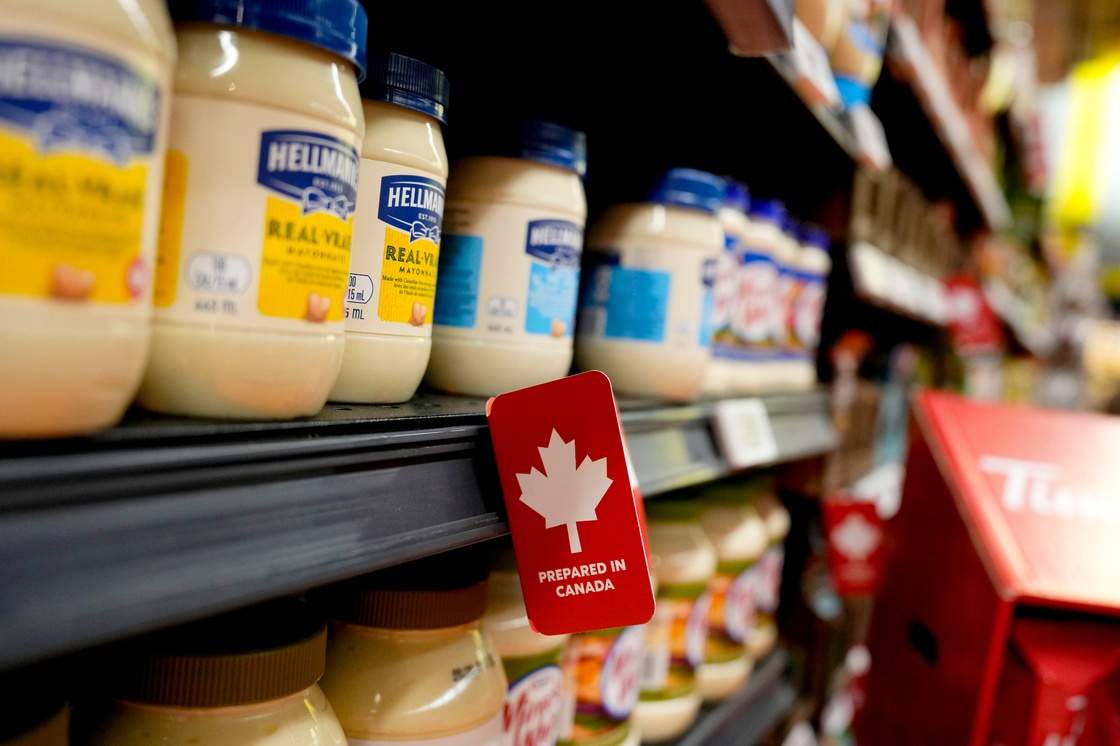
Loblaw Companies Ltd. is rushing to restore country-of-origin labels and its controversial tariff “T” markers across Canadian supermarket aisles as a brutal escalation in U.S.-Canada trade hostilities upends retail supply chains. The nation's dominant grocery titan, which faced heavy consumer backlash and regulatory fines earlier this year for quietly scrubbing domestic markers and mislabeling foreign goods, is yielding to intense public pressure and political posturing from provincial leaders like Ontario Premier Doug Ford.
Behind the corporate press releases about supporting local farmers, however, lies a messy reality of shifting logistics, rising food inflation, and an exhausted consumer base caught in the crossfire of a geopolitical economic war.
The Cost of Corporate Amnesia
Memory is short in the boardroom, but it has teeth in the checkout line. When trade tensions and steep U.S. tariffs first flared up, Canadian shoppers responded with an aggressive wave of economic nationalism. Grocery carts became ballot boxes. Maple leaf symbols and origin tags were the navigational tools for an impromptu public boycott of American goods.
Then, quietly, those markers began to vanish.
Retailers like Loblaw assumed the political storm would pass, or perhaps calculated that maintaining granular origin data across thousands of rotating stock-keeping units was too costly for inventory management. That calculation blew up in their faces. Consumers noticed the missing tags. Federal food regulators stepped in with fines after specific stores mistakenly slapped domestic flags on imported foods.
Chief Executive Per Bank announced via social media that the "T" symbols and fresh produce origin tags are returning to shelves. But this revival is not merely a benevolent nod to community pride. It is an emergency response to a renewed trade crisis featuring heavy new American tariffs and swift Canadian counter-levies.
Inside the Supply Chain Pivot
The retail architecture of a giant like Loblaw is built on global efficiency. For decades, supply chain managers optimized for cost, speed, and year-round availability. If California lettuce or Washington apples were cheaper and more reliable in February, they filled the bins.
Now, that architecture is a liability.
When a 50% tariff lands on a category of imported goods, the math changes overnight. The "T" symbol on the shelf is not just a political badge; it is a warning flare for sticker shock. Chief executive Per Bank insists the company is better positioned now than during the initial trade flare-up. They claim to have spent the intervening months aggressively onboarding domestic producers and diversifying international vendor lists away from the United States.
Yet, shifting a national agricultural supply chain does not happen at the speed of a LinkedIn post. Canada's agricultural sector operates on seasonal cycles and structural capacity limits. You cannot simply magic millions of pounds of domestic greenhouse produce or dairy into existence because a trade war escalated over the weekend.
Consider a hypothetical mid-sized Ontario greenhouse operation attempting to scale up distribution for a major grocer. Even with enthusiastic corporate buyers, expanding facility footprints, securing labor, and adjusting distribution hubs takes quarters, not days.
The Political Pressure Cooker
The boardroom does not exist in a vacuum. Politicians smell blood and shifting sentiment with equal acuity. When Ontario Premier Doug Ford took to the podium to publicly chastise major grocers—naming Loblaw, Walmart, and Sobeys directly—he gave voice to a populist frustration that corporate leadership ignores at its peril.
"We're in a war. You protect your country; you protect your province," Ford told reporters, urging institutions and citizens to scrutinize every label.
When provincial premiers lean on multi-billion-dollar corporations to change how they price and market goods, compliance ceases to be optional. It becomes a matter of brand survival. A grocery chain can absorb a regulatory fine or a temporary social media squawk, but it cannot afford to be painted as an economic traitor while citizens watch their grocery bills climb under the weight of retaliatory tariffs.
What the Labels Actually Tell Us
Transparency cuts both ways. While shoppers may feel a surge of empowerment seeing the familiar red maple leaf, the reintroduction of origin labeling also forces a glaring spotlight on systemic gaps in domestic self-sufficiency.
When a consumer looks at a produce display and sees the "T" marker next to an essential item, they are reminded of systemic vulnerability. Canada's northern climate means a permanent reliance on cross-border trade for fresh nutrition during major portions of the year. Domestic producers do the heavy lifting when in season, but the cold months expose the hard limits of the "Buy Canadian" ethos.
Furthermore, policing these labels requires a degree of administrative precision that grocers have historically stumbled over. The Canadian Food Inspection Agency is watching closely. Sloppy data entry by a stock clerk in a suburban warehouse can turn a French cheese or an American broccoli slaw into a fraudulent "Product of Canada," inviting public humiliation and financial penalties.
The return of these labels signals that the grocery store has officially transformed into a ideological battleground. Loblaw is putting the flags back up because they have no choice left if they want to keep the peace with an angry public. But as the tariffs bite deeper and supply lines strain under political weight, the true cost of this grocery aisle nationalism is only just beginning to show on the final receipt


