Every time a live blog screams about an intercepted drone heading toward Mecca, the global press corps treats it like the opening salvo of an apocalyptic holy war. They fall over themselves to paint a picture of a rogue regional actor deliberately trying to obliterate Islam’s most sacred sanctuary. It is breathless, sensationalist, and entirely detached from how modern asymmetrical conflict operates.
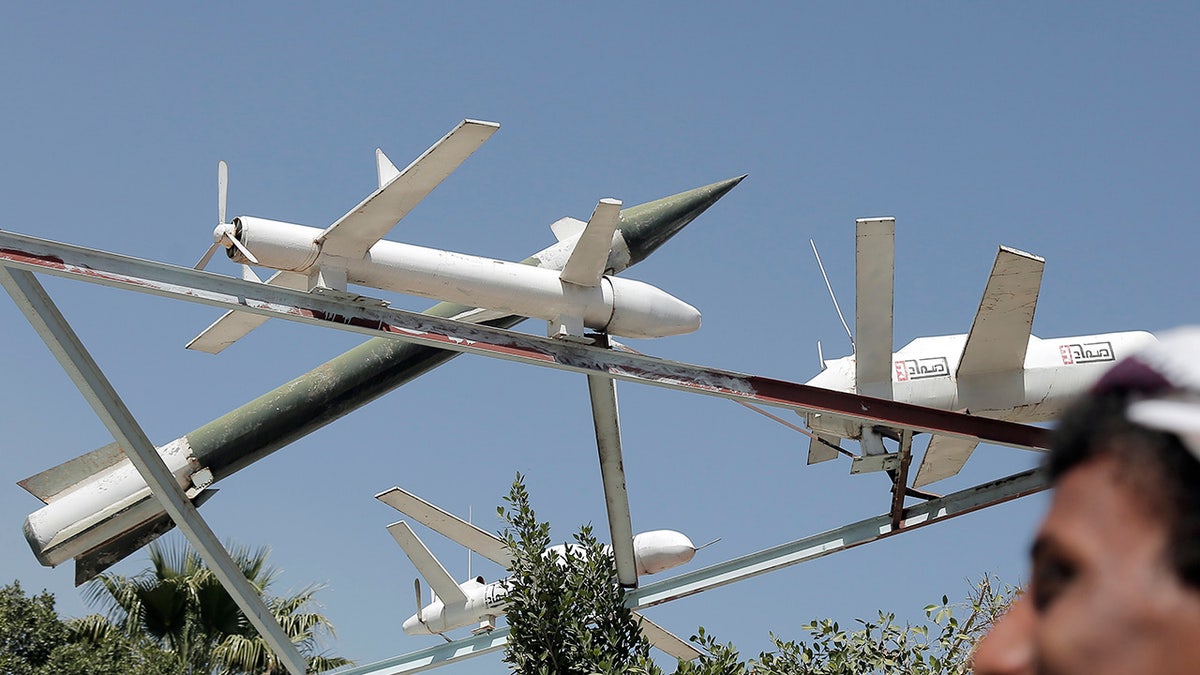
The mainstream narrative wants you to believe that launching a slow-moving, prop-driven delta-wing drone toward the Hijaz region is a theological declaration of total war. It is not. It is a masterclass in low-cost psychological pressure and economic attrition. If you look past the panic-inducing chyron and examine the cold, clinical mechanics of the operation, you realize that the narrative being fed to the public is built on fundamental misunderstandings of drone warfare, military economics, and regional deterrence.
The Economics of the Cheap Drone Trap
Let us talk about the math that defense analysts whisper about in private while public relations flacks cheer every interception.
A standard loitering munition or crude Shahed-style delta-wing drone costs anywhere from twenty thousand to fifty thousand dollars to manufacture. It is made of off-the-shelf commercial electronics, fiberglass, and a basic lawnmower engine or cheap turboprop. It is noisy, slow, and easily tracked by modern radar systems.
When that drone enters Saudi airspace, what happens next is hailed as a defensive triumph. A Patriot missile battery or an advanced air defense fighter jet launches. The interceptor missile costs between three million and four million dollars.
Do the math. The attacker spends pocket change to force the defender to burn multi-million-dollar inventory.
This is not a military strategy designed to breach air defenses through sheer brute force. It is an economic exhaustion strategy. Every time an interception occurs over western Saudi Arabia, the defensive apparatus scores a tactical victory while taking a severe financial hit. Yet, cable news networks frame each intercept as proof of an imminent existential collapse, ignoring the brutal ledger sheet of cost asymmetry. When you measure success solely by whether a projectile hit the ground, you miss the entire point of why the projectile was sent in the first place.
The Geography of Outrage and Media Amplification
Why Mecca? Why target or appear to target the holy site specifically?
The lazy consensus is that the perpetrators are driven by pure, unadulterated sacrilege—a desire to destroy holy ground out of sectarian malice. This view ignores the ruthless rationality of geopolitical signaling.
Mecca is not chosen as a military waypoint because of its strategic command-and-control value. It is chosen because of its amplification coefficient.
In the attention economy of modern conflict, a projectile heading toward Riyadh causes a ripple. A projectile traced on a trajectory toward the Grand Mosque causes a global tsunami. It forces an immediate, hyper-reactive political response from the coalition leadership. It guarantees front-page coverage in every major newspaper from London to Washington. It panics millions of believers worldwide, creating instant domestic pressure on the Saudi government to escalate, retaliate, or alter its strategic posture.
The target is not the physical stone of the Kaaba; the target is the nervous system of the international media and the emotional core of the Muslim world. By aiming at a cultural lightning rod, the sender forces the defender into a defensive crouch where every movement is scrutinized through a religious lens. It is a psychological wedge designed to provoke over-correction, not a tactical strike to flatten a city.
The Structural Failure of Air Defense Cost Asymmetry
Military establishments hate admitting vulnerability. They prefer the narrative of an impenetrable shield protecting the homeland. But the proliferation of cheap unmanned aerial vehicles has broken the classic air defense model.
For decades, military doctrine was built around high-value, low-density assets. You protected airfields, command centers, and oil infrastructure with expensive, sophisticated systems because the threats were expensive, sophisticated jets or ballistic missiles. You traded high-cost defense for high-value targets.
Today, the threat profile has inverted. The targets are still high-value, but the incoming threats are cheap, disposable consumer-grade technology packaged into military form factors.
When a coalition relies exclusively on high-tier interceptors to handle a swarm of cheap drones, they are playing a losing game of financial attrition. The attacker can manufacture a hundred units in a basic workshop while the defender waits for resupply shipments from Western defense contractors that take months to clear bureaucratic hurdles.
The uncomfortable truth that defense analysts refuse to shout from the rooftops is that passive defense alone cannot win an asymmetric drone war. Intercepting a drone after it has crossed hundreds of miles of airspace is a symptom of a failed strategic deterrence posture, not a celebration-worthy achievement. If your strategy relies on shooting down a twenty-thousand-dollar flying lawnmower with a four-million-dollar missile every single night, you are bleeding capital faster than your opponent is spending it.
The Myth of the Existential Religious Threat
We must dismantle the theological framing of these border skirmishes. The media loves to dress up modern geopolitical friction in ancient sectarian robes because medieval drama sells clicks.
The reality is that state and non-state actors operating in these theaters are driven by geopolitical leverage, territorial control, resource access, and regional hegemony. Religion is the banner, not the blueprint.
When a proxy force launches a projectile toward Saudi territory, they are negotiating at gunpoint. They are signaling dissatisfaction with economic blockades, diplomatic freezes, or regional peace talks. The flight path toward Mecca is a bargaining chip written in radar tracks. It says: If you continue to squeeze our economy, we will ensure your holy sites remain inside an active combat zone, disrupting your tourism economy, shaking investor confidence, and creating endless domestic security headaches.
To view this through the lens of a holy war is to misunderstand the cold, calculating nature of modern middle-eastern statecraft. The actors involved are not religious fanatics throwing caution to the wind; they are strategic operators calculating risk, reward, and escalation thresholds with cold precision.
How Regional Powers Actually Calculate Risk
Step back and look at the broader board.
Saudi Arabia has spent years trying to pivot its economy toward futuristic mega-projects, tourism, and non-oil diversification through Vision 2030. What is the kryptonite of a massive economic diversification plan reliant on foreign investment and global tourism? Unstable airspace.
Every time a drone crosses the border—even if it is successfully intercepted and turned into confetti over the desert—it sends a shiver down the spine of international investors, insurers, and tourists. The insurance premiums for shipping in the Red Sea spike. The perception of regional stability takes a hit.
The attackers know this. They do not need to hit a building to inflict damage. The mere threat of a drone near a holy site imposes a high economic tax on the kingdom's modernization ambitions.
This is the hidden cost of the conflict that the live-update blogs completely gloss over. They report the interception rate as a percentage score—one hundred percent success, zero hits, zero casualties—while ignoring the strategic drag that these ongoing incursions place on the national economy.
The Real Fix Nobody Wants to Discuss
If the current interception model is financially unsustainable and plays directly into the psychological trap of the attacker, what is the alternative?
It requires shifting the paradigm away from reactive kinetic destruction at the tail end of the kill chain and toward proactive kinetic disruption at the source. It means electronic warfare, high-powered microwave directed energy weapons, laser defense systems that cost dollars per shot rather than millions, and aggressive intelligence operations targeting launch logistics before the propellers ever spin up.
It also requires starving the threat of its media oxygen. The moment the global press stops treating every clumsy drone flight as an apocalyptic omen, the psychological return on investment for the sender plummets to zero. When a weaponized hobby drone fails to make front-page news, its utility as a psychological lever evaporates.
Stop cheering for the multi-million-dollar missile shot. Start asking why the defense budget is being bled dry by hardware that costs less than a luxury sedan. Until military planners and media commentators stop falling for the oldest psychological trick in the book, the sky above the Hijaz will remain a profitable shooting gallery for asymmetric actors who have mastered the art of winning by losing cheap.