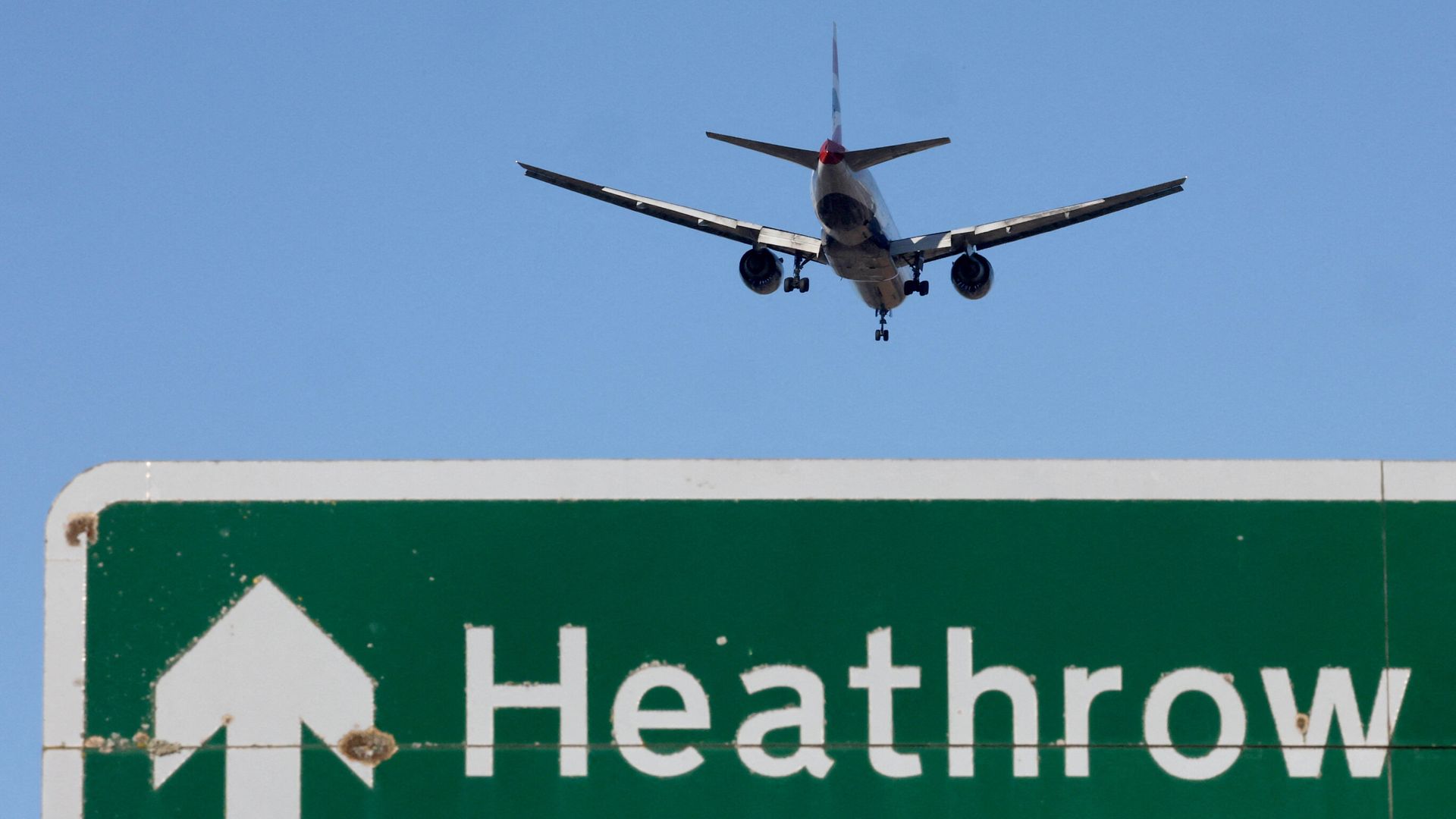
Capital allocation within mega-infrastructure projects relies on predictable regulatory frameworks, stable demand projections, and baseline cost containment. When an asset as critical as Heathrow Airport defers terminal and runway expansion projects into the late 2030s, the failure is rarely a singular logistical hurdle. Instead, it reflects a systematic breakdown in how regulatory caps interact with private financing constraints, environmental compliance mandates, and long-term passenger yield forecasts. Analyzing the persistent delays surrounding Heathrow's third runway requires examining the underlying economic levers that govern aviation capacity in constrained European markets.
The Structural Anatomy of Airport Capacity Constraints
A major international hub operates as a tightly coupled network where airside movement rates, terminal processing capacity, and ground access infrastructure must scale in equilibrium. When one node encounters a structural ceiling, the entire system absorbs efficiency losses. Heathrow operates at approximately 98 percent of its maximum permitted terminal and runway capacity during peak hours. This hyper-utilization yields high operational efficiency under nominal conditions, but leaves zero buffer for systemic shocks or scheduled maintenance. Recently making news in related news: The Anatomy of Wire Fraud Recovery Structural Bottlenecks in Business Email Compromise.
The economic consequence of operating at capacity is artificial scarcity. Airlines compete fiercely for slots, driving up slot valuations while limiting network growth for low-margin or regional carriers. This environment creates a powerful incumbent advantage, insulating legacy operators from new market entrants. However, it severely limits the airport operator's ability to capture incremental revenue through passenger volume growth, shifting the financial focus entirely toward aeronautical fee optimization and non-aeronautical retail yield per passenger.
Regulatory Pricing Caps and Capital Expenditure Incentives
Private infrastructure ownership depends on a predictable return on regulated asset bases. The UK Civil Aviation Authority sets price caps on the per-passenger fees Heathrow can charge airlines. These caps directly constrain the capital expenditure runway available for multi-billion-pound expansions like a third runway. Additional insights on this are covered by The Wall Street Journal.
When the regulator lowers the cap to protect airline operating costs, the airport operator faces an acute capital formation problem. Debt markets demand higher yields to fund projects exposed to protracted planning disputes and environmental litigation. Consequently, private shareholders evaluate multi-decade infrastructure investments through a risk-adjusted net present value lens. If regulatory uncertainty threatens the terminal value or the cash flow timing, capital is withheld or reallocated toward lower-risk, maintenance-level capital expenditures rather than greenfield expansion.
The Cost Function of Environmental Mandates
Modern aviation infrastructure must reconcile physical expansion with stringent decarbonization pathways. Heathrow operates within a dense urban envelope where local air quality, noise pollution quotas, and carbon emission caps are legally binding constraints.
Expanding physical capacity without violating local environmental limits requires heavy investment in fleet modernization incentives, noise-abatement procedures, and surface access modal shifts. Each of these mitigations carries a high marginal cost. When project timelines stretch across decades, regulatory baselines shift. A financial model constructed in the mid-2010s faces obsolete cost assumptions regarding carbon pricing, sustainable aviation fuel integration infrastructure, and biodiversity offsets by the time construction phases commence.
Passenger Yield Dynamics and Hub Economics
The commercial viability of a third runway rests on maintaining hub-and-spoke connectivity. Without additional capacity, long-haul carriers migrate to continental competitors such as Frankfurt, Paris Charles de Gaulle, or Amsterdam Schiphol, all of which benefit from fewer physical expansion constraints or more supportive state-backed planning frameworks.
+---------------------------+     +------------------------------+
| Capacity Saturation       | --> | Slot Scarcity & High Pricing |
+---------------------------+     +------------------------------+
                                                |
                                                v
+---------------------------+     +------------------------------+
| Carrier Migration to Hubs | <-- | Regulatory Return Friction   |
+---------------------------+     +------------------------------+
As long-haul traffic migrates, the passenger mix shifts away from high-yield transfer passengers toward point-to-point leisure travelers. This shift degrades the yield profile per passenger movement, depressing both airline profitability and airport retail spend. The delay of the third runway locks Heathrow into a defensive holding pattern, protecting current yields while sacrificing long-term market share dominance in transatlantic and Asia-Pacific corridors.
Strategic Capital Reallocation
Mitigating the economic drag of delayed infrastructure requires disciplined operational adjustments rather than speculative forecasting. Airport operators facing structural expansion delays must pivot toward asset sweating and software-driven throughput optimization.
Deploying advanced arrival management systems, dynamic stand allocation algorithms, and automated border control infrastructure can squeeze incremental capacity out of existing asphalt. Concurrently, commercial strategies must focus on maximizing spend per square meter in retail spaces through localized curation and digital-first fulfillment models.
For airline tenants, network planning must adapt to static slot availability by upgauging aircraft size to carry higher passenger volumes per movement. Fleet strategies will continue favoring high-density, widebody configurations designed to maximize revenue per hourly slot allocation.
Prioritize capital deployment toward digital passenger processing layers, terminal flow efficiency, and modular baggage handling upgrades that deliver immediate internal rate of return improvements without requiring multi-year planning consent cycles.