The fan stops spinning at 2:14 AM.
In Havana, silence is never peaceful. It is heavy. When the municipal grid drops—again—the sudden absence of a rattling plastic oscillator wakes you up drenched in sweat, listening to the neighbors groan through concrete walls thin enough to carry a whisper.
You lie in the dark. You count the seconds until the mosquitoes find your ankles. You wonder if the chicken thawing in the freezer will spoil before morning, because that single pound of meat cost a quarter of a doctor’s monthly salary.
Then, somewhere in the distance, someone bangs a metal spoon against an aluminum pot. Clang. Clang. Clang. Another window opens. Another pot joins in.
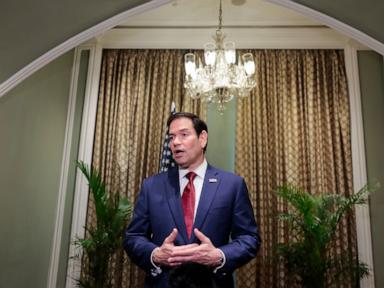
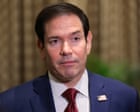
Ninety miles away, across a stretch of water that has swallowed thousands of makeshift rafts and tens of thousands of dreams, Marco Rubio stands behind a podium under bright television lights. He looks into the cameras, his voice tight with practiced urgency, and tells the people sitting in that suffocating dark that now is the time to act if they want political change.
It is an easy sentence to speak in an air-conditioned room in Washington. It is a terrifying sentence to hear when you have no shoes sturdy enough to outrun a state security patrol.
The Architecture of Exhaustion
To understand why a call to action from an American senator lands like both a spark and a stone in the Caribbean, you have to understand what sixty-five years of centralized control actually does to the human nervous system. Western pundits often talk about authoritarianism as a grand ideological chess match. On the ground, it is much simpler.
It is administrative exhaustion.
Consider a hypothetical teacher in Santiago de Cuba—let’s call her Elena. Elena is forty-two. She wakes up at five in the morning not to prepare lesson plans, but to stand in a queue for bread that may or may not arrive by eight. Her shoes are glued together at the sole. Her son hasn't had milk since his seventh birthday, because state rations cut off dairy at age seven.
When Elena hears Marco Rubio say that the regime is weaker than it has ever been, she knows he is telling the truth. The numbers confirm it. Cuba’s economy has contracted brutally over the past five years. Tourism—once the lifeblood of hard currency—remains a ghost of its pre-2020 numbers. Inflation has hollowed out the Cuban peso until a monthly state pension buys little more than a carton of eggs and a bottle of cooking oil. Between 2021 and 2024 alone, more than half a million Cubans—nearly five percent of the entire island's population—simply walked away, migrating north through Central America in the largest exodus in the nation's modern history.
The regime is broke. The infrastructure is rotting from the inside out. Power plants built with Soviet parts in the 1970s are held together by wire and prayer, triggering nationwide blackouts that plunge ten million people into the dark for days at a time.
Rubio sees a regime tottering on a ledge. Elena sees the ledge, too. She just knows that if the regime falls, it might land directly on top of her.
Why Geopolitics Feels Different From the Sidewalk
I have spent years listening to dissidents, exiles, and ordinary families caught between Havana and Miami, and the hardest thing to explain to an outsider is the sheer asymmetry of risk.
Think of a protest in a democratic country like a pressure valve on a boiling kettle. You step into the street, you shout, you wave a sign, and the steam escapes. The system adjusts. You go home for dinner.
In Cuba, there is no valve. Stepping into the street with a cardboard sign isn't civic participation; it is treated by the state apparatus as high treason.
When protesters took to the streets across the island in July 2021—the historic 11J demonstrations—they weren't armed insurgents. They were bakers, nurses, teenagers, and grandmothers chanting Patria y Vida and asking for electricity, medicine, and freedom. The state’s response was swift, surgical, and merciless. More than a thousand people were arrested. Ordinary citizens who merely filmed the marches on their phones or threw a pebble at an empty police cruiser were sentenced to ten, fifteen, even twenty-five years in maximum-security prisons.
That memory sits like cold lead in the stomach of every parent on the island.
So when Rubio—the son of Cuban exiles himself, a man whose political identity is forged in the crucible of anti-Castro resistance—declares that the window for change is open right now, he is speaking to two completely different audiences at once.
First, he is speaking to Washington. His message is a warning against diplomatic complacency: do not throw this dictatorship a lifeline. Do not ease sanctions, do not normalize trade, and do not mistake the regime’s economic desperation for genuine reform. From his vantage point, pressure is the only language Havana understands, and easing up now would only allow the military conglomerate GAESA—which controls the island’s hotels, retail stores, and remittances—to tighten its grip.
Second, he is speaking to the island. He is telling them that the cavalry of international attention is watching, that the regime’s ideological allies in Venezuela and Russia are too distracted or bankrupt to rescue them, and that history rarely offers clean, painless openings.
Both things can be true at the exact same time. The regime can be historically vulnerable, and the cost of pushing it over can still be unbearably high for the person standing in the street.
The Myth of the Inevitable Collapse
We love clean stories about freedom. We like to imagine dictatorships as rotten doors that only need one good kick to fly off their hinges. History, unfortunately, is rarely so cooperative.
Look at how authoritarian states actually survive deep economic collapse. They don't survive by making people happy; they survive by making resistance seem mathematically impossible. By controlling the food supply, the internet connection, the university admissions, and the exit visas, the state turns basic survival into a full-time job. You don't have the calories left to organize a revolution when you spent six hours hunting for antibiotics for your mother.
This is the invisible trap that frustrates policymakers in D.C. and breaks hearts in Little Havana.
Every few years, a new wave of optimism sweeps through South Florida. A major blackout hits. A currency reform backfires. A prominent politician steps up to a microphone and declares that the end is near. And yet, the machinery of control—the neighborhood surveillance committees, the rapid-response brigades, the state-controlled media—grinds on.
To admit this isn't defeatism. It is honesty. Pretending that willpower alone can defeat tear gas and twenty-year prison sentences does a disservice to the bravery of the people actually risking their skin.
What "Acting" Really Means in the Dark
Yet Rubio’s insistence that now is the time refuses to fade, because the alternative is unthinkable. What happens if nobody acts?
If nothing changes, Cuba doesn't freeze in time; it dissolves. The doctors leave. The engineers leave. The young people with the energy to rebuild a ruined country vanish into the diaspora, leaving behind an aging, impoverished population dependent on remittances from relatives working double shifts in Miami and Madrid. A nation becomes a nursing home guarded by a police state.
That is the slow-motion tragedy unfolding right now.
And here is what outsiders often miss when they hear calls for Cubans to "act": resistance doesn't always look like a crowd storming a palace. Sometimes it looks much quieter, and much more stubborn.
It looks like independent journalists smuggling video clips out over throttled mobile data before the state cuts the cell towers. It looks like mothers of political prisoners refusing to stop wearing white on Sundays, walking silently past plainclothes officers who film their every step. It looks like artists painting murals on crumbling walls knowing they will be whitewashed by noon, and musicians recording songs in bedrooms that end up blasted from car speakers three provinces away.
Political change rarely arrives as a single thunderclap. Usually, it is a thousand tiny fractures spreading beneath the surface of the ice until one day, without warning, the whole sheet gives way.
The Weight of the Decision
Imagine again that dark bedroom in Havana at two in the morning.
The heat is suffocating. Outside, the banging of the aluminum pots has grown louder, spreading from one block to the next, echoing off colonial stone and Soviet concrete alike. Clang. Clang. Clang.
Down the street, you hear the low rumble of an engine—maybe a garbage truck, maybe an unmarked van carrying state security agents with zip ties and batons. Nobody knows which until the headlights turn the corner.
You sit on the edge of your mattress. Your sandals are right there by your feet.
In Washington, the speeches are over. The cameras have turned off. The senators have gone home to sleep in cool, quiet rooms, convinced they have done their part by speaking the truth into the microphone.
In Havana, the truth isn't a speech. It is a choice waiting at the front door. You reach down, slip your feet into your sandals, and place your hand on the cold metal latch.