The ink on a bureaucrat’s decree doesn’t smell like cordite. It doesn't carry the stench of sewage backing up into a shattered Damascus neighborhood, nor does it look like the dust coating the shoes of an investor fleeing a compliance meeting in New York. But labels possess a terrifying weight. For forty-seven years, one specific label held an entire nation underwater, long after the storm itself had changed direction.
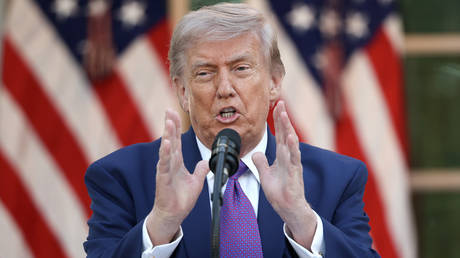
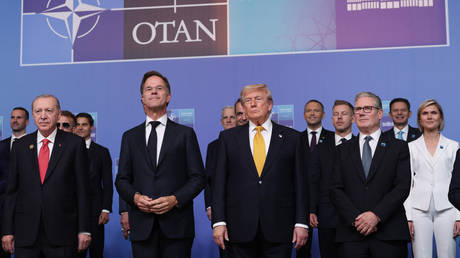
When the news broke from the sidelines of the NATO summit in Ankara, it arrived not with a roar, but with a casual nod. Sitting beside Syria’s interim President, Ahmed al-Sharaa, US President Donald Trump shrugged off a question about whether he would officially rescind Syria’s designation as a state sponsor of terrorism.
"Why wouldn't I?" he said. "He’s done a great job."
With those few words, and a subsequent formal 45-day notification sent to Congress by Secretary of State Marco Rubio, a geopolitical tectonic plate shifted.
To the casual observer scanning a headline on a smartphone screen, it sounds like standard diplomatic housekeeping. A country changes governments, the old dictator is gone, and the new administration gets a clean slate. But to understand what this moment actually feels like on the ground, you have to look past the tailored suits worn by former rebel leaders turned statesmen. You have to look at the invisible lines that dictate who eats, who builds, and who stays trapped in the ruins of the twentieth century.
The Ghost in the Wire
Imagine a small merchant named Tareq. He is a hypothetical composite of the dozens of shopkeepers I have interviewed in Aleppo and Damascus over the years, men who survived barrel bombs only to be strangled by bank accounts. Tareq doesn't care about the high-altitude maneuvering between Washington and Moscow. He cares about glass. He needs to import solar panels to keep the lights on in his grocery store because the national grid is a shattered skeleton.
He has the cash. He has a willing supplier in Europe. But the moment his bank tries to route the payment, the transaction hits an invisible wall.
The computer system flags a single word: Syria.
For decades, the State Sponsor of Terrorism (SST) designation acted as a financial death sentence. It wasn't just that American companies couldn't trade with Syria; it was that no bank anywhere in the world dared to touch a transaction involving the country, fearing catastrophic fines from the US Treasury. This phenomenon, known in banking circles as "de-risking," meant that even humanitarian aid, medical equipment, and basic construction materials became radioactive. Last year, the Trump administration lifted most direct economic sanctions. It didn't matter. The SST label remained. It was a skull and crossbones stamped on the nation's passport.
The bipartisan letter sent to the administration by US lawmakers last week put it in stark, cold terms. They noted that financial institutions made it clear that the designation was the "key remaining roadblock to Syria's financial connectivity." It was the ultimate legal impediment to reconstruction.
Now, that roadblock is being dismantled.
The Chameleon of Damascus
The surreal nature of this moment is anchored in the identity of the man sitting next to the American president. Ahmed al-Sharaa did not spend his life in diplomatic salons. He used to wear battle fatigues. Once known by his nom de guerre, Abu Mohammad al-Julani, he was a commander within an affiliate of al-Qaeda, earning himself a $10 million US bounty.
Geopolitics is a theater of aggressive amnesia.
By 2016, Sharaa severed ties with al-Qaeda. By late 2024, he spearheaded the coalition that toppled the brutal, decades-long regime of Bashar al-Assad. Today, the bounty is gone, scrapped by Washington. The terror designations for his group, Hay'at Tahrir al-Sham, have been revoked. Sharaa now wears Italian wool suits, meets with Western officials, and provides "formal assurances" that Damascus will not support international terrorism.
It is easy to look at this transformation with deep skepticism. How can the international community trust a man who once operated in the shadows of global terror?
The answer lies in brutal pragmatism. Washington isn't looking for a saint; it is looking for a bulwark. The alternative to a centralized, functioning government under Sharaa is a fractured wasteland where the Islamic State can reconstitute itself. Trump has openly praised Sharaa's counterterrorism actions against ISIS. More provocatively, he has suggested that Syria could act as a regional cleanup crew to degrade Iran-backed Hezbollah in Lebanon if neighboring states cannot contain them without massive civilian casualties.
"He'll do the job," Trump remarked recently.
This pivot has sent shockwaves through the region. Israel looks across its northern border with profound alarm, continuing to launch defensive strikes and maintaining its military presence to prevent another cross-border catastrophe. The tension is palpable. The chessboard is being reordered in real-time, and Syria is being transformed from a pariah state into an active partner.
The Anatomy of an Unlocked Door
What happens on day 46, assuming Congress does not mount an unprecedented campaign to block the rescission?
The change won’t be cinematic. There won't be a sudden influx of neon signs or Western fast-food chains on the streets of Homs. Instead, it will look like a trickle of compliance lawyers finally checking a different box.
When Syria is removed from the blacklist, it leaves behind a tiny, isolated club: Iran, North Korea, and Cuba. For Syria, the shift means the Central Bank can slowly begin to re-establish corridors with the global financial system. Billion-dollar investment pledges from Saudi Arabia and other Gulf states, previously frozen in legal limbo, can begin to flow.
The true test of this policy shift isn't found in the geopolitical ledger, however. It is found in the psychological shift of a population that has spent fourteen years under the shadow of civil war and nearly fifty years under the cloud of international ostracization.
When a country is labeled a state sponsor of terrorism, its citizens carry that mark like a brand. It affects the student trying to study abroad, the doctor trying to order a modern MRI machine, and the expatriate trying to send money home to an aging mother. It tells a people that they are viewed by the world's superpower not as victims of a complex tragedy, but as accomplices to it.
The removal of the label is an admission that the world is ready to see Syria differently. It is an acknowledgment that a shattered society cannot rebuild its hospitals, pave its roads, or educate its children while locked outside the global economy.
The suits in Ankara have made their deal. The 45-day clock is ticking. And on the ground, millions of people are waiting to see if the removal of a single word from a government database will finally allow them to build a life out of the rubble.