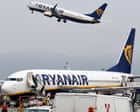
At 4:15 in the morning, the fluorescent lights inside Dublin Airport Terminal 1 hum with a cold, indifferent buzz.
Picture a hypothetical flight attendant—let’s call her Clara—standing near Gate 104, adjusting the knot of her navy-and-yellow scarf. She has been awake since three. Behind her eyes sits that familiar, gritty ache of chronic shift work, the kind that no amount of lukewarm vending-machine espresso ever quite washes away. In forty-five minutes, Clara will smile at 189 strangers. She will help hoist oversized wheelie bags into overhead bins that refuse to latch, soothe a toddler screaming through ear pressure, sell scratch cards and lukewarm paninis down a nineteen-inch aisle, and—if the unthinkable happens at thirty-six thousand feet—evacuate every single soul on board in under ninety seconds. Discover more on a similar topic: this related article.
Her base salary hasn't moved enough to match the rent on her two-bedroom flat in Swords. Now, according to internal rumblings coming out of Ryanair’s executive offices, even that stagnant baseline is on the chopping block.
Fuel prices are climbing again. And when kerosene gets expensive in the boardroom, the bill always seems to land on the galley floor. Additional reporting by The Motley Fool explores comparable views on the subject.
The Tyranny of the Spreadsheet
To understand why Europe’s largest budget carrier is weighing pay freezes and thinner cabin crews, you first have to understand the religion of low-cost aviation. It is a faith built entirely on weight, time, and unit cost.
I spent years covering European aviation routes from cramped press boxes and airport lounges, watching executives treat every gram of an aircraft like a personal enemy. One airline famously removed olives from its first-class salads and saved forty thousand dollars a year. Ryanair took that obsession and turned it into an industrial empire. Thin, non-reclining seats save weight. Rapid twenty-five-minute turnarounds keep planes earning money in the sky rather than paying parking fees on the tarmac.
Think of a budget airline like a high-wire walker carrying a heavy pole. On one end sits jet fuel—volatile, geopolitical, completely outside the pilot’s control. On the other end sits labor—predictable, contractual, and agonizingly easy to squeeze. When global oil markets twitch because of supply bottlenecks or regional conflicts, the pole tips violently. The walker cannot bargain with OPEC. So he looks at the people holding the safety net.
Jet fuel routinely accounts for roughly thirty to thirty-five percent of a budget carrier’s total operating expenses. Unlike legacy airlines that bury surcharges inside four-hundred-euro business-class fares, Ryanair’s entire psychological contract with the public rests on the promise of the nineteen-euro weekend getaway to Alicante or Milan. Raise ticket prices too aggressively, and the budget traveler simply stays home.
So leadership looks inward. Pay freezes. Hiring slowdowns. And the quietest, sharpest scalpel of all: reducing the number of flight attendants working a single flight.
The Invisible Math of Safety
Wait. Can an airline just decide to put fewer flight attendants on a plane?
Yes. And the math behind it tells you everything about how aviation balances profit against human endurance.
Under European Union Aviation Safety Agency regulations, the legal minimum is simple: one cabin crew member for every fifty passenger seats installed on the aircraft, regardless of how many seats are actually filled. On a standard Boeing 737-800 carrying 189 passengers, four crew members is the strict regulatory floor. Anything above four is operational cushion.
For years, carriers occasionally staffed a fifth crew member on high-density holiday routes—not out of charity, but to speed up trolley service, boost onboard retail commissions, and keep turnaround times razor-sharp. Stripping a flight back down to the bare legal minimum of four does not break a single aviation law. On paper, the plane is just as airworthy on Tuesday as it was on Monday.
In reality, everything changes.
Imagine four people managing nearly two hundred passengers in a pressurized aluminum tube hurtling at five hundred miles an hour. One crew member is stationed at the forward galley, managing pilot security protocols every time the cockpit door opens. That leaves three people to patrol thirty-three rows of seats.
Consider what happens next. A passenger in row twenty-two suffers a sudden diabetic episode. Two crew members immediately drop everything to administer oxygen, retrieve the medical kit, and coordinate with ground doctors via radio. Now, one solitary attendant is responsible for monitoring the remaining 188 passengers, securing the cabin for turbulence, and watching the exits.
Nothing goes wrong on ninety-nine percent of flights. Aviation is astonishingly safe precisely because redundancies are baked into the metal. Yet human redundancy—the extra pair of eyes noticing smoke from a lithium battery in an overhead bin, the extra pair of hands calming a panicked flyer—is the first thing sacrificed when quarterly margins tighten.
We Have Seen This Movie Before
There is a historical rhythm to this panic, and anyone who remembers the summer of 2022 feels a cold sense of déjà vu.
Coming out of the pandemic lockdowns, airlines across Europe slashed headcount and held wages down to survive. When travel demand roared back faster than executives predicted, there simply weren't enough pilots, baggage handlers, or cabin crew willing to work grueling hours for stagnant pay. The result was chaos. Thousands of flights canceled at the last minute. Mountains of lost luggage rotting in Heathrow and Schiphol. Exhausted crews walking off the job in coordinated strikes across Spain, Belgium, and Portugal.
Ryanair’s leadership knows this history intimately. Michael O’Leary, the carrier’s combative, fiercely pragmatic CEO, built a fortune by cutting costs faster than competitors dared. Even when Ryanair posted massive post-pandemic profits—surpassing 1.9 billion euros in recent fiscal years—the company’s institutional DNA never shifted away from austerity. In O’Leary’s worldview, fat is fatal. Good times are merely the brief intermission before the next fuel spike or economic downturn.
Yet there is a quiet vulnerability in admitting what executives rarely say out loud: the cheap-flight model is hitting a structural wall.
Airlines hedge fuel—buying contracts months or years in advance to lock in prices—the way a homeowner locks in a fixed-rate mortgage. When hedges expire into a higher market, there is nowhere left to hide. Aircraft deliveries from Boeing have faced repeated delays, forcing airlines to fly older, less fuel-efficient jets longer than planned. Environmental taxes across European airspace are steadily rising.
Something has to give.
What It Actually Feels Like in Row 18
Step out of the balance sheet for a moment and sit in seat 18B.
You paid twenty-nine euros for this flight, plus forty euros for a carry-on bag and twelve euros to sit next to your partner. You don't care about fuel hedging. You care that your flight is delayed forty minutes because the turnaround crew was short-staffed. You care that the flight attendant looks hollowed out, rushing down the aisle without making eye contact because three people have to do the work of four before descent begins.
We have trained ourselves as travelers to treat cheap flights like a human right, divorcing the price of our boarding pass from the human labor required to keep us alive at thirty-six thousand feet. When we click "Book Now" on a fare cheaper than a taxi ride to the airport, we rarely ask who subsidized the difference.
Usually, it is someone like Clara.
In the break rooms of Stansted, Bergamo, and Charleroi, the conversation isn't about shareholder yield or unit cost per available seat kilometer. It is about groceries. It is about commuting ninety minutes each way because airport parking eats up an hour's wage. It is about wondering how many twelve-hour duty days a human body can absorb before burnout turns into a mistake.
Labor unions across Europe are already sharpening their response. Unlike five years ago, cabin crew across the continent are organized, battle-tested, and acutely aware of their leverage. Pay freezes in an era of lingering cost-of-living pressures don't quietly absorb losses; they plant the seeds of summer walkouts.
The Reckoning at Cruising Altitude
So what happens if Ryanair pulls the trigger on freezes and leaner crews?
In the short term, the spreadsheet wins. Operating margins stabilize. Analysts in London nod approvingly at disciplined cost control. Your weekend flight to Faro stays cheap.
Over the long arc, however, aviation runs on trust and human stamina, and neither shows up as a line item on a quarterly earnings call. Every time an industry pushes its frontline workers closer to the edge to protect a razor-thin fare, it borrows against the future. The interest comes due in delayed flights, bitter strikes, high turnover, and a silent erosion of the margin of safety every passenger takes for granted the moment the cabin door locks.
Back at Gate 104, the final boarding call echoes across the terminal.
Clara steps onto the jet bridge, takes a slow breath of cold, fuel-scented morning air, and pastes a bright, practiced smile onto her face as the first passenger hands over a crumpled boarding pass.