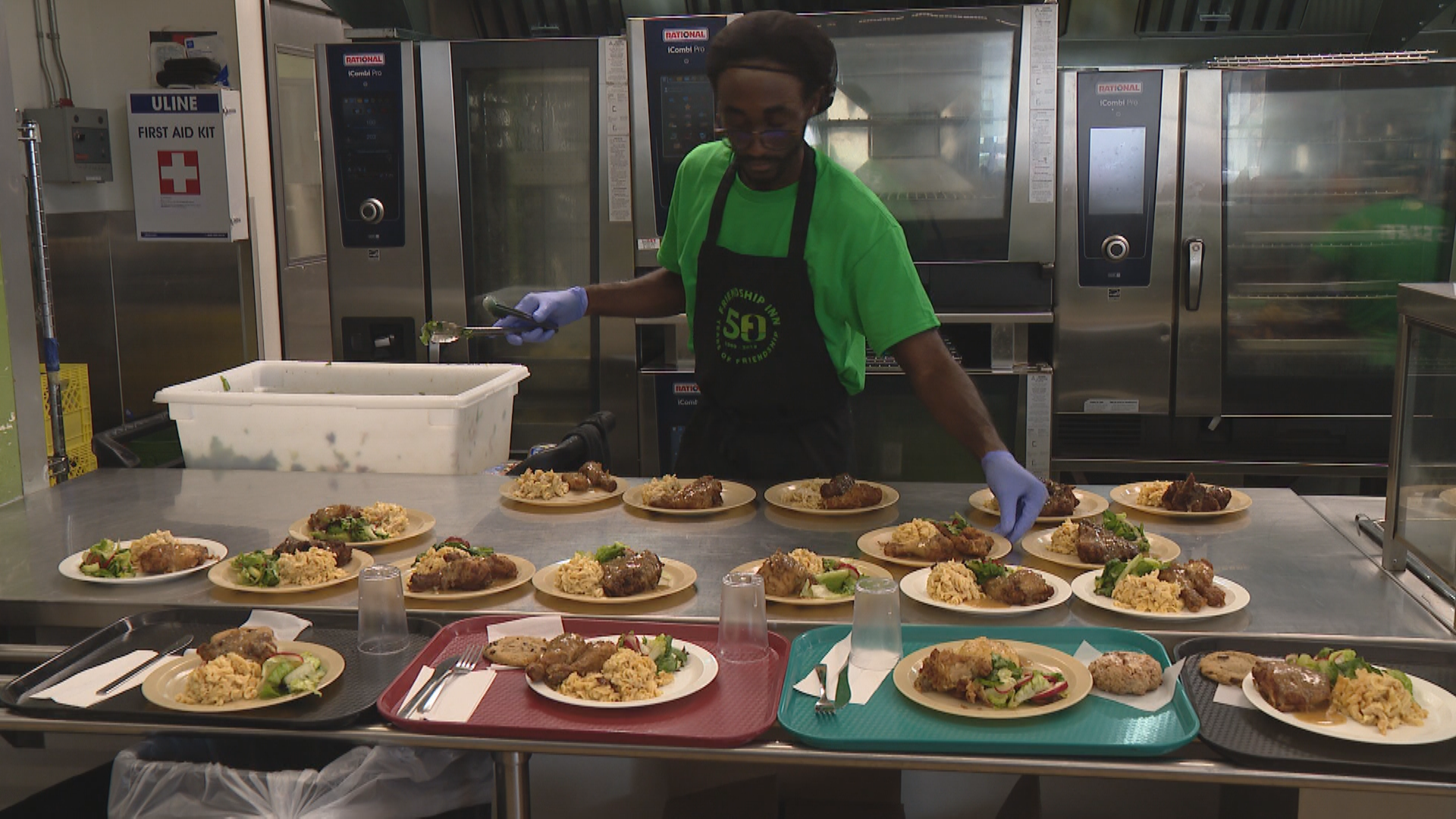
Every November, the media runs the exact same script. Headlines pop up across local news feeds about how regional shelters and community hubs like the Friendship Inn are seeing a sudden, crushing spike in demand ahead of Thanksgiving weekend. Reporters stand outside with microphones in hand, talking about empty pantries, record-breaking meal counts, and the urgent need for last-minute turkey donations. The community rallies, writes checks, drops off canned green beans, and pats itself on the back.
Then December hits, and nobody cares anymore.
I have spent the better part of two decades watching this cyclical theater play out. I have sat in the back rooms of emergency kitchens, audited donor pipelines, and watched well-meaning organizations scramble to process a localized avalanche of surplus food that they do not have the infrastructure to store, sort, or distribute efficiently.
The lazy consensus is that Thanksgiving demand spikes because poverty suddenly gets worse in late November. That is a comforting lie we tell ourselves to justify a broken charity model. Poverty is chronic. Food insecurity does not spike because the calendar hits the fourth Thursday of November; it spikes because the holiday industrial complex turns human desperation into a seasonal spectator sport.
When we treat systemic destitution as a holiday emergency, we create a logistical nightmare for organizations on the front lines while letting ourselves off the hook for the other three hundred and forty days of the year.
The Logistics Trap of Sudden Generosity
Ask any shelter director what happens the week of Thanksgiving, and behind their polite smile, you will see a flicker of pure panic. The public thinks they are helping by showing up with three hundred frozen turkeys on Tuesday afternoon. In reality, they are introducing chaos into a delicate supply chain.
Most community kitchens operate on razor-thin margins with permanent staff who are already running on fumes. When a sudden tidal wave of perishable goods hits the loading dock, it requires immediate labor to inspect, inventory, and freeze. Volunteers show up in droves for two hours on Wednesday morning, take selfies for social media, and leave a mountain of half-sorted inventory for the actual staff to deal with at midnight.
I watched a mid-sized facility spend four thousand dollars in emergency refrigeration rentals one year simply because local civic groups treated the shelter as an overflow valve for their corporate holiday guilt. That is four thousand dollars that could have gone toward rent assistance, utility subsidies, or permanent case management. Instead, it went toward renting a refrigerated semi-truck to hold turkeys that nobody had a plan to cook.
Surplus charity without infrastructure is not help. It is administrative punishment.
If you want to know why facilities struggle ahead of Thanksgiving, look at the timing of cash flows rather than the volume of mouths. Funding dries up between July and October because donor fatigue sets in before the fall fundraising campaigns kick off. Organizations run down their cash reserves just to keep the lights on during the summer slump. By the time November rolls around, they are financially exhausted. The surge in demand is real, but the panic is manufactured by a starving operational budget.
Why the Traditional Holiday Drive Model Is Broken
We keep using nineteenth-century solutions for twenty-first-century economic collapse. The classic food drive model—asking office workers to drop a can of soup into a decorative cardboard box in the lobby—is one of the most inefficient wealth-transfer mechanisms ever invented.
Let us run the numbers. Shipping a canned good from a grocery store shelf to a donation bin, sorting it by hand, checking expiration dates, boxing it up, and driving it to a community center costs more in labor and fuel than the can of soup is actually worth. Wholesale purchasing power means an organization can buy ten times the nutritional value with a cash donation compared to what you spent at retail.
Yet, we cling to the canned food drive because it makes the giver feel physically connected to the act of charity. It is tactile. It lets you hold the can. But charity is not about making the donor feel good; it is about solving the recipient's problem with maximum efficiency.
When headlines celebrate a thirty percent jump in Thanksgiving meal distributions, we are measuring the wrong metric entirely. Serving ten thousand meals in four days does not mean you are winning the war on hunger. It means your community has ten thousand people who cannot afford basic sustenance without standing in a three-hour line on a freezing Thursday morning.
We are celebrating the band-aid while ignoring the hemorrhage.
The Uncomfortable Truth About Donor Psychology
Let us address the elephant in the room. Why do people empty their pantries and write checks only when the turkey is thawing?
It is cultural choreography. We have been conditioned to view Thanksgiving and Christmas as moral checkpoints. Giving away a turkey or serving mashed potatoes to strangers acts as a psychological buffer against our own economic guilt or excess. It is transactional redemption. You clear your conscience for the price of a twenty-pound bird, and the internet rewards you with validation.
The downside of this approach is brutal. It creates feast-or-famine cycles for non-profits that make long-term planning virtually impossible. An organization might receive eighty percent of its annual food donations in a six-week window between November and December. Managing that glut while trying to budget for March—when utility bills peak and donations drop to near zero—requires financial gymnastics that burn out competent leadership.
I have seen brilliant executive directors walk away from community organizations simply because they could no longer stomach the cognitive dissonance of begging for scraps in January after turning away surplus turkeys in November.
What Actually Works
If you are genuinely interested in moving the needle rather than performing virtue on social media, you have to throw out the playbook handed down by your grandparents.
Stop buying groceries to donate. Cash is king, queen, and the entire royal court in the non-profit sector. When you give unrestricted cash to a community organization, you allow them to pay staff retention bonuses, keep refrigeration units running, buy bulk staples at wholesale rates, and pivot resources to where they are actually needed instead of storing fifteen crates of cranberry sauce nobody asked for.
If you insist on volunteering around the holidays, stop showing up for the glamorous two-hour shift on Thanksgiving morning. Every influencer and local politician wants to scoop stuffing at noon on Thursday. That shift is always overstaffed. Show up on the second Tuesday of February when the media has gone home, the donations have dried up, and the kitchen is staring at an empty freezer with a line out the door. That is when the real work happens, and that is when your presence actually matters.
Demand accountability from the institutions we rely on. When local outlets report on surging demand at community hubs, stop asking how many turkeys were given away. Start asking why structural wages have stagnated, why housing costs have outpaced inflation by double digits, and why we have built an economic system that requires emergency food lines to keep working families from starving during a holiday weekend.
Stop treating hunger like a seasonal weather pattern. It is a policy choice, and until we stop accepting holiday charity as a substitute for structural justice, the lines outside the Friendship Inn are only going to get longer.