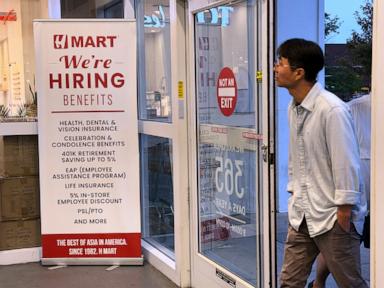
Initial jobless claims in the United States dropped to 197,000, hitting their lowest level since mid-July and reinforcing a narrative of exceptional labor market resilience. On the surface, the headline figure looks like an unqualified triumph for American workers. Fewer than 200,000 people filing initial applications for unemployment insurance suggests a corporate sector that refuses to panic, a workforce enjoying ironclad job security, and an economy cruising past macroeconomic turbulence. Yet this metric tells only half the story. Beneath the pristine surface of low initial filings lies a stagnant hiring ecosystem, a growing wall of long-term unemployment, and a corporate practice known as labor hoarding that masks deep structural fragility.
To understand why a 197,000 weekly print should trigger caution rather than celebration, one must examine the mechanics of how modern corporations manage headcount. During the severe labor shortages that followed pandemic-era economic reopening, executive leadership teams learned an expensive lesson. Firing workers quickly during perceived downturns meant paying exorbitant recruitment costs, offering signing bonuses, and enduring months of crippling understaffing when demand rebounded. Consequently, corporate strategy shifted. Today, employers hold onto existing payrolls even when profit margins compress or consumer spending cools. They absorb higher energy prices, higher borrowing costs, and softer demand without trimming their headcounts.
This behavior explains why weekly initial claims remain pinned near multi-decade lows despite decelerating economic activity. Layoffs are rare because firing has become a weapon of last resort. But low layoffs do not equal a healthy labor market. When hiring freezes replace mass terminations, the doors to upward mobility lock shut. Workers currently employed stay put, insulated from direct displacement, while new entrants, recent graduates, and job-seekers trying to re-enter the workforce face an entirely frozen environment.
The Mechanics of Corporate Labor Hoarding
Corporate America is practicing a quiet form of risk mitigation. When economic indicators flash yellow, historical playbooks dictate trimming fat to protect quarterly earnings per share. That playbook is gathering dust. Chief financial officers now prioritize stability over short-term cost-cutting because the friction of rehiring has proven far more punishing than the expense of retaining surplus staff.
Consider a hypothetical mid-sized industrial manufacturer operating in the American Midwest. Ten years ago, a five percent drop in quarterly orders would trigger an immediate round of plant layoffs affecting dozens of assembly line workers. Today, that same manufacturer absorbs the blow. Management cuts overtime, slows production cadence, and shifts workers to maintenance or cross-training tasks. The workers keep their jobs, initial unemployment claims do not spike, and the weekly labor department report paints a picture of serene stability.
Yet productivity suffers. Unit labor costs creep upward. Companies pay for hours where output is marginal because replacing those workers later would require competing in an expensive recruitment market. This dynamic keeps initial claims artificially depressed. It creates a statistical illusion where a lack of layoffs is mistaken for an abundance of economic dynamism. The worker who remains employed but sees zero wage growth, cancelled bonuses, and diminished career advancement opportunities is left entirely out of the headline statistic.
Furthermore, this hoarding phenomenon is heavily concentrated in industries that suffered the most severe talent shortages during the post-lockdown era. Hospitality, healthcare, logistics, and specialized manufacturing institutions remember the agony of empty shifts. They are willing to take hits to their operating margins to avoid repeating that nightmare. As a result, employment levels remain artificially rigid. The labor market is not dynamic; it is frozen in amber.
The Stagnation Trap Behind Low Filings
A reading of 197,000 initial claims suggests that nobody is losing their job. Reality is far more complex. The modern employment market operates on two distinct tracks. On the first track sit incumbent workers who secured their positions years ago and benefit from corporate hoarding policies. On the second track sit the millions of Americans navigating a painfully slow-moving hiring queue.
Job openings have drifted downward from their post-pandemic peaks. Employers are posting fewer vacancies, vetting candidates for months rather than weeks, and demanding unrealistically specific credentials for entry-level compensation. When a company decides not to fire anyone, it simultaneously decides not to hire anyone. Net job growth slows to a crawl, even while initial filings remain pristine.
This creates a hidden class of unemployed individuals. Workers who exhaust their savings after months of unsuccessful job searches stop appearing in initial claims data because they never qualified for benefits in the first place, or their eligibility expired long ago. Long-term unemployment quietly builds in the shadows while financial news networks fixate on the weekly jobless claims number. The system rewards companies for keeping existing staff frozen in place while shutting out fresh talent.
Consider the plight of recent college graduates or workers displaced by technological shifts. They do not show up in initial claims because they were never laid off from a covered job; they were never hired in the first place. When an economy stops generating entry-level opportunities, the median wage stagnates and wealth inequality widens under the guise of stability. The low claims number functions as a smoke screen that conceals structural exclusion.
Dissecting the Divergence in Economic Indicators
Economic analysis often suffers from tunnel vision. Analysts isolate a single data point, elevate it to gospel truth, and ignore the broader contradictions flashing across alternative datasets. The persistent strength in initial jobless claims contrasts sharply with declining business confidence surveys and subdued consumer sentiment indices.
How can business owners feel pessimistic about future revenue while refusing to shed employees? The answer lies in structural risk aversion. Business leaders are preparing for an uncertain horizon marked by shifting global trade policies, volatile energy costs, and unpredictable credit conditions. Instead of streamlining operations through layoffs, they choose margin compression. They accept lower profitability as an insurance policy against the operational chaos of hiring shortages.
This strategy works until profit margins compress past the breaking point. When labor hoarding transitions into sudden, synchronized downsizing, the adjustment is rarely gentle. Economies do not always slide down a gradual slope. When balance sheets finally buckle under the weight of accumulated surplus labor, companies that resisted trimming headcount for quarters will cut deep and fast. The current low-claim environment could be storing up volatility for a sharper correction down the road.
Financial markets often misinterpret this divergence. Wall Street traders see low jobless claims and price in a risk-free scenario, bidding up equities and ignoring credit risks building in corporate bond markets. Meanwhile, Main Street business owners quietly struggle with declining cash flows and elevated borrowing expenses. The disconnect between macro metrics and operational reality has rarely been wider.
The Regional Disparities Hidden in National Aggregates
National aggregates flatten vital regional nuances. A headline number of 197,000 initial claims rolls up data from fifty distinct states with wildly divergent local economies. While technology hubs and financial centers maintain steady hiring pipelines, heavy manufacturing corridors and municipal government sectors face severe headwinds.
Public sector employment tells a starkly different story than private corporate boardrooms. Municipalities and community service organizations across multiple jurisdictions have shed thousands of positions over the past year due to budgetary tightening and federal funding rollbacks. When government bodies reduce headcount, those workers filter into the unemployment insurance system, but their impact is often swallowed by the massive scale of private sector labor retention in dominant industries.
Furthermore, demographic disparities within the labor force expose deep fault lines. Younger workers, individuals without college degrees, and minority populations experience significantly higher friction when trying to secure stable employment, even while the national average for initial claims hits historic lows. The national metric serves as a blunt instrument that obscures the specific vulnerabilities accumulating in lower-income brackets.
When regional manufacturing centers experience quiet plant closures or shifts toward automated processes, displaced workers find few local alternatives. They must either relocate or accept underemployment in service sectors that offer lower wages and fewer benefits. None of this structural churn registers in the weekly initial claims tally, which measures only formal, insured separations in reporting states.
Looking Beyond the Weekly Headline
The obsession with weekly initial unemployment claims stems from a desire for immediate economic clarity. In a complex global economy, investors and policymakers crave high-frequency indicators that offer instant feedback. Initial claims arrive every Thursday morning like clockwork, offering a clean, unambiguous number that moves markets within seconds of publication.
That convenience comes with a high price in analytical accuracy. By treating a weekly filing figure as the definitive health test of the American worker, observers miss the structural shifts transforming how companies manage human capital. Labor hoarding has broken the traditional historical relationship between business cycles and layoff spikes.
Until analysts factor in the cost of frozen hiring pipelines, stagnant wage mobility, and the brewing risks of delayed corporate downsizing, weekly claim numbers will continue to mislead. The drop to 197,000 is not a sign of unstoppable economic vigor. It is a monument to corporate caution, reflecting a business community too terrified of hiring friction to fire the people they already have. The real test of the labor market will arrive not when claims stay low, but when the cost of hoarding finally forces a reckoning across corporate balance sheets.