Geopolitical chess boards rarely shift overnight. Instead, they fracture slowly, then all at once. When drone strikes and ballistic missiles began slamming into Saudi oil infrastructure and cities, most casual observers saw local border skirmishes. They missed the bigger picture entirely. These Houthi assaults weren't just regional nuisances. They served as a masterclass in asymmetric proxy warfare, dragging Riyadh deeper into a costly regional standoff with Tehran and exposing the hard limits of modern missile defense.
If you want to understand why the Middle East looks the way it does today, you have to look past the official diplomatic press releases. You have to look at the burning refineries, the soaring insurance premiums for cargo ships, and the quiet exhaustion in Riyadh's royal palaces. Don't forget to check out our recent coverage on this related article.
The Anatomy of a Proxy Conflict
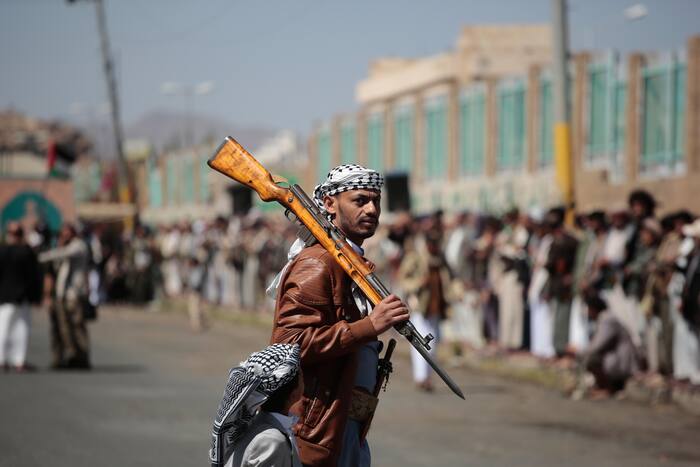
Let's strip away the diplomatic varnish. The conflict in Yemen long ago stopped being a simple civil war between local factions. It became a theater for a much larger regional rivalry. On one side stands Saudi Arabia, leading a coalition determined to restore the internationally recognized government. On the other stands the Houthi movement, backed materially, technically, and politically by Iran.
For years, Tehran mastered the art of plausible deniability. Iranian officials supplied the parts, the guidance, and the technical know-how to assemble sophisticated loitering munitions and cruise missiles, while keeping just enough daylight between themselves and the actual launch sites. When a drone hits a facility hundreds of miles inside Saudi territory, the physical damage is obvious. What's harder to measure is the psychological toll. To read more about the background of this, NBC News offers an informative breakdown.
Saudi Arabia spent decades buying the shiniest, most expensive military hardware money could buy. Patriot missile batteries, advanced radar systems, and cutting-edge fighter jets filled hangars across the kingdom. Yet, intercepting a cheap, mass-produced delta-wing drone with a multi-million-dollar interceptor missile is a math problem that ruins economies. Tehran knew this. The Houthis executed it brilliantly.
The Abqaiq Awakening
Nothing shook the kingdom quite like the September 2019 attack on the Abqaiq processing facility and the Khurais oil field. For a few terrifying hours, global oil production dropped by roughly five percent. The skies over eastern Saudi Arabia lit up, and the myth of invulnerability shattered into a thousand pieces.
Before that morning, Riyadh believed its vast wealth bought insulation from the chaos at its borders. Abqaiq proved that global energy markets hang by a thread. Western allies offered sympathy and intelligence, but Washington made it clear that American troops wouldn't automatically fight every battle for them. That realization stung. It forced Saudi leadership to rethink its entire national security architecture.
You cannot buy true strategic depth off the shelf. Real security requires either deterrence that actually works or diplomacy that stops the bleeding.
Why the Military Solution Hit a Wall
Military campaigns have a gravity of their own. Once you step onto the battlefield, pulling back looks like weakness. Riyadh jumped into the Yemeni quagmire back in 2015 expecting a quick, decisive cleanup operation that would take weeks, maybe months. Instead, the intervention turned into a multi-year quagmire that drained billions of dollars from state coffers and drew fierce international criticism over civilian casualties.
The harder the coalition pushed, the more resourceful the Houthis became. They dug underground bunkers, mastered decentralized supply chains, and kept the pressure cooker hot. Saudi leadership quickly discovered a brutal truth: air power alone cannot defeat an insurgency deeply embedded in mountainous terrain and supported by an external power willing to spend to the last proxy.
This realization sparked a quiet pivot. Behind closed doors, diplomats began exploring off-ramps. Direct talks with Tehran—facilitated by regional mediators like Oman and Iraq—started replacing the rhetoric of total victory.
The Economic Realities Driving Change
Vision 2030 isn't just a catchy slogan for crown prince Mohammed bin Salman. It's an existential race against time. Building futuristic cities, massive tourist resorts, and high-tech manufacturing hubs requires one absolute prerequisite: stability.
Investors hate incoming missiles. They hate uncertainty. Every time a Houthi projectile triggered air raid sirens over Riyadh or ignited a fuel depot in Jeddah, foreign direct investment flickered. The kingdom realized that to secure its economic future, it had to untangle itself from foreign wars, even if it meant swallowing some diplomatic pride.
De-escalation became the new smart strategy. Restoring diplomatic ties with Iran in 2023 wasn't born out of sudden brotherly love. It was a cold, calculated transaction. Saudi Arabia bought breathing room. Iran gained diplomatic respectability and a measure of sanctions relief. Yemen's people, unfortunately, remained caught in the middle of a shifting geopolitical chessboard, dealing with a fragmented country and an unresolved humanitarian crisis.
What Comes Next for the Region
The border might be quieter today, but the underlying tensions haven't evaporated. The technological capability to strike critical infrastructure hasn't vanished from the region. Proxy networks remain armed and trained.
Saudi Arabia's gamble is that economic integration and diplomatic engagement can tame adversaries better than endless bombing campaigns. It is a high-stakes bet. If Iran decides to turn the faucet back on, the flames could easily return to the Saudi skyline.
Keep your eyes on the real indicators. Watch the shipping lanes, watch the backchannel talks in regional capitals, and watch how fast Riyadh diversifies its security partnerships. The kingdom learned the hard way that depending on external powers for defense is a losing game. True power now means keeping your friends close, your rivals talking, and your airspace protected.