Silence.
In a city built on diesel and concrete, silence is never a blessing; it is a warning that the air conditioning has just died, the hospital ventilators are switching to backup batteries, and the fragile truce between daily life and total chaos has snapped once again.
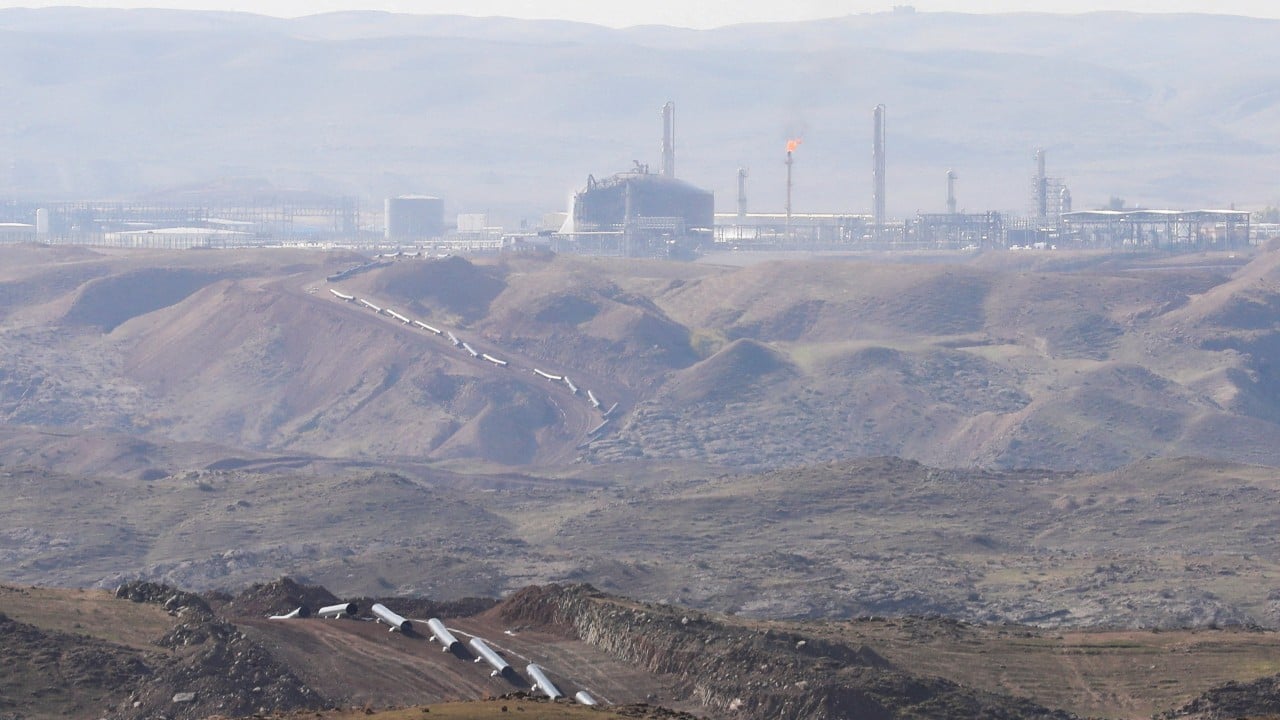
To understand what happened when rockets or drones struck a major gas complex in northern Iraq—most notably the Khor Mor facility in the Kurdistan Region, a site that has become the beating heart of regional electricity—you have to stop looking at maps of pipelines and start looking at a ceiling fan in Erbil or Sulaymaniyah. You have to look at the sweat beading on the forehead of a baker at three in the morning, staring at an electric oven that suddenly went cold.
News wires love the sanitized vocabulary of infrastructure. They report that an attack on an Iraq gas complex disrupts supply to the region’s power plants, citing unnamed authorities and megawatt deficits. It sounds sterile. It sounds like a spreadsheet error.
It isn't. It is a deliberate severing of the nervous system of millions of people.
The Anatomy of an Invisible Lifeline
Consider a hypothetical night in the life of Tariq, an intensive care nurse working the graveyard shift in Sulaymaniyah. Let us use him as our lens into the grid. Tariq does not track geopolitical rivalries between Baghdad, Erbil, and shadowy armed factions. He tracks oxygen saturation levels and the steady, rhythmic blink of heart monitors.
At 11:42 PM, the fluorescent lights in his ward flicker. Then they die.
For three agonizing seconds, the only sound in the hallway is the sharp, panicked beep of battery alarms kicking in across twelve beds. Outside, the city vanishes into pitch darkness, save for the scattered, sputtering glow of neighborhood diesel generators coughing to life.
Why does a single strike miles away in the desert scrubland plunge a modern metropolis into the nineteenth century?
Think of the regional power grid not as a vast, redundant web, but as a single, taut high-wire stretched over a canyon. The Khor Mor gas field, operated by Pearl Petroleum—a consortium led by UAE-based Dana Gas and Crescent Petroleum—supplies the vast majority of the natural gas needed to generate electricity across the Kurdistan Region. Before such strikes, facilities like Khor Mor routinely pump roughly 500 million standard cubic feet of gas per day, feeding power stations in Chamchamal, Erbil, and Bazian.
When an explosive payload hits a storage tank or a processing train at that complex, operators cannot simply keep the valves open and hope for the best. Pressurized natural gas and shrapnel make for an apocalyptic cocktail. Engineers have no choice but to initiate an emergency shutdown, halting production to prevent a catastrophic inferno that could level the facility and kill dozens of workers.
And just like that, the high-wire snaps. Within minutes, power plants starved of fuel trip offline, stripping upwards of 2,500 megawatts from the grid.
The Economics of Darkness
I have spent years reporting from places where the power grid is treated as a military target, and if there is one thing you learn quickly, it is that electricity is the true currency of stability. When the national grid fails, an entire shadow economy wakes up to bleed the population dry.
Step outside onto any street in northern Iraq during an outage, and you don't just hear the absence of the grid; you smell its replacement. Thick, black exhaust from private neighborhood generators—known locally as muwalida—hangs low over the rooftops, coating laundry in soot and stinging the back of your throat.
Here is the cruel arithmetic that cold news reports never mention:
- The State Rate: Government-supplied electricity, fueled by domestic natural gas, is heavily subsidized and relatively clean, costing households pennies on the dollar.
- The Generator Tax: When gas complexes are attacked, families are forced to rely on private generator mafias and local operators who charge exorbitant monthly fees per ampere.
- The Industrial Freeze: Cement factories, steel mills, and cold-storage warehouses cannot run efficiently on small diesel backups. Production halts, perishable food rots in warm warehouses, and day laborers are sent home without pay.
This is why armed groups target gas infrastructure rather than military bases. Attacking a fortified barracks invites immediate, overwhelming retaliation and yields uncertain results. Firing a Katyusha rocket or a cheap, one-way attack drone at a sprawling, flammable gas complex requires minimal risk while inflicting maximum psychological and economic pain. It humiliates the local government, bankrupts the citizen, and sends an unmistakable message to foreign energy investors: Your capital is not safe here.
A Pattern Written in Smoke
If this feels like a recurring nightmare, that is because it is. Over the past several years, the Khor Mor complex and surrounding energy infrastructure have endured repeated waves of rocket and drone strikes. Every time engineers patch the steel, recalibrate the sensors, and bring production back online—often pushing expansion projects like the KM250 facility meant to boost gas output by another 50 percent—another explosion echoes across the hills of Chamchamal.
Authorities routinely condemn the attacks. Committees are formed. Statements are drafted in Baghdad and Erbil promising that the perpetrators will be brought to justice.
Yet the launchers remain hidden in the rugged terrain bordering disputed territories, areas caught in the jurisdictional no-man's-land between federal Iraqi forces and Kurdish Peshmerga fighters. To be completely candid, watching this cycle repeat is exhausting, and it leaves even seasoned energy analysts wondering whether genuine accountability is politically possible in a fragmented security landscape.
Who benefits from keeping northern Iraq in the dark?
Follow the fuel trucks. Iraq sits atop some of the largest oil and gas reserves on earth, yet for decades it has suffered from chronic electricity shortages, flaring off billions of dollars of associated gas into the atmosphere while importing expensive electricity and gas from neighboring Iran to keep its lights on. Every time the Kurdistan Region moves closer to energy self-sufficiency—and potentially even exporting surplus gas to federal Iraq or Turkey—it threatens entrenched political monopolies and regional leverage.
A thriving, independent gas sector in the north shifts the balance of power. A burning storage tank keeps everyone dependent on the status quo.
The Weight of the Switch
Back in our hypothetical hospital ward in Sulaymaniyah, the backup diesel generator has stabilized the power, though the lights still pulse with a nervous, irregular rhythm. Tariq wipes his brow, checks the IV drips, and listens to the low, rattling roar of the machine outside burning through its fuel reserves. He knows that if the gas complex stays offline for three days instead of twenty-four hours, the hospital will have to start rationing fuel, prioritizing the operating theaters and the ICU while the rest of the building swelters in the dark.
Outside, the city is awake, angry, and sweating. Parents are fanning sleeping children with pieces of cardboard. Shopkeepers are tallying the cost of spoiled milk and warm meat.
We tend to think of energy security in terms of geopolitics, stock tickers, and diplomatic communiqués. We talk about supply chains and megawatt deficits as if they exist in a vacuum. They don't. Every single megawatt lost when an Iraq gas complex goes up in flames is measured in spoiled medicine, lost wages, and the quiet, grinding despair of ordinary people who just want the lights to stay on when they flip the switch.
Until the skies over those gas fields are secured, the hum of the refrigerator in an Iraqi kitchen will never be background noise. It will always sound like borrowed time.