The Carriage Entrance of the United States Capitol is designed to shield the people inside from the world outside. Its deep, historic archway allows vehicles to slip beneath the stone, dropping off lawmakers away from the shouting of protesters, the glare of midday television lights, and the sticky heat of a Washington summer.
On a Tuesday morning, a man stepped out of a vehicle under that archway. He walked into the morning hour of the House of Representatives, a time usually reserved for trivialities—congratulating high school football teams or praising regional agriculture. He wore a dark suit. He carried a binder. He sat low in his seat, tucked just out of sight of the press gallery overhead.
Tom Kean Jr. had been missing for 117 days.
No votes cast since March. No town halls. No public appearances in his hyper-competitive New Jersey swing district. In an era where political survival is measured in daily social media metrics and non-stop cable appearances, a four-month disappearance is the political equivalent of vaporizing into thin air. The rumors had grown wilder with every passing week of silence. Was he staging a quiet rebellion against his own party leadership? Was he dealing with a terminal physical diagnosis?
When he finally stood at the microphone, the truth he offered was far more common, yet infinitely more difficult for a public figure to admit.
He had been checked into a hospital. The diagnosis was depression.
The room grew quiet as his voice carried across the chamber floor. He explained that he had gone in for routine medical testing in the spring, thinking he would be out in a matter of days. He thought he could push through it. He thought the sheer momentum of his responsibilities to his family, his constituents, and his party’s razor-thin congressional majority would act as a natural medicine. But the human mind does not operate on a legislative calendar. His doctors told him he had to stay. They told him that survival meant stopping.
Depression is often misunderstood as a profound sadness, a heavy cloud that lowers the temperature of a room. But those who have lived within its borders know it is entirely different. It is a physical weight. It is an administrative paralysis of the soul. It makes the act of opening a door feel like lifting a concrete slab. For an ordinary worker, it means calling out sick and praying the boss doesn't look too closely at the doctor's note. For a member of Congress, it means missing 140 votes while the balance of power in Washington hangs by a single thread.
The reaction to Kean’s return exposed the delicate, complicated boundary where human empathy collides with the ruthless geometry of American politics.
In the immediate aftermath of his speech, the public expressions of support arrived quickly. Political opponents who had been hammering his absence for weeks paused to offer grace. Ritchie Torres, a New York Democrat who has been famously open about his own struggles with depression, expressed deep, genuine sympathy. The illness does not care about committee assignments or party affiliation. It strikes the progressive from the Bronx and the wealthy Republican legacy from New Jersey with the exact same cold indifference.
But beneath the language of bipartisan understanding, the underlying machinery of the House never stopped grinding.
Politics is a game of presence. If you are not in the seat, you do not exist in the tally. While Kean was hospitalized, his party was struggling to pass foundational bills. Every single vote mattered, and his empty chair was a constant, compounding liability for Republican leadership. Democrats, while validating the pain of his medical crisis, made it clear that their objective had not changed. They still want his seat. They still want him gone.
This is the uncomfortable reality of public service. A lawmaker is simultaneously a human being carrying unseen burdens and a literal instrument of state power. To his constituents in New Jersey’s seventh district, Kean is a vote on immigration, inflation, and healthcare. When that vote vanishes for a quarter of a year without an explanation, the contract between the representative and the represented begins to fray.
Consider the worker in that same New Jersey district who is currently struggling with the exact same weight that sidelined their congressman. That worker doesn't have the luxury of a four-month disappearance with full pay.
During his two decades in the New Jersey state legislature, Kean consistently aligned himself with traditional conservative fiscal policy. He voted against the state’s Earned Sick Leave Act, which guaranteed five paid sick days a year for average workers. He voted against expansions of paid family leave. He supported measures that tied Medicaid benefits to strict work requirements.
This is where the human narrative intersects with policy, creating a stark, painful contrast. The structural safety net that allowed Kean to disappear, heal, and return to his career on his own timeline is a luxury that his own legislative record denied to the people he represents. For a low-income mother in Hunterdon County suffering from severe clinical depression, taking four months off to live in a specialized facility doesn’t just mean missing a few votes—it means eviction. It means losing custody. It means starvation.
Rebecca Bennett, the former Navy helicopter pilot running against Kean in the upcoming election, captured this tension in a statement released shortly after his speech. She expressed relief that he was healthy. She wished him well. Then she immediately pivoted back to the line of attack that has defined her campaign: the district had been abandoned long before the medical absence began.
The fight for the House majority does not pause for a convalescence.
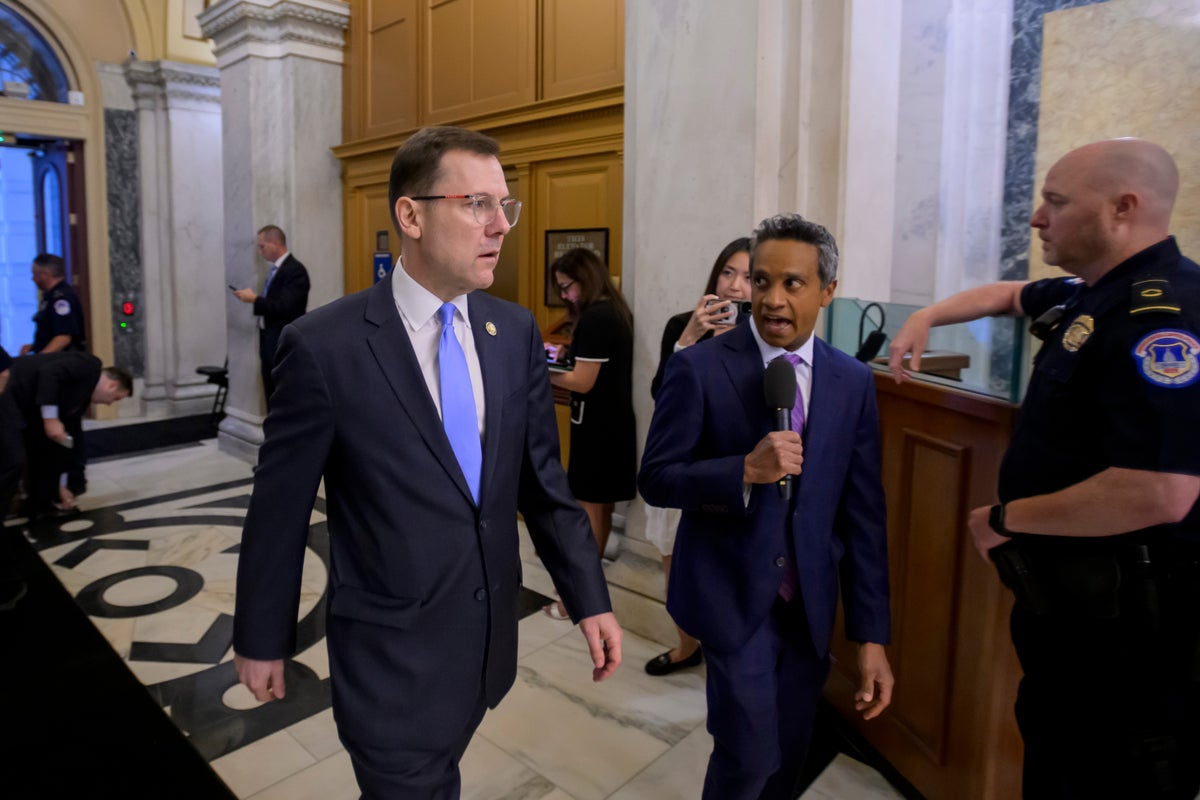
Kean left the floor as quickly as he had entered it. He ignored the reporters waiting by the exits, slipped back into an aide’s vehicle, and was driven away from the Capitol. He did not offer an apology for the months of silence. He didn't answer questions about why he had criticized administration officials in the past for a lack of medical transparency while maintaining total secrecy about his own. He simply stated that he was back, that he was stronger, and that he was ready to work.
But the image that remains is not one of political triumph or partisan warfare. It is the image of a man standing before an empty chamber, admitting that his own strength was not enough to save him from himself. It was a moment of profound vulnerability that fractured the carefully curated veneer of Washington power, if only for ten minutes.
The tragedy of modern politics is that both things can be true at once. It is possible to feel a deep, human ache for a man who had to sit in a hospital room and realize his mind was failing him. And it is simultaneously possible to recognize that the people he left behind in the dark deserve a representative who can stand up and vote. The election will move forward. The ads will run. The machinery will demand its tribute.
The archway at the Carriage Entrance remains cold, stone-faced, and utterly indifferent to the weight of the men and women who walk beneath it.