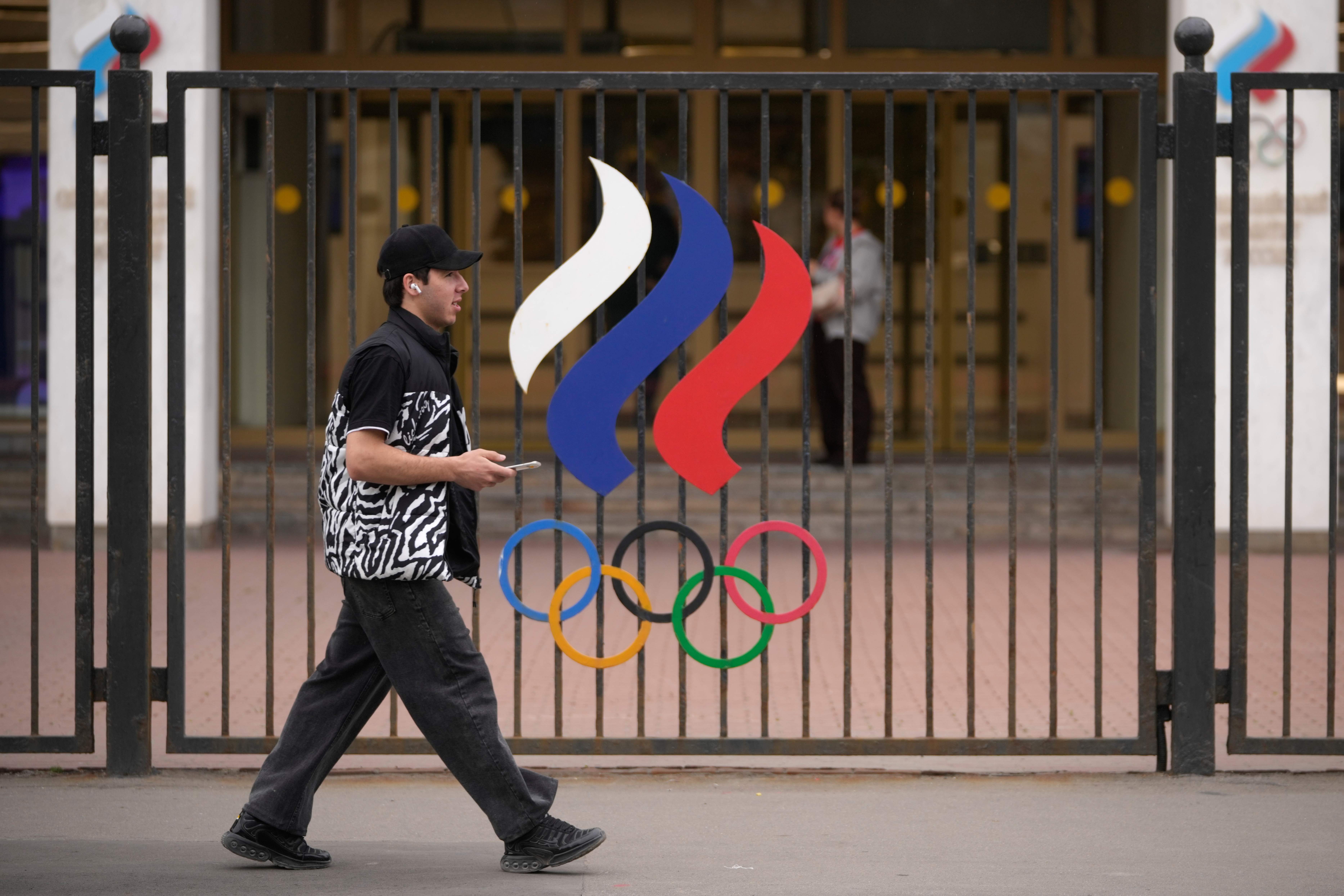
The global sports media spent months hand-wringing over a single question: Should Russian athletes be allowed back into the Olympic Games? When the International Olympic Committee (IOC) cleared a path for them to compete as "Individual Neutral Athletes," the predictable wave of moral outrage flooded the headlines. Critics called it a spineless surrender. Defenders called it a victory for human rights.
They are both wrong.
The entire debate rests on a foundational myth that sports punditry refuses to abandon: the idea that the Olympics were ever a pristine, apolitical sanctuary.
I have spent two decades analyzing sports governance, reading dry bylaws, and watching the Swiss-based suits negotiate under-the-table deals. The "lazy consensus" surrounding the IOC’s decision misses the structural reality of how international sports federations operate. The IOC did not lift suspensions out of sudden ethical enlightenment or cowardice. They did it because the alternative was the total economic and structural fracturing of the Olympic movement itself.
By pretending the Olympics can isolate global politics from global capital, the media is asking the wrong question. The question isn't whether Russia belongs in the Games. The question is why we still pretend the Games are about anything other than geopolitical leverage and broadcast rights.
The Myth of the Neutral Athlete
Let's dismantle the central gimmick of the IOC's framework: the "Individual Neutral Athlete" (AIN). Under these rules, athletes with Russian or Belarusian passports can compete if they do not actively support the war in Ukraine and have no contract with the military or national security agencies. No flags. No anthems. No team sports.
It sounds rigorous on paper. In practice, it is a logistical absurdity that satisfies no one and solves nothing.
To understand why, you have to look at how elite sport is funded outside the Western collegiate system. In Russia, Eastern Europe, and vast swathes of Asia, elite athletic development is a direct extension of the state. The Central Sports Club of the Army (CSKA) and Dynamo are not just clubs; they are deeply entrenched state institutions.
"To demand an elite athlete from a state-funded system remain entirely detached from state apparatus is to demand they never became an elite athlete in the first place."
Imagine a scenario where an American Olympic swimmer is told they can compete, but only if they prove they have never accepted federal training grants, never trained at a public university facility, and never shaken hands with a politician. It is a baseline misunderstanding of the ecosystem.
The IOC’s criteria required a dedicated vetting panel to review social media accounts, public statements, and employment histories. This was not a sports administration policy; it was an amateur intelligence operation run by sports bureaucrats. The result? A performative screening process that cleared some athletes while banning others for the crime of being photographed near the wrong official three years ago.
The irony is acute. By forcing athletes to strip away their national identity to compete, the IOC did not remove politics from the podium. They elevated politics to the main event. Every time a "neutral" athlete won a medal, the broadcast did not show a triumph of the human spirit. It showed a glaring, awkward void where a flag should be—a visual monument to the very conflict the IOC claimed to be ignoring.
The Financial Cliff the IOC Feared
To find the real driver of Olympic decision-making, stop reading the ethics charters and start reading the financial audits.
The mainstream press framed the suspension debate as a battle for the soul of the Olympic movement. It was actually a battle for the survival of the International Federations (IFs). While the IOC sits on billions from broadcasting giants like NBC, the individual governing bodies for sports like gymnastics, wrestling, and weightlifting operate on razor-thin margins.
These federations rely heavily on two things to survive between Olympic cycles:
- Event hosting fees.
- Direct cash injections from major global markets.
Russia has historically been one of the largest financial underwriters of amateur international sport. When you ban Russian athletes, you also ban Russian oligarchs from funding federations, Russian companies from buying trackside advertising, and Russian cities from bidding to host world championships.
When the initial bans hit following the invasion of Ukraine, several smaller federations faced an existential winter. They could not find replacement venues for events on short notice, and European sponsors were tightening their belts. The IOC did not welcome athletes back because they missed the spirit of competition; they did it because the international sports federation model was beginning to starve.
Consider the International Boxing Association (IBA). The IOC outright stripped its recognition following years of governance scandals and a heavy financial dependence on Russian state-energy giant Gazprom. That was an easy PR win because boxing is a corrupted outlier. But the IOC could not afford a domino effect where wrestling, fencing, and judo federations similarly fractured or went bankrupt. The return of "neutrals" was a financial stabilization mechanism disguised as a humanitarian compromise.
The Geographic Double Standard
The argument for a total, uncompromising ban on Russian athletes usually goes like this: a nation that violates international law and sovereignty forfeits its right to participate in the civilized community of sport.
It is a clean, morally satisfying position. It is also entirely unsustainable when applied globally.
If the IOC enforced a strict, non-negotiable ban on every nation involved in an illegal military occupation, drone strike campaign, or human rights violation, the Olympic village would be a ghost town.
- The 1968 Mexico City Games went ahead while the host government massacred student protestors in the streets just days before the opening ceremony.
- The 1980 and 1984 boycotts did nothing to stop the Soviet war in Afghanistan or change American foreign policy; they merely ruined the careers of a generation of athletes.
- Western nations have launched multiple unilateral military interventions over the last three decades without their athletes ever facing a single day of Olympic suspension.
The Western media consensus operates under the assumption that the Euro-Atlantic view of global conflict is universal. It is not. A significant portion of the global community—including major sporting nations across Africa, Latin America, and Asia—viewed the complete exclusion of Russian athletes as a hypocritical exercise in Western geopolitical muscle-flexing.
Had the IOC maintained a blanket ban, they risked a permanent schism: the creation of a rival sporting bloc. Russia already floated the revival of the "BRICS Games" and the "Friendship Games." While Western pundits laughed these off as secondary exhibitions, the threat of a fractured sporting world where China, India, and large parts of the global south stop prioritizing the Olympic movement is the ultimate nightmare for Lausanne.
The IOC’s real mandate is not world peace. It is the preservation of its own monopoly.
The Flawed Premise of "Sport as a Force for Good"
We need to kill the cliché that sport bridges political divides. It never has. Sport is war minus the shooting, packaged for television.
The PAA ("People Also Ask") queues on search engines are filled with variations of: How do the Olympics promote world peace?
The honest answer is: They don’t. They provide a highly tribal, heavily subsidized arena for nationalism. When a state wins a gold medal, that victory is immediately co-opted by state media to validate its political system, its culture, and its leadership.
The IOC’s "neutrality" policy is a desperate attempt to have it both ways. They wanted to appease Western sponsors and governments by punishing the Russian state, while simultaneously keeping the television product intact by ensuring the world's best athletes were still in the pool and on the mat.
The result was an unmitigated mess. It satisfied no one. Ukraine and its allies saw it as a betrayal. Russia saw it as an insulting discrimination. The audience was left with a confusing broadcast where athletes competed under a generic flag to a generic tune, while everyone in the stadium knew exactly which country’s state-backed academy produced them.
The Downside of Clarity
The contrarian truth is uncomfortable: the IOC should have either banned Russia completely, consequences be damned, or allowed them to compete fully with flags and anthems. This middle path—the illusion of neutrality—is a masterclass in bureaucratic cowardice.
The downside of admitting this is that it forces us to look at the Olympics for what they truly are: a massive commercial enterprise that leases nationalism to the highest bidder. If you want a pure sporting competition based strictly on merit, unburdened by passports and politics, you are looking for professional sports leagues, not the Olympic Games.
Stop asking how the Olympics can fix global politics. Stop pretending that a medal count has any bearing on international law. The IOC didn't lift a suspension; they protected their balance sheet and prevented a global mutiny by non-Western federations. The corporate suits did exactly what they were built to do: they chose the survival of the institution over the illusion of the ideal.