Washington’s aggressive campaign to drag NATO into its military confrontation with Iran has collided with a wall of European resistance that no amount of rhetorical bluster can shatter. While the White House frames this conflict as a definitive test of transatlantic loyalty, the reality exposes a profound miscalculation of strategic priorities, logistics, and regional stability. The refusal of European allies to open their airbases or police the Strait of Hormuz is not a temporary diplomatic spat. It is a fundamental rejection of a unilateral war of choice that threatens to destabilize Europe while achieving no clear strategic victory.
The current standoff at the Ankara summit reveals a truth that policymakers have avoided for decades. The United States can no longer dictate the terms of global security to partners who view the American approach to the Middle East as erratic, unlawful, and profoundly dangerous.
The Broken Blueprint of a War of Choice
The military operation against Iran was conceived under the assumption that the regime in Tehran would crumble under rapid, decisive pressure. It did not. The initial strikes dismantled air defenses and targeted military installations, yet they failed to account for Iran’s asymmetric retaliation capabilities. Every standard military simulation for a conflict in the Persian Gulf includes the immediate threat of a blockade at the Strait of Hormuz. Despite these warnings, Washington proceeded as if the sheer projection of American power would deter Iran from deploying its most potent economic weapon.
When Tehran effectively closed the strait to tanker traffic, twenty percent of the global oil supply was choked off overnight. The economic shockwaves were instantaneous. Energy prices soared, threatening to push European and Asian economies into a deep recession. The White House immediately demanded a collective international effort to reopen the shipping lanes, insisting that those who benefit from Gulf oil must share the burden of securing it.
The request exposed a glaring vulnerability in the United States Navy. Decades of procurement failures have left the American fleet without the lighter frigates necessary for escorting commercial tankers through narrow, hostile waters. The high-profile failure of the Littoral Combat Ship program meant that Washington simply lacked the specific assets required for this mission. It could not deploy enough Arleigh Burke-class destroyers to secure the entire waterway without leaving other critical global theaters completely exposed.
To hide this operational deficit, the administration turned to its allies, expecting immediate compliance. The response was a resounding chorus of refusal from capitals that had been cut out of the initial decision-making process.
The Logistics of a Denied Airspace
The limits of American unilateralism became undeniable when European governments denied the United States permission to use their airbases for bombing missions against Iran. For decades, Washington has treated its network of bases across Europe as sovereign launchpads for its global interventions. This crisis proved that access is entirely conditional.
Apart from late, reluctant cooperation from the United Kingdom, major European powers held firm. Italy and Spain flatly refused to let American bombers utilize their runways or enter their airspace for offensive operations in the Middle East. This refusal forced the U.S. military into absurd logistical detours, requiring long-range flights that stretched refueling capabilities to their absolute limit.
The Strained Air Corridors of the Mediterranean
Flying missions from alternative hubs or directly from the continental United States drastically inflated the financial and physical cost of the air campaign. The Pentagon expended billions of dollars in a matter of weeks just to maintain a basic operational tempo. This logistical nightmare illustrated that without European geography, the American military machine becomes significantly less efficient and far more expensive to operate.
The friction extended to maritime operations. When the administration pressured Italy to send naval assets to the Strait of Hormuz, Rome refused. The move soured personal relationships between leadership circles, but the Italian government recognized that sending warships into an active combat zone initiated by Washington would invite direct Iranian retaliation against Italian economic interests. European leaders were being asked to absorb all the risks of a conflict they did not start, with no say in how it would end.
The Continental Threat That Matters More to Europe
The fundamental disconnect between Washington and Europe lies in their competing definitions of an existential threat. For the United States, Iran’s nuclear ambitions and regional alignment represent the primary challenge to its hegemony in the Middle East. For Europe, the threat is much closer to home.
European defense strategists are currently engaged in a massive, unpopular effort to convince their domestic populations to accept higher defense budgets. These funds are desperately needed to rebuild conventional military deterrence against a hostile Russia, which intelligence assessments indicate could threaten the territorial integrity of a NATO state within the decade.
- Diverted Budgets: Every euro spent deployment to the Persian Gulf is a euro taken away from the defense of the eastern flank.
- Public Backlash: Electorates already suffering from a prolonged cost-of-living crisis will not tolerate massive military spending for a Middle Eastern war.
- Strategic Distraction: Russia benefits directly when Western military attention and manufacturing capacity are drained by a conflict in Iran.
European officials understand that getting dragged into Washington's war of choice would completely undermine the fragile public consensus supporting European rearmament. They cannot justify sending scarce naval and air assets to the Middle East while their own borders require maximum vigilance. The high energy prices caused by the conflict have already angered European voters. Adding military casualties to the equation would be political suicide for the continent's leadership.
The Ankara Summit and the Rhetoric of Dissolution
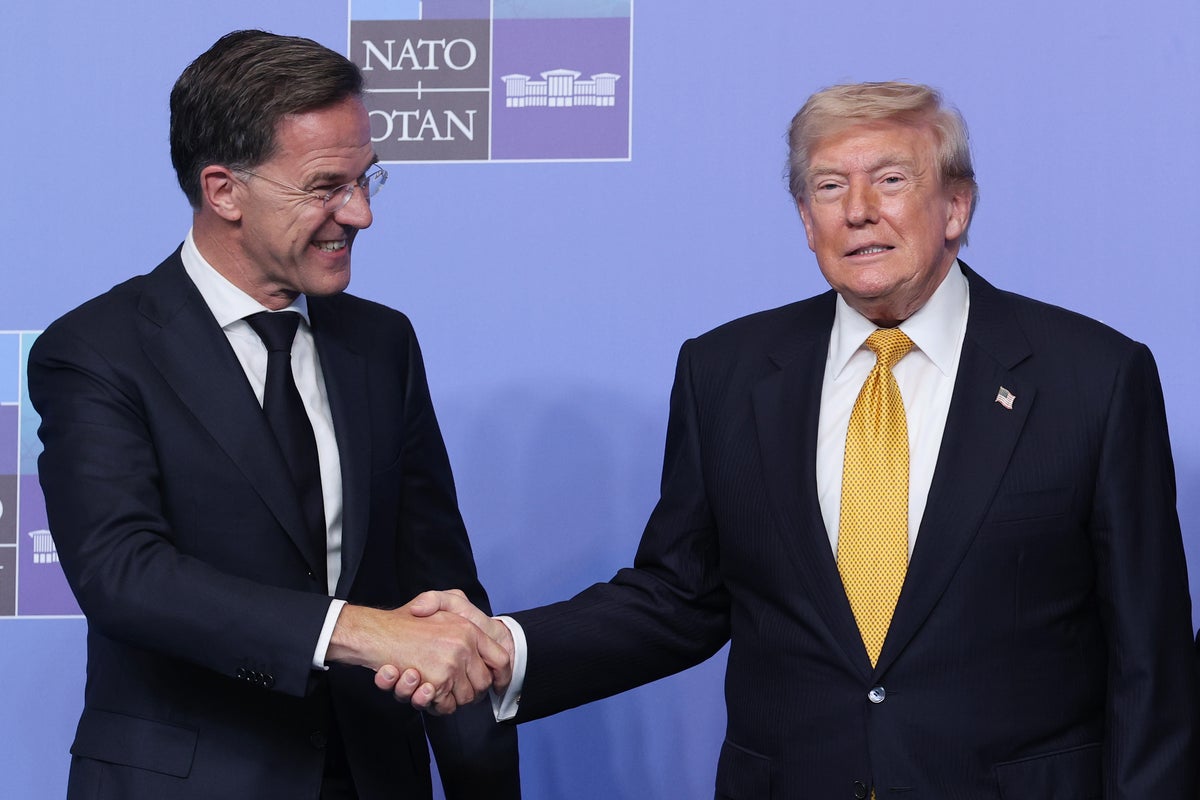
At the NATO summit in Ankara, the frustration boiled over into public view. The American president used his opening appearances alongside the NATO Secretary General to deliver an angry monologue, lambasting allies for their lack of support and declaring the brief ceasefire with Iran to be officially over. The administration framed its demands as a test, claiming it wanted to see who would stand by America in a crisis.
This narrative flips reality on its head. A true alliance is not a mechanism where one nation launches a war without consultation and then demands that the remaining members clean up the mess. By labeling the alliance a one-way street, the White House ignores the decades of intelligence sharing, logistical support, and political cover that Europe has provided for American endeavors.
The Illusion of Alternative Coalitions
During his public broadsides, the president praised regional actors like Turkey and various Gulf states, suggesting that the United States has found better partners elsewhere. This rhetoric ignores the complex motivations of those nations. Turkey’s diplomatic involvement is driven by a desire to prevent a total collapse of its neighbor, not a willingness to act as an instrument of American military power. The praise heaped on Ankara was merely a clumsy attempt to shame traditional European allies into submission.
The declaration that the United States does not need anyone's help contradicts the administration's frantic diplomatic arm-twisting behind the scenes. If Washington truly possessed the unilateral capability to secure the Strait of Hormuz and force a total denuclearization of Iran without alliance support, it would not have spent months issuing veiled threats about the future of NATO.
The Cost of the Unending Conflict
The financial figures associated with the opening weeks of this conflict are staggering. The United States spent over sixteen billion dollars in the first twelve days alone, surpassing its entire annual humanitarian assistance budget. This level of expenditure is unsustainable, especially when the military objectives remain vaguely defined and constantly shifting between stabilization, deterrence, and forced denuclearization.
Iran has shown no appetite for a humiliating surrender. Despite sustaining heavy damage to its conventional military infrastructure, the regime retains its capacity for proxy warfare, cyber attacks, and asymmetric maritime disruption. The assumption that the conflict would be a brief, one-sided affair has been thoroughly debunked by the reality of an open-ended war of attrition.
The Western alliance is facing its most significant internal crisis since the 2003 invasion of Iraq. Then, as now, a refusal to bow to Washington’s martial demands was framed by American commentators as a betrayal. History proved that the European nations who resisted the rush to war in Iraq were entirely correct in their assessment of the long-term consequences. The current resistance to the Iran campaign follows the exact same logic.
European capitals are holding their ground because they recognize that the international order cannot function if the world's primary military power operates entirely outside the boundaries of collective decision-making. The United States cannot treat NATO as an insurance policy that can be cashed in to cover the costs of its own strategic blunders. If Washington wishes to maintain the integrity of the Western alliance, it must learn to consult its partners before the first missiles are launched, not after the global economy begins to bleed.