The wind in the Tarim Basin does not just blow. It scours. For centuries, the Taklamakan Desert earned its reputation as the "Sea of Death," a place where the local Uyghur phrase translates loosely to you go in, but you never come out. It is an unforgiving expanse of shifting dunes, blistering daytime heat, and freezing nights. Nothing grows here. It is a canvas of absolute barrenness.
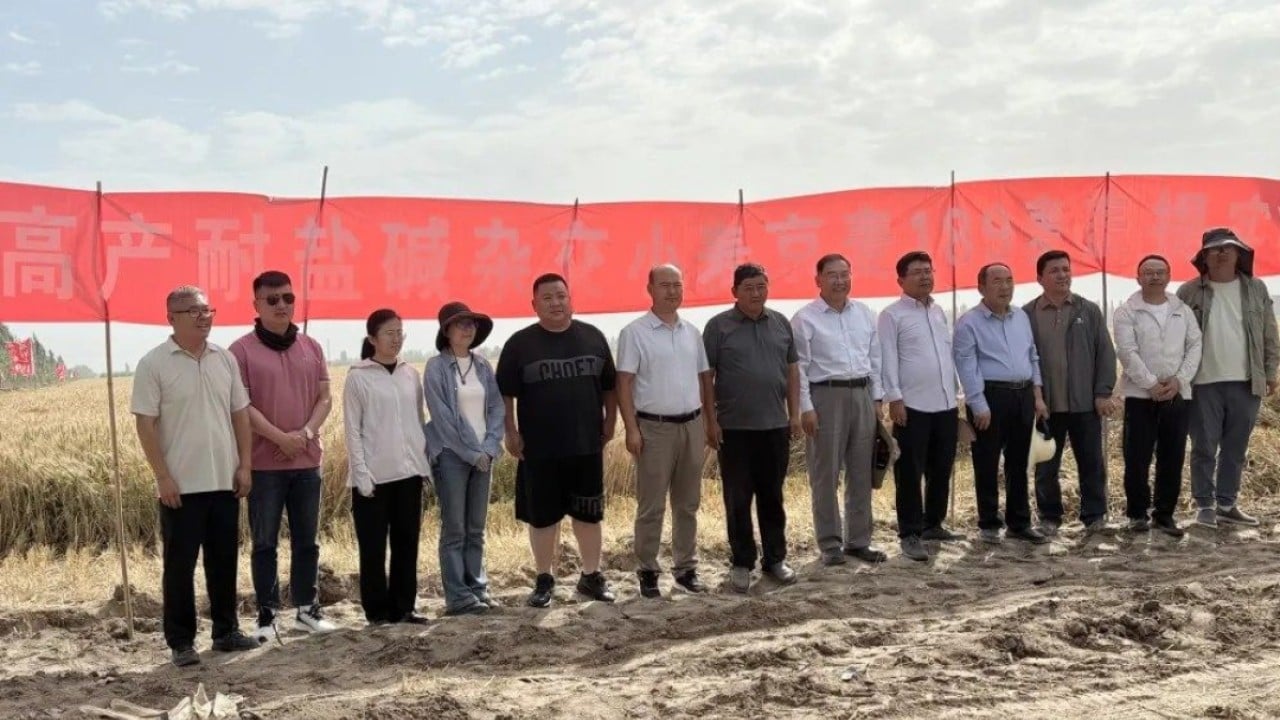
Yet, a few months ago, a team of agricultural scientists stood in the dust of Xinjiang, watching a mechanical harvester roar through a field of gold.
The crop was wheat. Not scrubby, desperate weeds, but dense, heavy ears of grain bowing under their own weight. When the final tallies came in from the experimental plots, the yield hit 651 kilograms per mu. To put that in perspective, that translates to roughly 9.76 tons per hectare. It is a number that more than doubles China’s national average for wheat production.
In the middle of a desert known for killing life, they had somehow managed to supercharge it.
The Ghost of Hunger
To understand why men and women would spend years eating dust in one of the most hostile environments on Earth just to plant a few rows of grass, you have to look beyond the spreadsheet of agricultural yields. You have to look at the collective memory of a nation.
Food security is not a policy buzzword in Asia; it is a foundational pillar of survival. China has to feed nearly one-fifth of the world’s population with less than ten percent of the planet's arable land. As climate patterns shift, rivers dry up, and traditional farmlands face the relentless creep of urbanization, the math stops adding up.
Consider the vulnerability of a single grain of wheat. It needs predictable moisture. It needs tempered soil. It needs a gentle climate. The Taklamakan offers none of these. The desert soil is heavily alkaline, choked with salts that dehydrate plants from the inside out. The water, when you can find it, is brackish and bitter.
If you or I were dropped into the Tarim Basin with a bag of seeds, we would be staring at a death sentence for those plants within forty-eight hours. The sun would bake the soil into a brick, and the salt would wither the roots.
But the scientists from the Xinjiang Institute of Ecology and Geography saw the desert not as a graveyard, but as a laboratory.
Engineering Life Out of Salt
The breakthrough did not happen overnight, and it did not happen through a single stroke of genius. It was a grueling process of trial, error, and meticulous technological adaptation.
The first hurdle was the water. Traditional irrigation in a desert is an exercise in futility. If you flood a field in the Taklamakan, the brutal heat evaporates the water almost instantly, leaving behind a thick crust of white salt that poisons the earth permanently.
To solve this, engineers adapted sub-surface drip irrigation systems. Picture a web of capillaries buried beneath the sand, delivering precise, metered drops of water directly to the root zones of the wheat plants. This water was mixed with specific soil conditioners designed to neutralize the heavy alkalinity of the desert earth. Instead of fighting the environment, they created a micro-climate a few inches below the surface, sheltering the roots from the harsh reality above.
Then came the choice of the seed itself.
Through rigorous selection and breeding, the team utilized a specialized, salt-tolerant wheat variety. These plants are built differently. Where standard wheat varieties panic and wither when exposed to salinity, this variant regulates its salt intake, storing excess sodium in its older leaves or pumping it back out through its roots. It is a biological survival mechanism, a gritty adaptation that mirrors the determination of the humans tending to them.
But the real secret weapon was the desert itself.
The Unintended Blessing of the Sun
Deserts are brutal, but they possess two things that traditional farming regions often lack during the growing season: cloudless skies and an abundance of space.
In the fertile plains of central China, overcast days and industrial smog can filter out the sunlight, limiting the photosynthetic efficiency of the crops. In the Taklamakan, the sun beats down with relentless, uninterrupted intensity. Once the engineers solved the water and soil equations, the wheat plants began to photosynthesize at an accelerated rate. They drank in the light, converting solar energy into carbohydrates with unprecedented speed.
Furthermore, the extreme temperature swing between day and night worked in the crop's favor. The blistering daytime heat stimulated growth, while the sudden drop in temperature at night slowed the plants' respiration down to a crawl. This meant the wheat conserved the energy it had manufactured during the day rather than burning it off at night.
The result was an explosion of biomass. The heads of the wheat grew fat and packed with nutrients, defying every established law of desert farming.
When the harvest trucks rolled into the experimental base, the atmosphere was thick with tension. Agricultural officials and independent experts gathered to weigh the grain, expecting a modest success at best. Desert farming is historically a game of diminishing returns—you spend a fortune in resources to get a fraction of a normal harvest.
The scales told a completely different story.
The trial did not just succeed; it shattered expectations. Doubling the national average meant that this barren sand was suddenly outperforming some of the most fertile, centuries-old farmland in the country.
The Expanding Horizon
What happened in the Taklamakan changes the narrative of what we consider "usable" earth. It forces us to rethink the boundaries of agriculture.
If a nation can successfully grow high-yielding staple crops in a shifting salt desert, the geographical constraints that have dictated human civilization for millennia begin to blur. It means marginal lands, abandoned spaces, and arid zones across the globe could theoretically be transformed into breadbaskets.
But the victory is not without its quiet anxieties.
Maintaining these artificial ecosystems requires constant vigilance. The balance between the freshwater pumped from deep underground aquifers and the rising salinity of the surrounding desert is incredibly delicate. One mistake, one systemic failure in the irrigation network, and the desert will reclaim the land in a matter of weeks. The project is a testament to human ingenuity, but it is also a reminder of our ongoing, fragile dependence on intensive technological intervention.
For now, the gold fields of the Tarim Basin stand as a stark anomaly.
A lone harvester cuts through the dust, leaving behind neat rows of shorn earth where nothing was ever supposed to live. The grain collected here will find its way into silos, then into flour, and eventually onto dinner tables. The people eating it will likely never think about the shifting sands or the bitter, salty water of the Taklamakan. They will only know that there is bread on the plate.