Beijing has a massive problem on its hands, and it isn't just coming from Washington. The real headache for the Chinese Communist Party is the quiet, rapid hardening of the axis between New Delhi and Tokyo. For years, regional security experts talked about the potential of India-Japan relations. Now, we're seeing that potential turn into actual, physical hardware deployed in the waters of the Indo-Pacific.
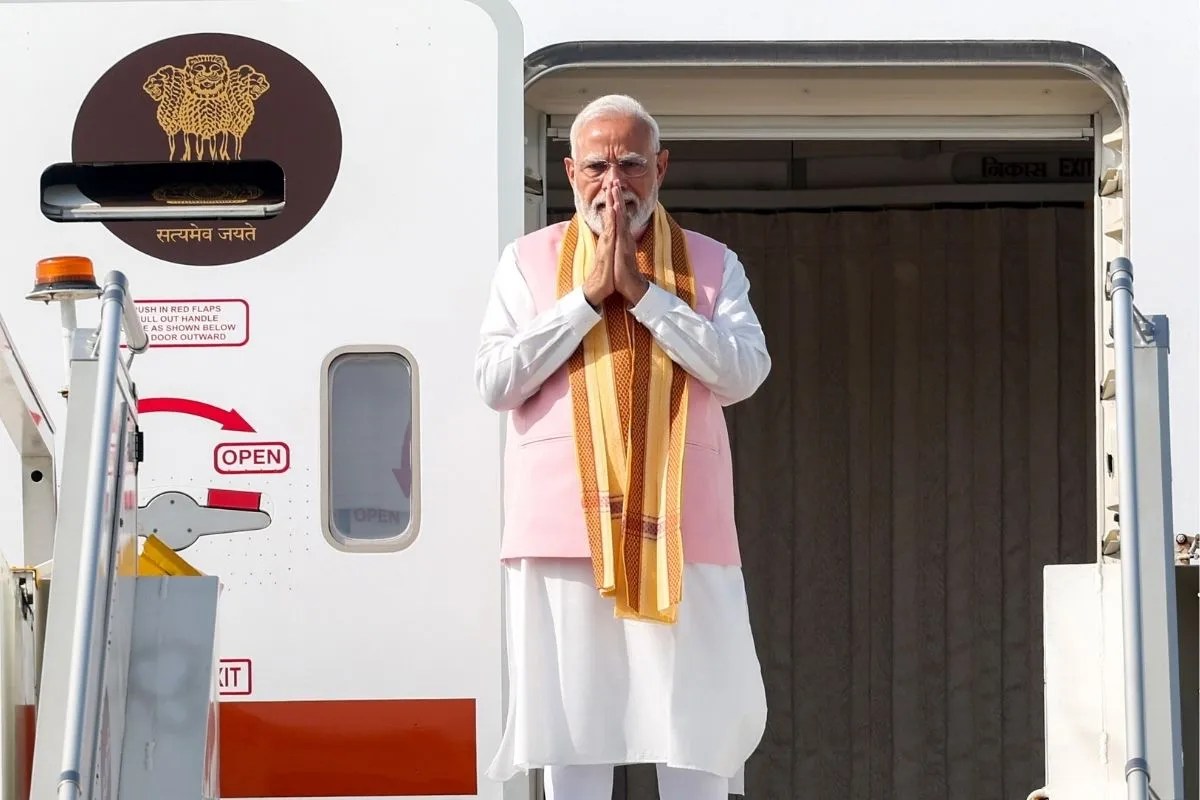
The recent July 2026 summit in New Delhi between Prime Minister Narendra Modi and Japan’s Prime Minister Sanae Takaichi made one thing completely clear. This isn't just another diplomatic photo-op with vague talk about shared values. It’s a direct, practical response to Chinese muscle-flexing in the South China Sea, the East China Sea, and the Indian Ocean. With over $13 billion in new private-sector deals and a historic naval co-development project, these two Asian giants are building a real counterweight to Chinese economic and military pressure.
China tried to brush it off immediately. The Chinese Foreign Ministry released a statement warning that bilateral cooperation shouldn't "target any third party" or "patch up exclusive small groupings." But that defensive rhetoric shows exactly how much this alliance gets under Beijing's skin.
Moving From Diplomatic Talk to Warship Tech
The biggest shift in the relationship is happening where it matters most: the defense sector. For decades, Japan’s pacifist constitution kept its advanced military technology locked inside its own borders. That era is officially over.
At the July 2026 summit, Modi and Takaichi finalized the deal for the Unified Complex Radio Antenna, widely known as the UNICORN system. This isn't a minor equipment purchase. This is the first-ever bilateral defense co-development program between India and Japan. Bharat Electronics Limited will work alongside Japanese defense firms to integrate this advanced mast system onto future Indian Navy warships.
If you look at modern naval warfare, electronic survival is everything. The UNICORN system replaces the messy jungle of traditional wires and spinning dishes on a warship with a single, smooth composite mast. It cleans up the ship's radar signature, making it significantly harder for hostile anti-ship missiles and reconnaissance drones to pick up. It also stops different onboard radars from interfering with each other during intense electronic warfare scenarios.
This gives the Indian Navy a massive tactical edge when operating in heavily monitored maritime choke points, like the Malacca Strait or around the Andaman and Nicobar Islands. By putting this specific Japanese technology on Indian hulls, both nations are sending a blunt message. They're preparing their navies to operate together in highly contested environments where China thinks it holds all the cards.
Weaponizing Economic Security Against Coercion
Beijing doesn't just use its navy to threaten its neighbors; it uses its market dominance as a political cudgel. We saw this clearly when China tightened its grip on rare earth mineral exports to pressure Japan, the US, and India over trade disputes. China still controls roughly 70% of global rare earth mining and around 90% of the processing. It handles the minerals that run everything from EV batteries to advanced missile guidance systems.
India and Japan are explicitly fighting back against this economic bullying. During their recent meetings, the two leaders launched a Joint Declaration on Economic Security that singles out "economic coercion" and "non-market policies." While they didn't explicitly print the word "China" on the official letterhead, everyone in the room knew exactly who they were talking about.
The strategy here is practical diversification. The two nations are locking in supply chain agreements across five critical areas:
- Semiconductors: Building parallel manufacturing pipelines so a conflict over Taiwan won't collapse the global tech supply.
- Critical Minerals: Joint investments in mining and processing facilities outside of China's sphere of influence.
- Clean Energy: Spurring localized production of wind turbines, solar infrastructure, and green hydrogen tech.
- Pharmaceuticals: Securing the active ingredients needed for global medicine manufacturing.
- Advanced AI: Creating a dedicated Strategic AI Dialogue to pool engineering talent and research.
This economic shield matches Japan’s capital with India’s massive manufacturing scale. Japan is currently pumping billions into India, including a recent $1.6 billion deal for a 20% stake in Yes Bank and major funding for the Mumbai-Ahmedabad high-speed rail corridor. They aren't just trying to make a profit. They're moving supply chains out of China's reach.
Connecting the Indian Ocean and the Pacific
Look at a map of Asia and you'll see why this partnership completely changes the strategic math. Japan relies on the Middle East for the vast majority of its oil. That oil has to travel through the Indian Ocean, pass through the narrow Malacca Strait, and head up through the South China Sea. If China controls those waters, it holds a knife to Japan's throat.
For India, China’s "String of Pearls" strategy—building ports and naval access points in Pakistan, Sri Lanka, and Myanmar—is a direct encirclement effort. India needs a powerful maritime ally at the other end of the ocean to stretch China's naval resources thin.
That’s why the convergence between Japan’s Free and Open Indo-Pacific vision and India’s MAHASAGAR initiative is so critical. These aren't just fancy acronyms. They represent a coordinated plan to monitor and police the sea lanes.
The two navies are already expanding the scale of their joint exercises, like the recent JIMEX operations. They're also setting up shared maintenance, repair, and overhaul hubs. Soon, an Indian warship will be able to pull into a Japanese port for quick repairs and re-arming during a crisis, and vice versa. They are building a distributed naval network that makes it impossible for the Chinese People's Liberation Army Navy to dominate the region without starting a major, multi-front conflict.
Building the Bridge Through Northeast India
One of the most overlooked parts of this alliance is happening on dry land in India's remote Northeast region. This area connects South Asia to Southeast Asia, but it has historically suffered from a lack of infrastructure. It also shares a highly tense, disputed border with China.
While India usually keeps foreign investors far away from its sensitive border regions, it has made a massive exception for Tokyo. Japanese investment is pouring into Assam, Tripura, and Mizoram to build roads, bridges, and power grids. The launch of the India-Japan Governors Network in early 2026 proves this isn't just a high-level federal project. It’s a deep, bureaucratic alignment connecting local leaders on both sides.
By developing Northeast India, Tokyo and New Delhi are creating an alternative trade corridor that bypasses China's Belt and Road projects. It anchors India firmly into the Southeast Asian economic ecosystem, making it much harder for Beijing to isolate its neighbors.
Actionable Steps for Regional Observers
If you're tracking geopolitical risk, supply chains, or international business in Asia, you can't treat this alliance as standard diplomatic noise. The shift is real, and it requires concrete adjustments.
First, global electronics and automotive companies must accelerate their "China+1" supply chain strategies. The economic declarations signed in New Delhi show that both governments will offer heavy incentives and regulatory fast-tracking for companies moving production to India using Japanese capital.
Second, defense tech contractors should watch the UNICORN program closely. The success of this project will likely open the floodgates for more co-development deals involving communications, drone tech, and anti-submarine warfare gear. The "Make in India" framework is getting a massive injection of Japanese precision engineering, creating a highly capable new hub for defense manufacturing.
Finally, keep a close eye on the upcoming 2+2 Foreign and Defense Ministerial Dialogue in Tokyo later this year. That meeting will lay out the specific operational rules for how these two navies will share satellite data and maritime domain awareness. When those tracking systems link up, Beijing's ability to hide its submarine movements in the Indian Ocean will effectively disappear.