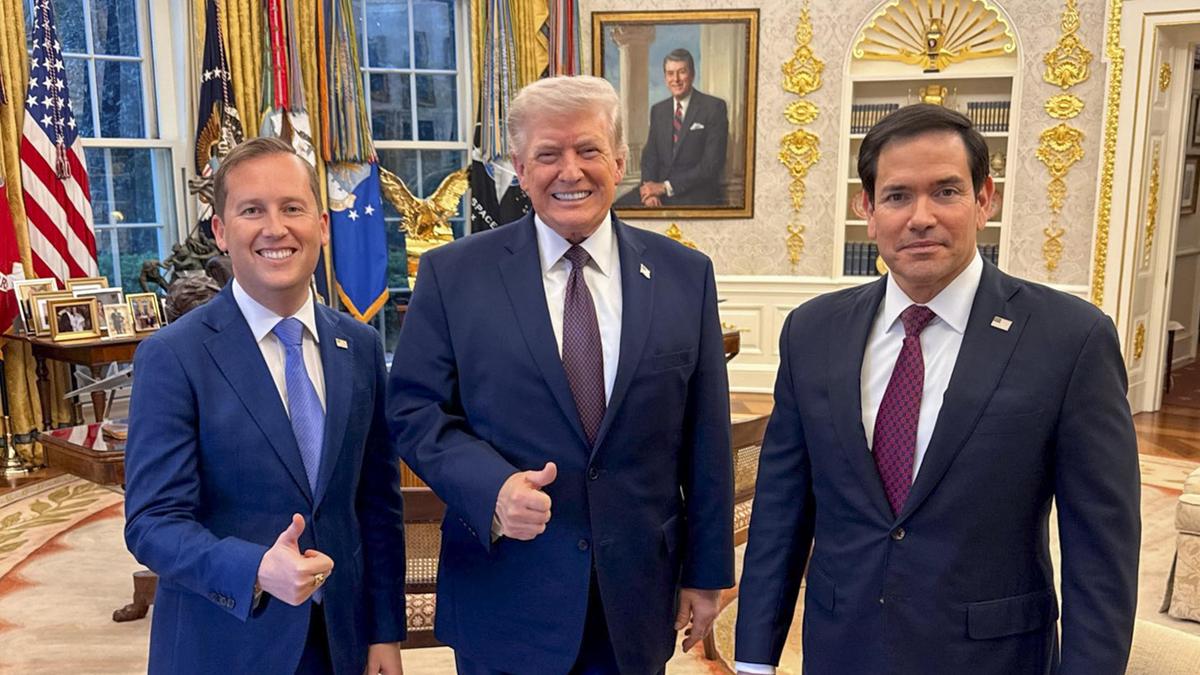
Diplomacy is mostly theater. When you see a U.S. envoy shaking hands and talking about a "shared future" for India and the United States, you aren't watching a policy shift. You are watching a press release with a pulse.
The standard narrative suggests that a change in the Oval Office—specifically the return of Donald Trump—automatically triggers a fundamental restructuring of the Indo-Pacific strategy. This is the first mistake. The second mistake is believing that "shared values" drive the engine of this relationship. They don't. Friction drives it. Competition drives it. The "strong ties" everyone keeps shouting about are actually a series of uncomfortable compromises held together by a mutual fear of a third party.
The Myth of Personal Chemistry
Observers love to obsess over the "bromance" between leaders. They point to rallies in Houston or hugs in Ahmedabad as evidence of a rock-solid foundation. I have spent years in the rooms where these deals actually get signed. The hugs are for the cameras; the trade barriers are for the ledgers.
Relying on the personal relationship between a President and a Prime Minister is a high-risk, low-reward strategy. It ignores the massive, immovable bureaucracies underneath them. The U.S. State Department and India's Ministry of External Affairs operate on decades-long trajectories that a single election doesn't derail. When an envoy talks about "strong future ties" under Trump, they are really saying, "The status quo is too profitable to break, regardless of who is tweeting."
India is Not an Ally and Never Will Be
The term "ally" gets thrown around with reckless abandon. Britain is an ally. Japan is an ally. India is a strategic partner. There is a canyon of difference between those two labels.
India has a fiercely guarded doctrine of "strategic autonomy." They don't want to be a junior partner in a Western-led order; they want to be one of the poles in a multi-polar world. To think India will pivot its entire foreign policy to suit Washington's whims is a fundamental misunderstanding of New Delhi's DNA.
Why the "Democratic Values" Pitch is Dead
- Transactionalism over Ideology: Trump’s foreign policy is purely transactional. He doesn’t care about shared democratic ideals; he cares about the trade deficit.
- The S-400 Reality Check: India bought the Russian S-400 missile system despite massive U.S. pressure. That wasn't a fluke. It was a statement.
- Visa Volatility: The H-1B program is a recurring wound. No amount of "strategic alignment" stops the U.S. from squeezing Indian tech talent when domestic politics demands it.
If you are waiting for a formal defense treaty, stop. It isn't happening. The relationship works precisely because it is messy, non-binding, and constantly negotiated.
The Trade Deficit Elephant
The competitor’s fluff piece ignores the math. Trump’s "America First" agenda is a collision course with "Make in India." You cannot have two nations simultaneously trying to repatriate manufacturing and protect domestic industries without a massive fight.
India currently maintains some of the highest tariffs in the democratic world. Trump has called India the "tariff king." While the diplomatic corps smiles for photos, the commerce departments are sharpening knives. The real "future of ties" isn't about grand strategy; it's about Harley Davidson motorcycles, medical devices, and dairy products.
We see a pattern where high-level visits result in "agreements to agree." These are hollow victories. True integration would require India to dismantle its protectionist walls and the U.S. to stop its protectionist rhetoric. Neither side has the stomach for it.
The China Buffer is the Only Glue
Let's be brutally honest. If China weren't aggressively expanding its footprint in the Himalayas and the South China Sea, the India-U.S. relationship would be lukewarm at best.
The U.S. needs India as a massive, democratic counterweight. India needs U.S. technology and intelligence to monitor the border. This isn't a marriage of love; it's a marriage of convenience in a dangerous neighborhood.
When envoys talk about "security cooperation," they are talking about the Quad—a group that exists primarily because its members are nervous about Beijing. But notice the hesitation. India is the only Quad member that refuses to turn the group into a formal military alliance. Why? Because New Delhi knows that if a shooting war starts, Washington is thousands of miles away, while China is right next door.
Tech Decoupling and the Real Battleground
The real war isn't being fought with tanks; it's being fought with chips and undersea cables. The "iCET" (Initiative on Critical and Emerging Technology) is the only part of the relationship that actually matters right now.
- Semiconductors: The U.S. wants to pull supply chains out of East Asia. India wants a slice of that $500 billion pie.
- AI Governance: Both nations are terrified of losing the algorithmic arms race.
- Space: ISRO and NASA are collaborating because neither can afford to let the lunar surface become a Chinese monopoly.
This is where the nuance lies. The "future ties" aren't built on speeches; they are built on the shared desperation to stay technologically relevant. Everything else is just noise for the evening news.
The Danger of the "Great Reset"
Every time a new administration takes over in Washington, analysts predict a "reset." This is a myth. U.S.-India relations have been on a steady, albeit slow, upward curve since 1998. The "reset" is a marketing tool used by consultants to sell reports.
The danger isn't that the relationship will fail; the danger is that it will stagnate under the weight of its own hype. If we keep pretending that everything is perfect because two leaders like each other, we miss the structural cracks that actually need fixing.
Stop Asking if the Relationship is Strong
The question "Is the India-U.S. relationship strong?" is the wrong question. It’s like asking if a bridge is strong without looking at the load it’s carrying. The relationship is functional, which is much better than "strong."
It is a series of overlapping interests that occasionally align. When an envoy tells you the future is bright, check your wallet. They are usually trying to sell you a version of reality that doesn't exist on the ground.
Stop looking at the handshakes. Look at the shipping manifests. Look at the defense procurement contracts. Look at the visa rejection rates. That is where the "future" is actually being written, and it looks a lot more like a corporate merger negotiation than a historic brotherhood of nations.
The "strong future" isn't a guarantee; it's a grind. And right now, the grind is getting louder.
Pay attention to the friction, not the smiles. The friction is the only thing that’s real.