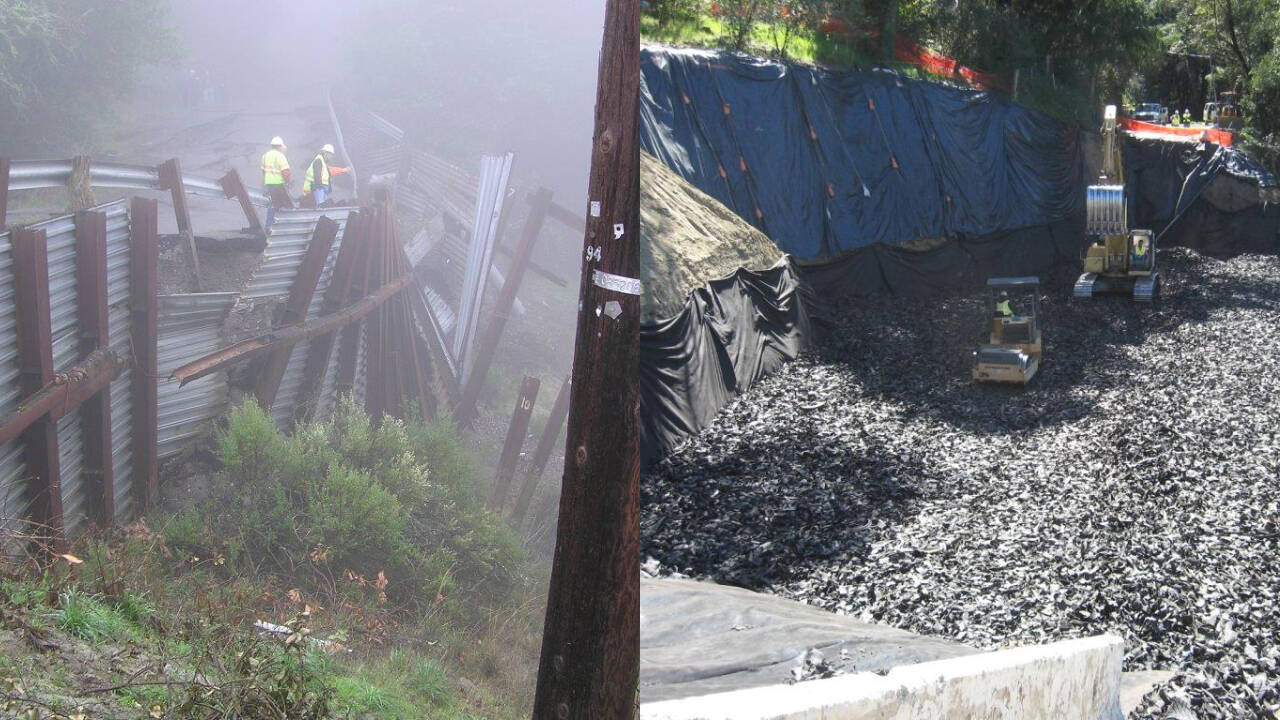
The Structural Deficit of Municipal Paving
Public infrastructure expenditure suffers from a chronic failure mode. Traditional asphalt concrete mixes, composed entirely of virgin aggregate and neat binder bitumen, lack the viscoelastic resilience required to withstand modern axle load distributions and thermal cycling. When a road fails structurally, agencies typically default to a reactive capital expenditure cycle: mill out the damaged surface course, lay down an identical specification mix, and absorb the identical failure timeline four to seven years later.
This model ignores material science innovations that alter the baseline cost function of road construction. Scrap tire modified asphalt replaces a portion of the mineral aggregate and modifies the asphalt binder with crumb rubber derived from discarded pneumatic tires. The technical integration of elastomeric polymers into bitumen changes the fundamental rheology of the pavement. Instead of treating waste management as an isolated municipal burden and road construction as a virgin material consumer, elastomeric modification bridges the two domains. Learn more on a similar topic: this related article.
The economic justification rests on a shift from initial capital expenditure minimization to total cost of ownership optimization. Neat asphalt binder softens under high ambient temperatures, leading to rutting, and embrittles under low temperatures, leading to thermal cracking. Crumb rubber modification increases elasticity, lowers temperature susceptibility, and extends fatigue life by a factor of two to four. Evaluating a specific municipal reconstruction project that utilized approximately 330,000 waste tires to rehabilitate a failing roadway corridor reveals the exact mechanics of how material substitution simultaneously reduces upfront unit costs and extends asset lifecycle curves.
The Material Science of Rubberized Asphalt
To understand why scrap tire modification yields capital savings, one must examine the physical interaction between crumb rubber and petroleum-based asphalt binder. Crumb rubber is produced by ambient or cryogenic grinding of post-consumer tires, yielding irregular particles with high surface-area-to-volume ratios. When blended into hot bitumen at elevated temperatures, typically between 160 and 190 degrees Celsius, a chemical and physical process known as digestion or interaction occurs. Additional analysis by Business Insider delves into related views on the subject.
The lighter aromatic fractions of the asphalt binder are absorbed by the rubber particles, causing them to swell and soften. This interaction forms a gel-like matrix that increases the viscosity of the binder. Mechanically, this modified binder exhibits enhanced elastic recovery. When a heavy commercial vehicle passes over the pavement surface, the tire induces compressive stress. Conventional binders undergo permanent plastic deformation, accumulating rutting over time. Rubberized binders store the energy elastically and recover their original shape after the load passes.
Two primary blending methods dominate engineering applications: the wet process and the dry process.
- The Wet Process: Crumb rubber is blended directly with the asphalt binder as a liquid additive prior to mixing with aggregate. The rubber acts as a polymer modifier, chemically altering the binder properties. This method requires specialized blending equipment and precise temperature control to prevent phase separation.
- The Dry Process: Crumb rubber is introduced into the asphalt mix as a direct substitute for a fraction of the fine aggregate. While less common due to quality control challenges regarding rubber-binder reaction completeness, it consumes higher volumes of scrap rubber per ton of mix.
The wet process yields predictable performance gains. By increasing the film thickness of the binder coating each aggregate particle, moisture susceptibility decreases. Stripping, the loss of adhesion between aggregate and asphalt due to water intrusion, is a primary driver of structural degradation. The rubberized binder resists stripping more effectively than neat bitumen, protecting the underlying base courses from moisture infiltration.
Deconstructing the Economic Mechanics
The financial optimization of scrap tire modified asphalt operates through three distinct levers: material displacement, lifecycle extension, and maintenance frequency reduction.
[Waste Tires]
     │
     ▼
[Crumb Rubber Processing]
     │
     ▼
[Binder Modification] ──► [Enhanced Viscoelasticity] ──► [Extended Fatigue Life]
     │
     ▼
[Aggregate Displacement] ──► [Reduced Upfront Capital] ──► [Lower Lifecycle Cost]
When evaluating a project where 330,000 waste tires are diverted into a major roadway reconstruction, the immediate financial impact occurs at the batch plant. Crumb rubber replaces a portion of the virgin binder and fine aggregates. Because virgin bitumen prices track crude oil volatility, substituting an industrial waste product introduces a deflationary hedge into the material procurement budget. In the documented case where total savings reached $300,000 on a single corridor, the savings derived from a combination of reduced binder volume requirements, elimination of specialized anti-stripping chemical additives, and optimized layer thickness design.
Traditional structural design requires thicker asphalt sections to distribute heavy loads across weak subgrades. Because rubberized asphalt exhibits higher tensile strength and fatigue resistance, structural design standards allow for a reduction in total structural section thickness without sacrificing load-bearing capacity. Thinner structural sections mean fewer tons of total asphalt mix required, directly compressing material and trucking costs.
The long-term economic return dwarfs the initial capital expenditure delta. The primary cost driver in municipal road management is not the initial construction; it is the Net Present Value of future maintenance interventions. A conventional asphalt road requires crack sealing, surface fog seals, and localized mill-and-fill patches within five years of placement. Rubberized asphalt delays the onset of reflective cracking and thermal fatigue.
By extending the maintenance-free window from five years to twelve or fifteen years, the municipal discount rate heavily favors the modified material. Discounting future cash flows reveals that delaying major rehabilitation cycles by a decade saves millions in agency outlays, freeing municipal capital for other core services.
Operational Constraints and Implementation Bottlenecks
Despite the clear economic and material advantages, municipal adoption rates face institutional friction. Engineers and procurement officers operate under stringent risk aversion parameters. Paving a roadway with a non-standard specification introduces perceived liability. If a novel mix fails prematurely, the responsible engineers face professional and political fallout. Consequently, municipal specifications often enshrine legacy mix designs that exclude recycled polymers.
Processing infrastructure creates a secondary bottleneck. High-quality crumb rubber requires dedicated granulation facilities. If a municipality lacks local processing plants, the logistics costs of transporting bulky waste tires or finished crumb rubber can erode the raw material cost advantage. The supply chain must be balanced regionally to ensure that the carbon footprint and transportation expenses of the modifier do not outweigh its economic benefits.
Batching plant compatibility presents a third operational hurdle. Traditional asphalt plants cannot simply dump crumb rubber into standard pugmills without modification. The wet process requires heated blending tanks with high-shear agitation equipment to keep the rubber particles suspended in the asphalt cement during the digestion period. Contractors who have invested millions in conventional batch plants are reluctant to incur capital expenditure for dedicated rubber-modification spreads unless contract volume guarantees justify the expenditure.
Furthermore, thermal management requires strict adherence. Rubberized mixes often require higher mixing and compaction temperatures than conventional mixes, increasing burner fuel consumption at the plant and demanding tighter rolling schedules behind the paver to achieve target densities. If compacted outside the optimal temperature window, the air void content increases, accelerating moisture damage and negating the durability gains.
Strategic Procurement Framework for Municipalities
Scaling scrap tire modified asphalt from isolated pilot projects to standard municipal procurement requires a systematic restructuring of tender specifications. Agencies must transition from prescriptive specifications to performance-based specifications. Prescriptive specs dictate the exact recipe—specifying aggregate gradations and binder percentages—which legally locks out innovative material blends. Performance specs establish required engineering outcomes, such as dynamic modulus, rut depth thresholds under specific wheel-tracking tests, and fatigue cracking resistance indices. When an agency specifies the required performance rather than the ingredients, contractors are legally empowered to utilize rubberized binders to meet or exceed those standards cost-effectively.
Procurement officers must also internalize the true cost of waste management externalities. Landfilling whole tires incurs tipping fees, occupies scarce municipal landfill volume, and creates severe environmental hazards, including uncontainable tire fire risks and vector-borne disease propagation via accumulated standing water. Integrating tire recycling metrics into departmental Key Performance Indicators aligns transportation departments with environmental sustainability mandates without requiring dedicated municipal subsidies.
To execute this transition successfully, engineering departments should initiate structured procurement pilots across secondary arterial corridors with high commercial vehicle density. Arterial routes with heavy bus or freight traffic provide the ideal testing ground, as conventional asphalt failure is most rapid in these environments, maximizing the visibility of the performance differential. By instrumenting these test sections with weight-in-motion sensors and laser profilometers, municipal engineers can build local empirical datasets that validate lifecycle cost models, neutralizing internal institutional resistance to future specification updates.
Deploy capital exclusively into structural sections where heavy vehicle shear stress accelerates rutting, mandate performance-based mix designs in all upcoming public works tenders, and require regional asphalt suppliers to maintain active crumb rubber blending capabilities as a prerequisite for municipal bidding eligibility.