Two local government employees arrived at a residential property in the quiet Bavarian village of Berngau for what was supposed to be a standard, administrative safety check. Their objective was mundane: verify that a licensed gun owner was storing his collection in compliance with state regulations. They left in body bags.
The brutal killing of two district office administrators by a 60-year-old sport shooter and hunter shatters the quiet assumption that routine bureaucratic oversight in Western Europe is a low-risk affair. When civil servants step into private homes to inspect legal firearms, they frequently do so without police escorts, operating under the polite fiction that compliance checks are universally welcomed administrative duties. That illusion evaporated in the Upper Palatinate region, exposing systemic gaps in how safety checks are planned, prioritized, and protected.
The Anatomy of an Unprotected Protocol
In Bavaria alone, roughly 200,000 citizens hold legal firearms permits. Because the state mandates regular checks roughly every three years, regional district offices process more than 60,000 inspections annually. State Interior Minister Joachim Herrmann noted publicly that the vast majority of these encounters pass without incident. Statistically, lightning strikes more often.
Yet administrative math offers cold comfort to the families of the fallen workers. Because the suspect had no prior criminal record, no known extremist affiliations, and zero history of agitation with local law enforcement, the district office treated the appointment as low-risk. The inspectors walked through the front door unarmed, unshielded, and unaccompanied by tactical units.
This points to a profound institutional blind spot. Bureaucracies excel at scaling administrative throughput, but they routinely fail at tactical risk assessment. When an official inspects a private home, they are entering a controlled environment where a legal gun owner possesses immediate access to lethal force. Treating that interaction like a routine gas meter reading ignores the psychological friction inherent in state oversight of private property and personal weaponry.
The Illusion of Predictability in Gun Compliance
Public safety debates often fixate on the macro-level policy of firearm acquisition—background checks, registry databases, and permitted calibers. But the Berngau incident forces a hard look at the micro-level mechanics of enforcement. How does a state verify storage compliance without provoking a violent defensive reaction from citizens who view state oversight as an intrusion?
In this case, the suspect held ten legally registered weapons, spanning handguns and long guns. He was a known quantity to local clubs, yet something in the calculus of that specific afternoon triggered a catastrophic escalation. Whether it was paranoia, sudden desperation, or a deep-seated grievance against state oversight remains under investigation. What is clear is that the system relies entirely on the voluntary cooperation of the gun owner. Once that cooperation breaks down, unarmed civil servants have zero defensive buffer.
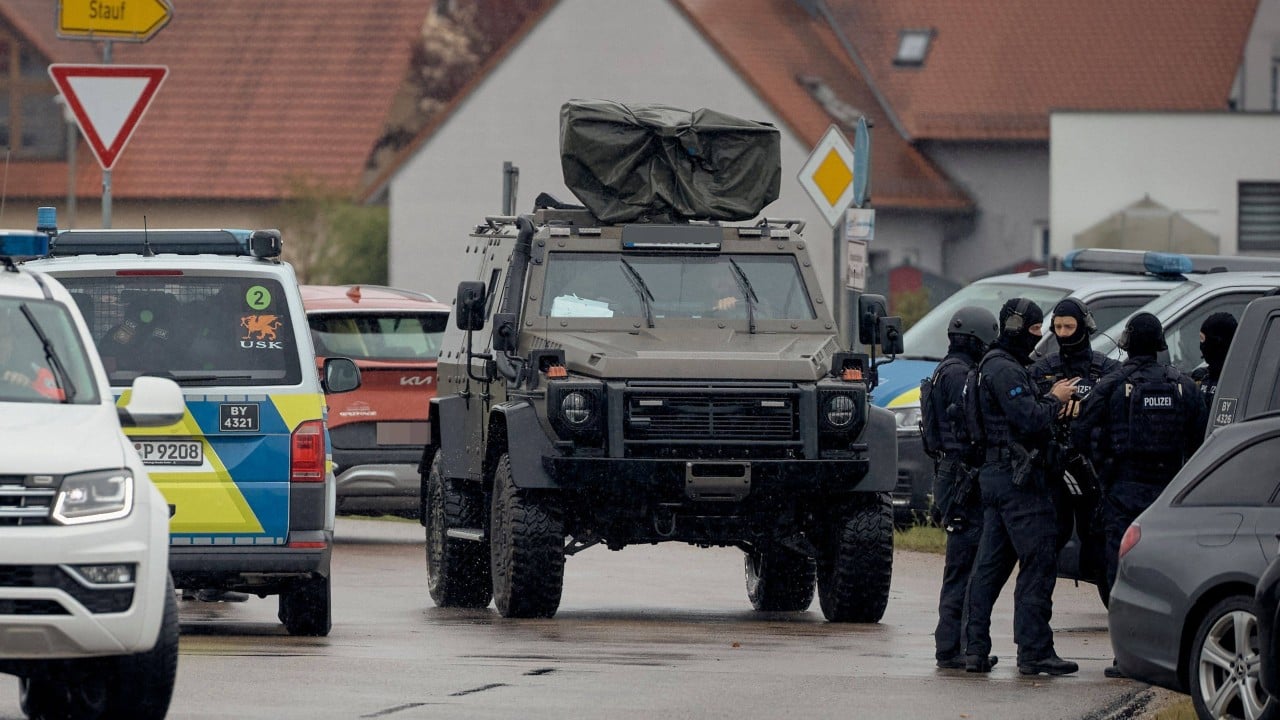
The subsequent hours-long standoff—which drew armored vehicles, special operations units, and a police helicopter to the sleepy rural neighborhood—demonstrated how quickly a local administrative office can find itself outmatched by the very hazards it seeks to regulate. The suspect ultimately survived after a targeted police shot to the leg during the overnight raid, leaving investigators to piece together a motive that defies simple categorization.
Rethinking Field Safety for Civil Servants
The immediate fallout from Berngau will likely force a painful modernization of field protocols across Germany. Administrators cannot continue to conduct unannounced or routine firearm inspections as if they are delivering mail.
Risk-mitigation strategies that should have been standard practice—such as mandatory risk-profiling for every address, mandatory police accompaniment for inspections involving high-capacity collections, or two-stage verification processes—are now subject to intense scrutiny. When the state demands transparency from gun owners, it owes a baseline duty of protection to the workers tasked with enforcing that transparency.
The tragedy in Bavaria signals an end to an era of naive administrative complacency. Bureaucracy is meeting reality, and the cost has been paid in blood.
The video above provides a look at the regional reporting and the heavy police deployment surrounding the Berngau neighborhood following the incident.

