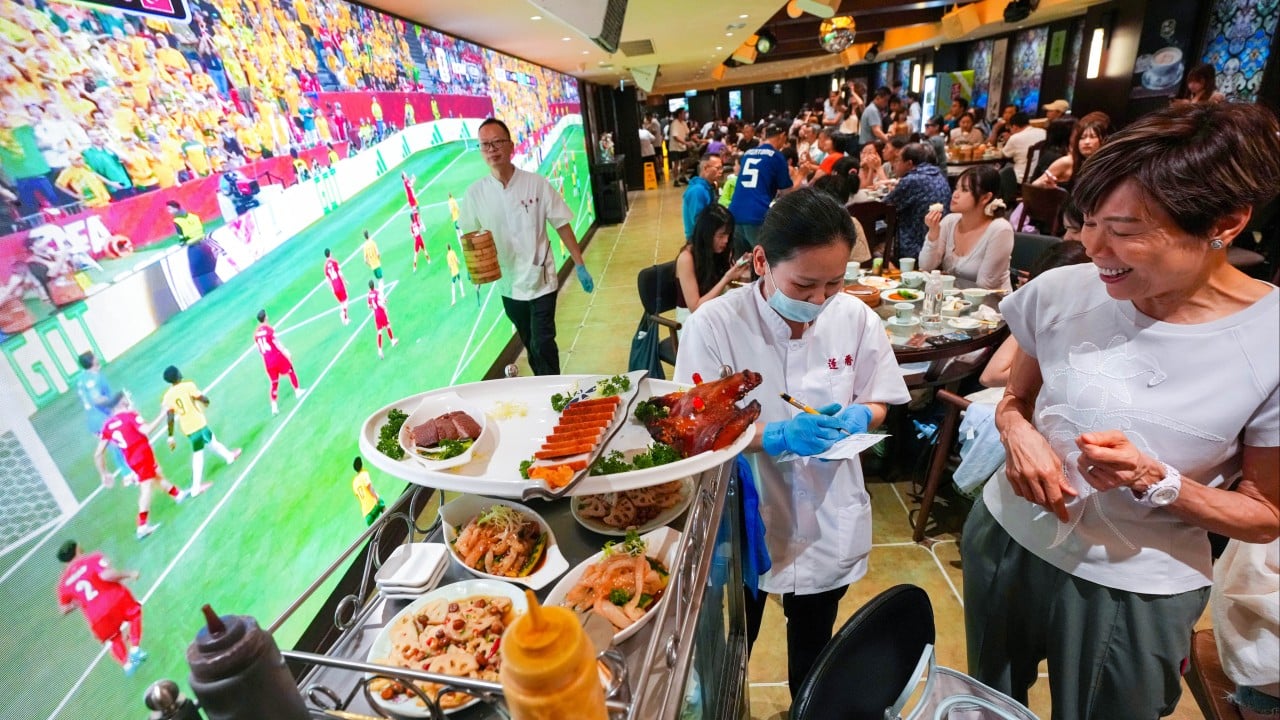
The survival of a traditional Hong Kong dim sum restaurant hinges on razor-thin margins and relentless table turnover. When a global event like the FIFA World Cup arrives, going big on the tournament is rarely a quirky marketing stunt. It is a desperate, calculated pivot to extract maximum yield from some of the most expensive commercial real estate on the planet. By transforming a daytime tea house into a raucous late-night sports bar, operators can capture a flood of high-margin alcohol sales. Pulling this off requires tearing up the traditional rulebook.
You have to understand the inherent friction of the concept. Traditional dim sum is a morning and early afternoon ritual. It relies on a delicate atmosphere of bamboo steamers, pouring hot pu'er tea, and a multigenerational clientele that prioritizes fresh ingredients over loud entertainment. The World Cup, especially when hosted in European or Middle Eastern time zones, requires broadcasting matches at 11 PM, 2 AM, or even 4 AM locally in Hong Kong.
Merging these two worlds is an operational nightmare. It demands a complete overhaul of staffing, menu engineering, licensing, and brand identity, all compressed into a frantic four-week window.
The Crushing Weight of the Commercial Lease
To grasp why a quiet neighborhood teahouse would voluntarily subject itself to screaming football fans and spilled beer, you have to look at the math of Hong Kong real estate.
Commercial landlords in districts like Mong Kok, Causeway Bay, or Wan Chai do not care about the cultural heritage of shrimp dumplings. Rents can easily consume thirty to forty percent of a restaurant's gross revenue. In a normal operating environment, a dim sum restaurant maximizes its lease by turning over tables quickly between 7 AM and 3 PM. After dark, the space often sits empty, generating zero revenue while the meter on the rent keeps running.
The World Cup offers an immediate, albeit temporary, solution to this dead time. It provides a rare justification to keep the doors open for twenty hours a day.
Every seat in a restaurant has a calculated yield per hour. During a Tuesday morning service, an elderly patron might sit for two hours reading a newspaper, spending perhaps $60 HKD on tea and a single order of pork buns. During a World Cup quarter-final at midnight, that same seat can be sold with a minimum spend requirement of $300 to $500 HKD, heavily weighted toward overpriced imported beer and fried snacks.
The revenue density of a sports crowd completely alters the financial trajectory of a struggling business. A successful month-long World Cup activation can generate enough pure profit to cover three months of rent. For operators staring down a lease renewal or lingering debts, this is not an opportunity. It is a lifeline.
The Midnight Kitchen Metamorphosis
You cannot simply turn on a television and expect a traditional kitchen to handle a 2 AM sports crowd. The menu has to adapt to the physiological realities of drunk, excited patrons.
Delicate, steamed items like har gow require intense labor, precise timing, and focused chefs. A kitchen staff already exhausted from working a split shift cannot be trusted to pleat dumplings perfectly at 1:30 AM while a crowd bangs on the tables. More importantly, steamed dumplings do not pair well with heavy alcohol consumption.
Smart operators entirely re-engineer their late-night menus. The bamboo steamers disappear. Out comes the deep fryer.
The focus shifts to salt and pepper squid, fried spring rolls, spicy chicken wings, and crispy pork belly. These items share three critical traits. They are highly salty, which actively drives more beverage sales. They can be prepped in bulk hours ahead of time. And they are highly forgiving to cook, requiring less technical skill from the skeleton crew manning the midnight shift.
This menu shift also alters the food cost percentage. Deep-fried carbohydrates and cheaper cuts of meat carry significantly higher margins than hand-made seafood dumplings. When a table orders a bucket of iced beer alongside a platter of fried wontons, the restaurant is operating at a profit margin that traditional daytime service can never touch.
Securing the Broadcast and the Bureaucracy
The logistical hurdle of legally showing the matches is steep. In Hong Kong, commercial broadcast rights for major sporting events are fiercely guarded by local monopolies like Now TV.
A consumer subscription to watch the games at home might cost a few hundred dollars. A commercial public performance license for a restaurant can run into the tens of thousands, depending on the square footage and seating capacity of the venue.
Restaurant owners have to perform a brutal cost-benefit analysis before the tournament even begins. If they pay the exorbitant commercial broadcast fee, they are immediately starting the month in a deep financial hole. They must guarantee packed houses every single night just to break even on the TV license.
Many smaller, neighborhood spots attempt to bypass this by illegally broadcasting standard residential feeds or pirated streams. This is a massive gamble. Undercover customs and broadcasting inspectors actively sweep commercial districts during the World Cup. Getting caught results in severe fines and the potential loss of business licenses.
Furthermore, there is the issue of liquor licensing. Hong Kong has strict regulations regarding the hours during which alcohol can be served. A traditional dim sum restaurant might only hold a license to serve beer until 11 PM. Applying for a temporary extension to cover the 3 AM matches requires navigating a sluggish bureaucracy, notifying local police, and dealing with potential objections from upstairs residential neighbors who do not want to hear a pub crowd chanting at dawn.
The Labor Crisis in the F&B Sector
No strategy matters without the people required to execute it. The Hong Kong food and beverage sector operates under a chronic, punishing labor shortage. Finding staff willing to work regular daytime hours is difficult enough. Finding staff willing to handle a violent, unpredictable night shift requires serious financial incentives.
The existing staff at a dim sum restaurant usually consists of older, career hospitality workers. You cannot ask a sixty-year-old floor manager who arrives at 5 AM to set up the dining room to suddenly stay until 4 AM to mop up spilled beer.
Operators are forced into the mercenary gig economy. They hire temporary, high-priced casual labor to run the midnight services. These workers have no loyalty to the restaurant and often lack the basic customer service standards the daytime regulars expect. It is a purely transactional relationship. The restaurant pays a premium hourly rate, and the temporary staff manage the chaos.
This split labor model creates massive internal friction. The daytime staff arrives in the morning to find the dining room smelling of stale alcohol, the floors sticky, and the delicate teaware chipped or broken by rowdy fans. The resentment builds quickly. Managing the physical and psychological toll on the core staff is often the hardest part of the entire month. If you burn out your head chef for the sake of football revenue, you might lose your daytime business entirely.
The Physical Toll on the Teahouse
Traditional Chinese restaurants are not built to withstand the physical abuse of a sports bar environment.
The furniture is often heavy, ornate, and tightly packed. The lighting is bright and unforgiving. The acoustics are designed to amplify the clatter of plates and loud conversations, which is charming at Sunday brunch but deafening when a hundred people are screaming at a referee on a projector screen.
Operators have to completely redesign the floor plan every evening. They push the heavy round tables aside to create sightlines to the temporary screens. They bring in cheap plastic stools. They swap out fragile ceramic teacups for thick, unbreakable glassware or plastic cups.
They also have to manage the bathrooms. A space designed to handle a polite lunchtime crowd of families will experience catastrophic plumbing failure when subjected to a hundred people drinking heavy volumes of cheap beer over three hours. The unseen costs of plumbing emergency calls and deep cleaning services eat directly into the perceived profits of the late-night gambit.
The Hangover and the Brand Damage
The most dangerous aspect of pivoting a traditional restaurant toward a massive sporting event is the long-term damage to the brand.
For thirty days, the restaurant operates as a completely different entity. It attracts a demographic that has zero interest in the core product. The 25-year-old who spends $800 HKD on beer during the final match is not coming back next Tuesday morning for steamed spare ribs.
Meanwhile, the loyal daytime customers—the elderly couples, the local office workers, the neighborhood families—often experience a sharp decline in quality during the tournament month. The staff is exhausted. The restaurant smells slightly of industrial cleaner attempting to mask the scent of stale lager. The kitchen is distracted.
If a restaurant completely sacrifices its daytime quality to chase the midnight dollar, it risks a fatal hangover when the tournament ends. The screens are packed away. The temporary night staff is fired. The landlord still expects the massive rent check next month.
The operators who survive this transition understand that the World Cup is a mercenary extraction exercise. They compartmentalize the night service. They aggressively protect the morning prep routines. They use the cash influx to patch holes in their balance sheets or fund necessary renovations, rather than treating it as a permanent new business model.
Running a restaurant in Hong Kong is an endless war of attrition against the cost of space. An event like the World Cup simply accelerates the timeline, forcing operators to push their physical spaces, their staff, and their own endurance to the absolute limit. It is an ugly, stressful, and highly lucrative month. When the final whistle blows and the trophy is lifted, the true victory for the restaurant owner isn't the profit margin. It is simply unlocking the front door the next morning, turning on the dim sum steamers, and hoping the neighborhood still remembers who they really are.