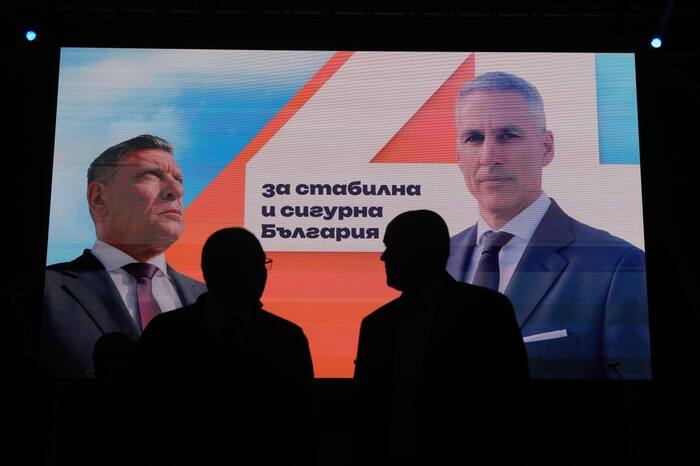
Voters in Bulgaria are heading to the polls for a presidential election overshadowed by severe inflation, political fatigue, and deep divisions over the war in Ukraine. While mainstream coverage frames this vote as a simple binary choice between pro-European integration and Russian sympathy, the reality on the ground is far more fractured. The Bulgarian presidential election has become a proxy battleground for a population exhausted by chronic governance failures, skyrocketing living costs, and a relentless information war that has eroded public trust in democratic institutions.
To understand why this election carries disproportionate weight for a largely ceremonial office, you have to look at the vacuum left by a paralyzed parliament. Over the past several years, Bulgaria has endured a dizzying cycle of snap parliamentary elections, fragile coalitions, and caretaker governments. When the legislature fails to function, constitutional power defaults to the presidency. The occupant of the presidential palace at Dondukov 2 suddenly wields immense authority, appointing caretaker cabinets, shaping foreign policy narratives, and holding veto power over critical legislation. If you enjoyed this post, you should read: this related article.
The Anatomy of Economic Exhaustion
Walk through any market in Sofia, Plovdiv, or the impoverished northwestern regions around Vidin, and the geopolitical debates of Brussels feel entirely detached from daily survival. Bulgaria remains the poorest member state in the European Union. While macroeconomic indicators occasionally show modest GDP growth, those numbers do not translate into purchasing power for the average pensioner or factory worker.
Inflation has gutted household budgets. Food prices, energy costs, and basic services have climbed sharply, outpacing wage growth in sectors outside the booming Sofia IT hub. For millions of Bulgarians, the transition from a state-planned economy to free-market capitalism has felt less like a liberation and more like a three-decade exercise in wealth extraction by entrenched oligarchs. For another look on this development, refer to the latest coverage from NPR.
The Eurozone Anxiety Trap
A central economic flashpoint in this election is the timeline for adopting the euro. Pro-Western political factions argue that joining the Eurozone is the final, necessary step to anchor Bulgaria firmly within the European core, lowering borrowing costs and attracting foreign investment.
Critics and populist candidates exploit a visceral fear among the public. They point to neighboring Croatia, where euro adoption coincided with a noticeable spike in consumer prices, as a cautionary tale. Without strong consumer protection agencies or genuine trust in state regulators, many Bulgarians believe local merchants and monopolies will use currency conversion as a cover to round prices up, effectively wiping out their remaining savings. Candidates who promise to delay the euro or demand a national referendum tap directly into this anxiety, framing themselves as defenders of national sovereignty against distant bureaucrats.
The Ukraine Fault Line and Historical Ghosts
Foreign policy rarely dominates domestic elections in small European nations unless it collides directly with historical identity and wallet issues. The war in Ukraine has done both in Bulgaria.
Historically, cultural, linguistic, and religious ties between Bulgaria and Russia run deep. The narrative of Russia liberating Bulgaria from Ottoman rule in the late nineteenth century remains embedded in the national psyche, taught in schools and memorialized in monuments across the country. At the same time, Bulgaria is a committed member of both NATO and the European Union, bound by collective security agreements and economic integration.
This duality has split the electorate down the middle. One camp views unwavering support for Kyiv, including military aid and strict sanctions against Moscow, as a moral imperative and a vital investment in Bulgaria's own national security against Russian aggression. The other camp argues that sending weapons prolongs the conflict, invites Russian retaliation, and drags a vulnerable Balkan nation into a war it cannot afford.
Energy Dependence as Political Leverage
For decades, Bulgaria was almost entirely dependent on Russian natural gas, nuclear fuel, and crude oil. When Moscow cut off gas supplies after Sofia refused to pay in rubles, it triggered an immediate political and economic shockwave.
The scramble to secure alternative liquefied natural gas routes and diversify energy infrastructure exposed years of deliberate neglect by previous administrations. Politicians aligned with Moscow quickly weaponized the resulting price volatility. Their message to voters is brutally simple. Aligning with Western sanctions means freezing in the winter and paying triple for electricity. Rebuilding pragmatic ties with Russia means cheap energy and economic stability. Even though Bulgaria has made significant strides in diversifying its gas supply through interconnectors with Greece, the psychological impact of energy insecurity remains a potent campaign weapon.
The Disinformation Ecosystem and Voter Apathy
You cannot analyze a modern Bulgarian election without examining the media environment. According to international press freedom indices, Bulgaria has struggled for years with concentrated media ownership, where outlets are frequently used as political clubs by business tycoons rather than independent watchdogs.
Into this void has stepped a sophisticated, low-cost disinformation network operating primarily on social media platforms like Facebook, Telegram, and Viber. Narratives questioning the legitimacy of the European Union, amplifying Kremlin talking points on Ukraine, and spreading conspiracy theories about Western cultural decadence circulate with minimal friction.
The goal of this information campaign is not necessarily to convince voters to embrace authoritarianism. The goal is exhaustion. When voters are bombarded with contradictory claims, fabricated scandals, and relentless cynicism, they conclude that all politicians are equally corrupt and that democracy itself is a sham.
The Machine Voting Controversy
Technical changes to how Bulgarians cast their ballots have further fueled distrust. The introduction of voting machines was initially championed by reformists as a silver bullet to eliminate widespread ballot-box stuffing, invalid ballots, and corporate vote-buying in impoverished communities.
Instead, the machines became a political football. Traditional parties rolled back mandatory machine voting, reintroducing paper ballots alongside digital terminals. The resulting hybrid system created logistical chaos, confusion among elderly voters, and endless accusations of tampering from both sides. When the mechanics of voting become a partisan battleground, turnout inevitably collapses. Low turnout disproportionately benefits entrenched political machines capable of mobilizing disciplined, dependent voting blocs, while alienated urban and diaspora voters stay home.
Why the Presidency Matters More Than You Think
Political analysts outside the Balkans often dismiss the Bulgarian president as a figurehead who cuts ribbons and hosts foreign dignitaries. That assessment is dangerously outdated.
Under the Bulgarian constitution, the president is the supreme commander-in-chief of the armed forces and chairs the Consultative Council on National Security. In times of geopolitical crisis, the presidency controls the national microphone. A president skeptical of NATO deployments or military aid to Ukraine can stall defense modernization, complicate alliance cohesion on the Black Sea flank, and signal to foreign investors that Bulgaria is an unreliable partner.
Furthermore, the power to appoint caretaker governments gives the president direct control over the state apparatus during prolonged parliamentary deadlocks. Caretaker ministers manage public procurement, oversee energy contracts, and appoint regional governors who control local law enforcement during election cycles. The presidency is not a ceremonial sideline. It is the ultimate insurance policy for political survival in Sofia.
The Real Stakes for Europe's Southeastern Flank
Look closely at the map of Southeastern Europe. Bulgaria sits at a strategic crossroads, bordering the Black Sea, Turkey, Greece, North Macedonia, Serbia, and Romania. Stability in Sofia is essential for securing NATO's eastern flank, managing migration flows, and maintaining energy transit corridors that bypass Russian territory.
Yet the international community frequently misreads Bulgarian politics by viewing it through a simplistic ideological lens. Voters who back populist or nationalist candidates are not necessarily endorsing authoritarianism. Many are casting a protest vote against a political establishment that has failed to reform the judiciary, curb high-level corruption, or deliver basic public services like functional healthcare and decent roads.
As long as anti-corruption reforms remain stalled and the gap between Sofia's elite and the rest of the country continues to widen, every election will feel like an existential crisis. The ballots cast today will determine who occupies the presidential palace, but they will not fix the broken social contract that drove Bulgaria to this breaking point.