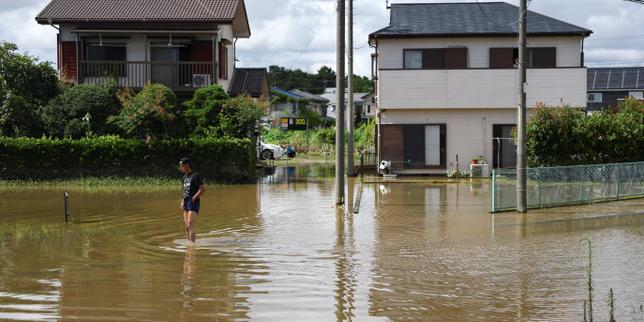
Record-shattering downpours struck Chiba Prefecture, leaving at least nine people dead, thousands stranded at Narita Airport, and over a thousand homes inundated. When the Japan Meteorological Agency issued its highest-level Level 5 emergency warning for Chiba—a first for the region—it signaled more than just an extreme weather event. It exposed a systemic vulnerability in how densely populated suburban corridors adjacent to Tokyo manage catastrophic flash flooding when atmospheric rivers stall overhead.
Over 115 millimeters of rain hammered parts of Chiba in a single hour, matching total historical monthly averages in minutes. Local infrastructure buckled instantly. Water pressure blew manhole covers into the air, subterranean drainage networks choked on surface runoff, and low-lying roadways turned into lethal aquatic traps. Multiple motorists drowned after their vehicles flooded, unable to open jammed doors against external hydraulic pressure. For an alternative view, see: this related article.
Municipal leaders admitted caught-off-guard realities. Chiba Governor Toshihito Kumagai noted publicly that despite responding to numerous historical disasters, the sheer speed and localized intensity of this deluge defied standard predictive modeling. That admission points to an uncomfortable truth. Japan's celebrated disaster mitigation framework, built largely around typhoon preparedness and major river basin overflow, struggles when hyper-localized cloudbursts drop months of rain on urbanized tablelands in mere hours.
Suburban sprawl compounds the danger. Over decades, natural water retention basins, agricultural plots, and permeable soil across Chiba have given way to asphalt, concrete parking lots, and residential housing developments. When torrential rain hits paved over landscapes, absorption drops near zero. Runoff accelerates violently toward local depressions, overwhelming narrow municipal drainage channels that were never engineered for cloudburst intensities driven by a warming atmosphere. Similar coverage regarding this has been provided by Reuters.
Emergency response coordination also hit severe bottlenecks. With rail arteries crippled, approximately 7,000 travelers spent an uncomfortable night stranded inside Narita Airport terminals, while Self-Defense Forces had to deploy heavy transport to evacuate thousands more trapped near regional rail hubs. The cascading failure of commuter networks highlights how tightly integrated Greater Tokyo's transit economy is, and how quickly a regional weather anomaly paralyzes millions.
Fixing this vulnerability requires abandoning reactive disaster management. Engineering massive subterranean diversion tunnels, similar to the Metropolitan Outer Area Discharge Channel north of Tokyo, is prohibitively expensive and logistically impossible for every regional municipality. Instead, urban planners must pivot toward decentralized retention systems. Mandating permeable pavement, expanding underground neighborhood cisterns, and enforcing stricter building codes for subterranean parking structures are no longer optional upgrades. They are baseline survival requirements for a future where unprecedented rainfall becomes the new normal.
The waters in Chiba have receded, leaving behind damaged storefronts, ruined vehicles, and grieving families. Yet the structural blind spot remains wide open.
Japan in Flood Chaos! Record Rain Hits Chiba and Tokyo, Turns Streets Into Rivers, People Trapped
This footage documents the severity of the record-breaking rainfall and street-level flooding that overwhelmed Chiba Prefecture during the disaster.
http://googleusercontent.com/youtube_content/1