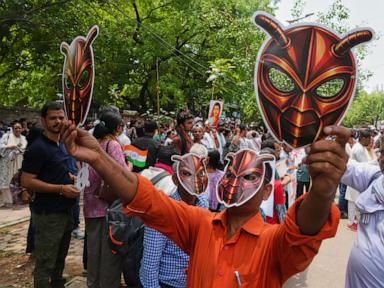
A viral digital joke has mutated into a disruptive political force across India. What began as an algorithmic meme known as the Cockroach Party has triggered actual, physical protests among millions of underemployed youth in tier-2 and tier-3 cities. This is not a standard flash mob or a temporary internet trend. It is a highly decentralized, leaderless movement utilizing weaponized absurdity to express deep economic frustration. By adopting the cockroach—an creature that survives in the harshest, most neglected conditions—as their symbol, India’s youth are signaling their refusal to remain invisible in an economy that they feel has left them behind.
To understand how a digital joke became a national security concern, you have to look past the surface-level internet trends. The movement did not start in the elite tech hubs of Bengaluru or New Delhi. It bubbled up from the smartphone screens of youth in places like Patna, Lucknow, and Ranchi, where the gap between digital aspiration and economic reality is widest. Meanwhile, you can read similar stories here: Inside the South Asian Migration Boom Nobody is Talking About.
The Birth of a Mutant Political Symbol
Internet culture in India has traditionally been divided along linguistic and socioeconomic lines. The Cockroach Party smashed those barriers. The movement began with a series of satirical, hyper-localized short videos depicting a fictional political party run entirely by insects. The premise was simple. Cockroaches can survive a nuclear blast, live without food for weeks, and thrive in the dark, making them better equipped to handle the current job market than university graduates.
The satire struck a nerve. Within weeks, the joke evolved from passive content consumption to active participation. Millions of young people began altering their social media profiles, organizing local "cell meetings" in public parks, and distributing digital manifestos. To understand the bigger picture, check out the detailed article by Associated Press.
The rapid scaling of this movement relies on a specific structural mechanism. Unlike traditional political organizations, the Cockroach Party possesses no central command, no official bank accounts, and no single face that authorities can target or co-opt. It operates entirely on a franchise model driven by algorithms. Anyone with a smartphone can create a local chapter, generate content using shared audio templates, and mobilize a crowd within hours.
The strategy relies on a concept known as tactical absurdity. When police forces encounter protestors holding banners demanding "Dignity for the Resilient Insect," standard crowd-control playbooks fail. Law enforcement officers face a bizarre dilemma. Arresting a teenager for carrying a cardboard cutout of a cockroach risks making the state look ridiculous on national television, fueling further outrage.
The Economic Tinderbox Driving the Subversion
The state cannot afford to dismiss this as mere juvenile delinquency. The underlying drivers of the Cockroach Party are purely economic, rooted in a structural crisis of youth underemployment that has been building for over a decade.
India’s macroeconomic headlines often paint a picture of roaring GDP growth and tech-driven prosperity. The view from the ground in regional towns tells a different story. Millions of young people are graduating from private engineering and degree colleges every year into an economy that primarily generates low-tier gig work or temporary contract jobs.
Consider a typical scenario in a regional hub like Kanpur. A student spends their family's savings on a technical degree, expecting a path to the middle class. Upon graduation, the available options are often limited to driving for delivery apps or working in unorganized telesales. The anger stems not from a lack of work, but from a severe lack of quality, stable employment that matches their qualifications.
+-------------------------------------------------------------+
|               THE ANATOMY OF AN ALGORITHMIC PROTEST         |
+-------------------------------------------------------------+
|                                                             |
|   [Economic Frustration] -> High underemployment in towns   |
|              |                                              |
|              v                                              |
|   [Tactical Absurdity]   -> Memes disguise political anger  |
|              |                                              |
|              v                                              |
|   [Algorithmic Velocity] -> Short-form video scales rapidly |
|              |                                              |
|              v                                              |
|   [Physical Occupation]  -> Flash protests disrupt streets   |
|                                                             |
+-------------------------------------------------------------+
This disparity has turned regional cities into an economic tinderbox. Traditional student unions tied to mainstream political parties are viewed with deep suspicion by the youth, who see them as careerist stepping stones for the well-connected. The Cockroach Party filled this vacuum by offering an alternative that felt authentic, uncorrupted, and fiercely independent.
The Failure of the Formal Job Market
The numbers tell a stark story. While formal employment sectors shrink or automate, the informal sector has expanded. The promises of manufacturing booms have not materialized fast enough to absorb the rural-to-urban shift of workers. This has left an entire generation stranded in a liminal space. They are too educated for manual labor, yet blocked from professional corporate careers.
The Psychology of the Survivalist Icon
Choosing a cockroach as a mascot is an act of dark psychological defiance. It subverts the traditional aspiration of political imagery. Instead of promising progress, strength, or prosperity, the movement embraces a symbol of pure, stubborn survival. The message sent to policymakers is clear: you have treated us like pests, so we will learn to survive like them.
How Algorithmic Velocity Outruns the State
The speed at which these protests manifest on the streets has caught regional administrations entirely off guard. Traditional intelligence gathering relies on monitoring known activists, tracking union finances, and listening to wiretaps. The Cockroach Party bypasses all of these entry points.
The mobilization relies entirely on algorithmic velocity. A user in a city like Bhopal uploads a video containing a hidden audio trigger or a specific hashtag. The algorithm, optimized for high engagement driven by outrage and novelty, pushes that video to hundreds of thousands of local feeds within a specific geographic radius. The video specifies a time and a public square. By the time the local intelligence bureau flags the post, thousands of young people have already occupied the space.
Traditional Protest Model:
Central Command -> Regional Leaders -> Local Cadres -> Mobilization (Takes weeks)

Cockroach Party Model:
Decentralized Content -> Algorithmic Amplification -> Peer-to-Peer Geotargeting -> Immediate Flash Occupation (Takes hours)
This operational model makes containment incredibly difficult. When authorities shut down mobile internet access in one district, the network self-heals. Activists use offline mesh-messaging apps or pass information via physical storage drives at local tea stalls. The movement adapts to censorship because its base is technologically fluent and deeply familiar with digital evasion tactics.
The Corporate Exploitation of the Trend
Where there is attention, there is capital. While the political establishment views the Cockroach Party with panic, parts of the corporate world see a lucrative marketing opportunity. This corporate co-optation adds an extra layer of complexity to the phenomenon.
E-commerce brands, local clothing labels, and fast-food chains have begun subtly incorporating cockroach imagery and movement slang into their advertising campaigns. They want to capture the attention of this massive, highly engaged demographic without alienating older customers or drawing the ire of government regulators.
This dynamic creates a bizarre paradox. A movement born from anti-systemic anger is simultaneously being packaged and sold back to the protestors in the form of graphic t-shirts, smartphone cases, and energy drinks. Some radical factions within the movement have burned corporate merchandise during rallies, arguing that capitalism is trying to neutralize their message by turning it into a lifestyle commodity. Others use the corporate visibility as a shield, arguing that the mainstream commercialization of their symbols makes it even harder for the state to criminalize them.
The Limits of Leaderless Subversion
The fundamental strength of the Cockroach Party is also its greatest structural vulnerability. Because it lacks a centralized leadership core, it is highly susceptible to internal fragmentation and external manipulation.
In several states, opportunistic political actors have already attempted to hijack local chapters. They inject their own sectarian agendas into the decentralized network, threatening to destroy the cross-caste, cross-religious unity that made the movement potent in its early stages. Without an authorized governing body to issue clarifications or disavow rogue actors, the movement struggles to defend its core message against targeted disinformation campaigns.
History shows that purely leaderless movements struggle to transition from disruption to actual policy reform. Occupying a public square or disrupting traffic forces the state to pay attention, but it does not write legislation. It does not create jobs. Eventually, the initial energy of tactical absurdity faces a choice: evolve into a structured political entity with concrete demands, or watch the algorithmic tide move on to the next viral sensation.
The state is betting on exhaustion. Regional governments are currently avoiding mass arrests, opting instead for a strategy of strategic delay. They wait for internal rifts to widen while using targeted tax audits and cyber-security laws to pressure the tech platforms hosting the movement’s digital infrastructure.
The young people on the streets seem aware of this trap. In recent rallies, the banners have begun to change. The absurdist humor is hardening into something more direct, more traditional, and far more dangerous for the political establishment. The jokes about insects are fading, replaced by specific demands for exam transparency, public sector job allocations, and corporate accountability.
The mutation of the Cockroach Party from an internet meme into a street-level crisis reveals the deep fissures in the narrative of smooth economic progress. The smartphone gave India’s youth a voice, but the economy failed to give them a stake. The crowds occupying the squares are no longer laughing at the joke. They are waiting to see who takes them seriously first.