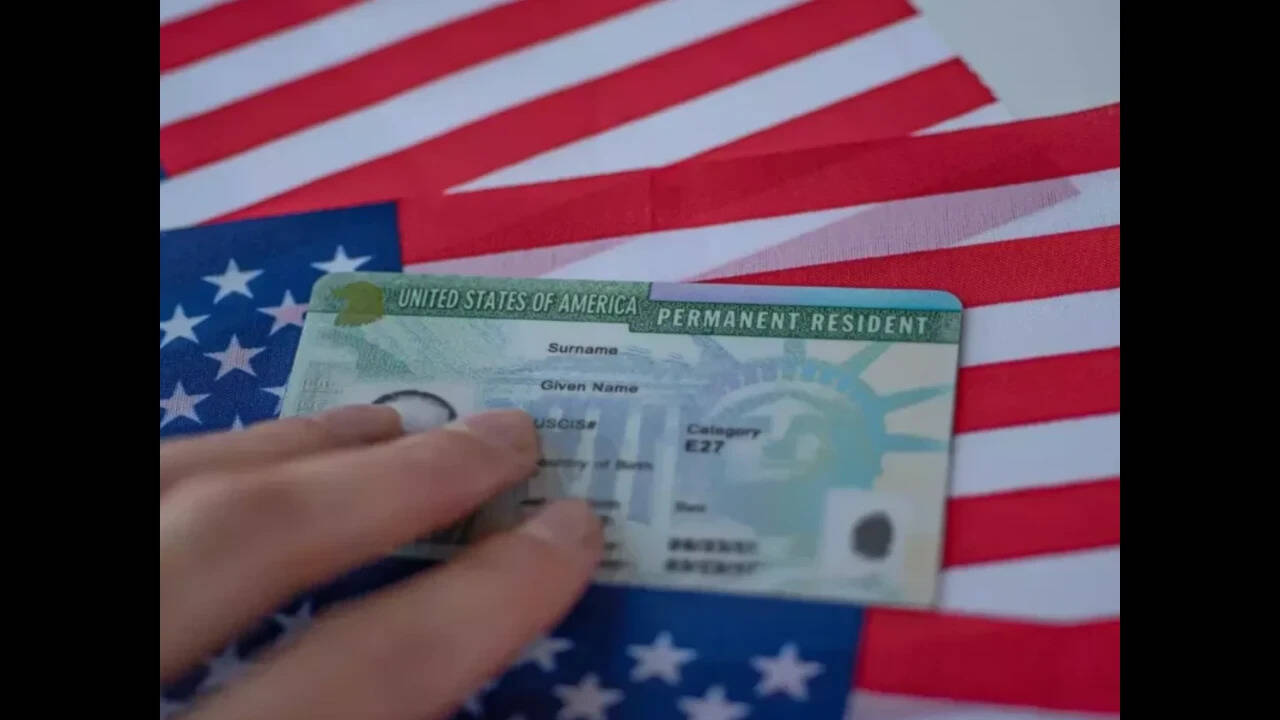
The Department of Labor's sudden freeze on permanent labor certifications for eight major employers has turned corporate immigration channels into a logistical disaster area.
If you are an H-1B holder whose livelihood depends on Microsoft, Adobe, Cognizant, Infosys, Tata Consultancy Services, Wipro, HCL Technologies, or Capgemini, your permanent residency track has hit a brick wall. The administration targeted the PERM program, halting both new submissions and pending applications amid allegations of displacement and wage suppression. Panic has rippled across corporate campuses, leaving thousands of foreign professionals questioning whether to pack their bags or lawyer up.
Understanding the mechanics of this penalty requires separating administrative reality from internet rumors.
The Anatomy of the PERM Freeze
The program in question is the Permanent Labor Certification Program, known as PERM. It is the mandatory first step for most employment-based green cards. Before an employer can petition the federal government for a permanent resident visa on behalf of a worker, they must prove to the Department of Labor that no qualified, willing, or able American worker is available for the job.
By suspending these eight companies from the PERM system entirely, the federal government has effectively locked them out of the green card sponsorship pipeline.
The rationale offered by administration officials centers on domestic displacement. High-profile statements pointed to recent domestic layoffs coupled with large-scale foreign national hiring volumes, arguing that the system is being weaponized to bypass local talent pools. Corporate leadership counters that the numbers reflect internal status adjustments and standard retention pipelines rather than workforce replacement.
Regardless of the political posturing, the operational fallout falls entirely on individual workers who spent years accumulating priority dates.
What Happens to Approved I-140s and Existing Status
A common point of confusion is whether the suspension invalidates existing legal protections. It does not.
If your PERM was already certified and your Form I-140 immigrant petition was previously approved by USCIS, that approval remains valid. An approved I-140 secures your priority date, which dictates your place in the employment-based green card queue. That date is anchored to you. Even if you eventually change employers, you keep that priority date for future filings.
The danger zone belongs to those whose cases were caught mid-stream. If your PERM application was sitting on a desk waiting for certification when the hammer dropped, processing has stopped indefinitely.
Meanwhile, your temporary nonimmigrant status—the H-1B visa—operates under a separate legal framework. The Department of Labor’s action against PERM does not automatically cancel an active H-1B visa. You retain your current right to work, provided your employer maintains your sponsorship compliance.
The clock, however, keeps ticking. The standard H-1B validity period caps out at six years. Under normal circumstances, filing a PERM application at least 365 days before that six-year limit allows an employee to secure multi-year extensions. When the PERM mechanism is jammed, those extensions become precarious. Workers approaching their sixth year without an approved PERM or I-140 face the very real prospect of exhausting their time and being forced to leave the country.
The Strategic Dilemma for Affected Employees
Should you stay or should you leave? The answer depends entirely on your current timeline and risk tolerance.
For an employee with four years remaining on an H-1B, waiting out the administrative freeze might be a viable, if stressful, option. Legal challenges are already being weighed, and administrative policies can shift with future political or judicial interventions.
For someone whose visa expires in six months, waiting is a gamble with high stakes.
Jumping ship to a new employer is complicated. Moving to a company unaffected by the suspension allows a new sponsor to file a fresh PERM application, but it requires starting the labor certification process entirely from scratch. You lose the momentum of your previous filing date, though you can port your approved I-140 priority date once you reach that stage with the new firm.
Furthermore, the tech sector is not hiring with the unchecked aggression it displayed during previous boom cycles. Securing an H-1B transfer in the current labor market requires finding an organization willing to take on immigration sponsorship overhead during a period of intense regulatory scrutiny.
The Broader Industry Chill
The fallout extends beyond the named corporate giants. Immigration lawyers report a surge of advisory consultations from mid-tier firms and outsourcing partners who fear they could be next on the enforcement chopping block.
When federal agencies target multinational corporations and major IT consulting providers, the compliance burden shifts for everyone else. Employers are auditing their internal recruitment practices, tightening documentation around local job postings, and reassessing whether their sponsorship pipelines expose them to regulatory penalties.
The era of routine, frictionless corporate green card sponsorship is undergoing a forced contraction. For the thousands of professionals caught in the crossfire, the path forward requires aggressive auditing of personal expiration dates, close coordination with specialized legal counsel, and a willingness to make hard career pivots before administrative stagnation forces the choice for them.