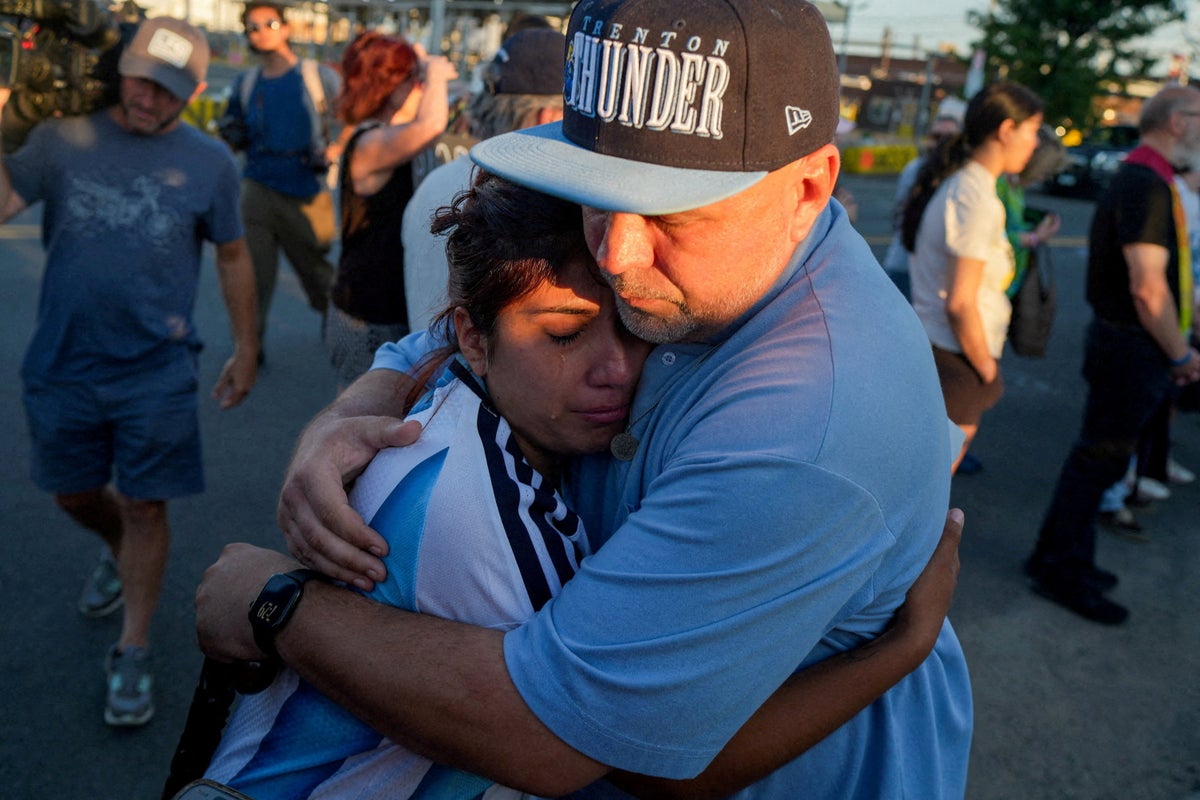
The flashing lights outside Delaney Hall illuminate a familiar tableau of grief, anger, and procedural stonewalling. Another human being has drawn their final breath inside a federal immigration facility, leaving behind shattered relatives and a chorus of local politicians demanding accountability that never quite materializes.
Edwin Lopez-Cornejo was forty-one years old. He came from El Salvador decades ago, built a life in New Jersey, and held down consistent work. By August, he was gone, pronounced dead at a Newark hospital after what federal authorities routinely describe as a sudden medical emergency.
The machinery of civil detention hums quietly until a pulse stops. Then, the press releases fly.
To understand why facilities like Delaney Hall remain operational amid chronic turmoil, one must look past the immediate tragedy and examine the structural architecture of modern immigration enforcement. Private prison operators, federal contractors, and a labyrinth of bureaucratic insulation create an environment where transparency goes to suffocate. When a detainee dies, the system does not break down; it executes a well-rehearsed containment protocol. Public relations statements substitute for actual answers. Investigations drag on for months, shielded by privacy exemptions and jurisdictional handoffs between local police, federal agencies, and corporate contractors.
Public pressure mounts immediately following these incidents. Protesters gather at the gates with handwritten signs and black ribbons. Mayors issue scathing press releases. U.S. senators fire off pointed letters demanding immediate closures and comprehensive federal probes.
Yet the facility stays open.
The staying power of detention centers like the one on Doremus Avenue rests on a simple economic and political reality. Bed space is a high-value commodity in the sprawling architecture of federal immigration enforcement. As enforcement priorities shift and crackdowns expand, the demand for secure holding facilities skyrockets. Private operators pitch themselves as rapid-response logistical partners, capable of turning dormant buildings into high-volume processing hubs overnight. Local zoning boards, state health departments, and even congressional oversight teams frequently find themselves locked out or legally obstructed when attempting to conduct unannounced health and safety audits.
Behind those brick walls, the day-to-day reality is starkly removed from statutory mandates. Months before the latest fatality, Delaney Hall was already boiling over. Hundreds of detainees launched coordinated labor and hunger strikes, refusing meals to protest spoiled food, inadequate medical attention, and aggressive guard behavior.
When people inside a facility feel compelled to starve themselves to draw attention to basic living conditions, the system is failing its foundational obligations.
The response to those protests offered a chilling preview of institutional priorities. Instead of systemic reform or independent health evaluations, tensions escalated outside the perimeter. Encounters between demonstrators and security personnel grew hostile. Video footage captured volatile clashes, painting a portrait of an institution permanently on the defensive.
Every preventable death in federal custody chips away at the moral authority of the agency overseeing it. Yet, accountability remains elusive because the responsibility is diffused across a corporate chain of command. The GEO Group runs the facility on a government contract. Immigration and Customs Enforcement dictates the population levels and operational guidelines. Department of Homeland Security officials issue high-level assurances from Washington while local communities bear the emotional and social fallout.
When a family receives a call from a hospital hours after their loved one has already passed away behind locked doors, the abstract debate over immigration policy transforms into an acute human wound. Maria Cornejo will not see her son walk through her front door again. A young girl grows up without her father.
The gate remains bolted on Doremus Avenue. The patrols continue. The paperwork gets filed. And the next cycle waits just around the corner.

.png?itok=1mb05mKJ)

