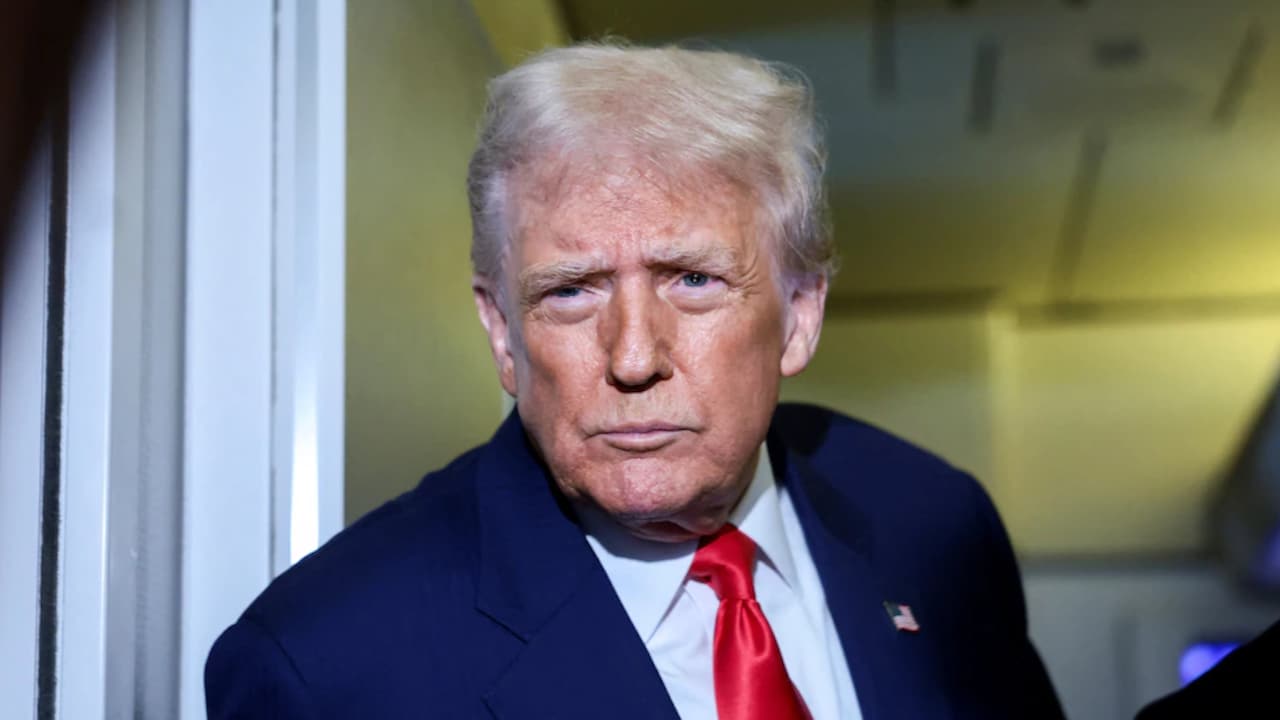
Donald Trump believes he deserves the Nobel Peace Prize, and he rarely misses an opportunity to say so. His repeated public complaints—claiming he has ended wars, neutralized threats from Iran, and brokered historic Middle East agreements without receiving recognition from Oslo—reflect a central tension between transactional American diplomacy and the institutional culture of the Norwegian Nobel Committee. While supporters point to the Abraham Accords and the absence of new foreign wars during his presidency as concrete achievements worthy of the honor, critics and foreign policy analysts argue that unilateral withdrawals from international treaties and escalating regional tensions run directly counter to the prize's founding mandate.
The grievance is not new. It has become a recurring fixture of his rallies, press briefings, and social media posts, resurfacing every October when the committee announces its annual laureate and whenever foreign policy dominates the news cycle. To understand why a medallion awarded by five retired Norwegian politicians commands so much attention from the American political right, one has to look past the surface-level rhetoric and examine how diplomatic legacy is constructed, validated, and weaponized in modern politics.
The Architecture of a Diplomatic Grievance
For decades, the Nobel Peace Prize has functioned as the ultimate international stamp of approval for world leaders. When Barack Obama won the award in 2009—just nine months into his first term, before many of his signature foreign policy initiatives had even taken shape—the decision cemented a lasting political fault line in Washington.
Trump has cited Obama's win repeatedly as evidence of a double standard. In his telling, Obama received the prize simply for being elected and giving speeches, whereas Trump delivered tangible results on the ground. According to Trump's public statements and those of his former aides, his administration's record includes several pillars that should have secured the award:
- The Abraham Accords, which normalized relations between Israel and four Arab nations—the United Arab Emirates, Bahrain, Sudan, and Morocco—breaking a decades-old diplomatic stalemate in the Middle East.
- The defeat of the ISIS territorial caliphate in Iraq and Syria through an intensified military campaign that eliminated the group's physical stronghold.
- De-escalation with North Korea, highlighted by historic face-to-face summits with Kim Jong Un in Singapore and Hanoi, which temporarily halted nuclear and long-range missile testing.
- Containment of Iran, executed through the "maximum pressure" sanctions campaign and the targeted strike that killed Islamic Revolutionary Guard Corps commander Qasem Soleimani, which Trump argues prevented wider regional war.
From the perspective of Trump and his allies, these actions represent a results-oriented approach to global stability. They argue that traditional diplomats spent decades talking about Middle East peace without changing facts on the ground, while the Trump administration bypassed conventional wisdom and achieved formal peace treaties.
How Oslo Actually Chooses a Laureate
The disconnect between Trump's expectations and the committee's decisions comes down to how the Nobel Peace Prize is defined and administered. The award is not decided by the United Nations, the United States government, or a global popular vote. It is governed by the specific text of Alfred Nobel's 1895 will and interpreted by the Norwegian Nobel Committee, a five-member panel appointed by Norway's parliament, the Storting.
Nobel's will specifies that the prize should go to the person who has done the most or the best work for fraternity between nations, the abolition or reduction of standing armies, and the holding and promotion of peace congresses.
"The committee does not operate as a scoreboard for bilateral deals or military deterrence; it looks for systemic efforts that strengthen multilateral institutions and international law."
That distinction explains much of the friction. Historically, the Norwegian committee has favored multilateral diplomacy, arms control treaties, human rights advocacy, and international cooperation. Figures like Jimmy Carter, Mikhail Gorbachev, and the European Union fit neatly into an institutional worldview that equates peace with cross-border governance and consensus-building.
Trump's foreign policy philosophy, built around the doctrine of "America First," explicitly rejected that framework. During his time in office, the United States withdrew from the Joint Comprehensive Plan of Action (JCPOA)—the 2015 Iran nuclear deal—as well as the Paris Climate Accord, the Intermediate-Range Nuclear Forces (INF) Treaty, and the UN Human Rights Council. He openly questioned the value of NATO and imposed tariffs on longstanding allies.
To his supporters, pulling out of flawed agreements was an act of strength that protected American sovereignty. To the traditional foreign policy establishment in Europe, those moves dismantled the very mechanisms of international cooperation that the Nobel Committee exists to reward.
The Iran Factor and Competing Definitions of Peace
Trump's frequent assertion that he "stopped Iran" highlights how two sides can look at the exact same set of events and reach opposite conclusions about whether they constitute peacemaking.
In May 2018, the Trump administration exited the JCPOA, arguing that the agreement failed to permanently block Tehran's path to a nuclear weapon and ignored Iran's ballistic missile program and support for regional proxy groups. The White House subsequently reimposed sweeping economic sanctions designed to cripple Iran's oil exports and isolate its banking sector. In January 2020, following attacks on U.S. personnel in Iraq, Trump authorized the drone strike near Baghdad International Airport that killed Qasem Soleimani.
Supporters of this approach contend that re-establishing deterrence prevented Iran from dominating the Middle East. They point out that Tehran did not launch a full-scale conventional war in response to the Soleimani strike, and that financial pressure severely constrained Iran's ability to fund allied militias in Lebanon, Gaza, and Yemen. In Trump's framing, projecting overwhelming strength forced adversaries to back down, thereby preserving peace.
Foreign policy critics, including former officials from the Obama and Biden administrations as well as European diplomats, offer a starkly different assessment. They note that after the U.S. withdrawal from the nuclear deal, Iran resumed enriching uranium at higher purities and expanded its stockpile far beyond the limits set by the 2015 accord. Rather than containing the nuclear threat, critics argue, the abandonment of diplomacy pushed Tehran closer to nuclear threshold capability while triggering a cycle of retaliatory strikes across the Persian Gulf and Iraq.
Under the criteria typically applied by the Nobel Committee, unilateral sanctions and targeted military strikes—even when intended to deter aggression—are viewed as instruments of coercion rather than peacebuilding.
The Politics of Nominations
Part of the confusion surrounding Trump's Nobel grievances stems from how the nomination process works. Every year, headlines announce that Trump—or another prominent politician—has been "nominated" for the Nobel Peace Prize. In reality, securing a nomination is a remarkably low bar.
Thousands of people worldwide are eligible to submit names to the committee before the annual January 31 deadline. Eligible nominators include:
- Members of national assemblies and national governments of sovereign states
- Current heads of state
- University professors of history, social sciences, law, philosophy, theology, and religion
- Directors of peace research institutes and foreign policy institutes
- Previous Nobel Peace Prize laureates
- Current and former members of the Norwegian Nobel Committee
Because any member of a national legislature can submit a nomination, politicians routinely nominate allies or foreign leaders to generate favorable press coverage back home. Trump has been nominated multiple times by lawmakers from the United States, Norway, Sweden, and Australia, often specifically citing the Abraham Accords or his outreach to North Korea.
The committee does not verify or endorse nominations; it simply accepts all valid submissions into a pool that regularly exceeds 300 candidates. Being nominated indicates that at least one eligible person filled out a form, not that the committee is seriously considering the candidate for the shortlist.
What the Abraham Accords Changed—And What They Left Unresolved
If there is one achievement that even many of Trump's critics acknowledge as a major diplomatic breakthrough, it is the Abraham Accords. Signed in September 2020 at the White House, the agreements normalized diplomatic, economic, and security ties between Israel and the United Arab Emirates and Bahrain, with Sudan and Morocco following shortly thereafter.
For decades, the prevailing consensus among Middle East diplomats held that no Arab nation would formally recognize Israel until the Israeli-Palestinian conflict was resolved through a two-state solution. Trump's team—led by senior advisor Jared Kushner and Secretary of State Mike Pompeo—bypassed that orthodoxy, capitalizing on shared Gulf Arab and Israeli concerns over Iranian regional influence.
The accords produced immediate, measurable results. Direct commercial flights began operating between Tel Aviv and Dubai, bilateral trade surged into the billions of dollars, and intelligence-sharing frameworks solidified across the region. In historical terms, the agreements were the most significant Arab-Israeli peace deals since Israel signed treaties with Egypt in 1979 and Jordan in 1994.
Yet those earlier treaties were accompanied by Nobel Peace Prizes—awarded to Anwar Sadat and Menachem Begin in 1978, and to Yitzhak Rabin, Shimon Peres, and Yasser Arafat in 1994—while the architects of the Abraham Accords were passed over.
Analysts point to two main reasons for the omission. First, unlike Egypt and Jordan, none of the four nations in the Abraham Accords had ever fought a direct war with Israel; the agreements formalized existing, covert cooperation rather than ending active armed hostilities. Second, the accords deliberately sidelined the Palestinian leadership, leaving the core territorial and political dispute between Israelis and Palestinians unresolved. To many international observers, a regional arrangement that left the central conflict untouched did not meet the threshold for a comprehensive Middle East peace.
Why the Grievance Resonates With Voters
Beyond the diplomatic substance, Trump's repeated complaints about the Nobel Peace Prize serve a clear domestic political function. Throughout his political career, Trump has framed himself as an outsider fighting against entrenched elites who refuse to give him credit for his accomplishments.
In that narrative, the Norwegian Nobel Committee serves as a useful foil. It represents the exact kind of international establishment—European, academic, and committed to global governance—that his base views with skepticism. By highlighting the contrast between his tangible deals and the awards given to traditional politicians, Trump reinforces a central campaign message: that the global elite values rhetoric and conformity over concrete results.
At the same time, the fixation reveals an enduring paradox in Trump's worldview. He routinely dismisses international institutions as biased, obsolete, or hostile to American interests, yet he continues to seek validation from one of Europe's most prestigious institutional bodies. The medal itself carries no legal authority, no policy leverage, and only a modest financial stipend, yet its symbolic power remains unmatched in global politics.
Whether future historians judge Trump's foreign policy as a disruptive success that broke stagnant diplomatic orthodoxies or a destabilizing era that weakened global alliances, the Nobel Committee's criteria are unlikely to shift toward transactional dealmaking. The committee rewards adherence to international norms and multilateral consensus, while Trump's political identity is built on challenging both.


