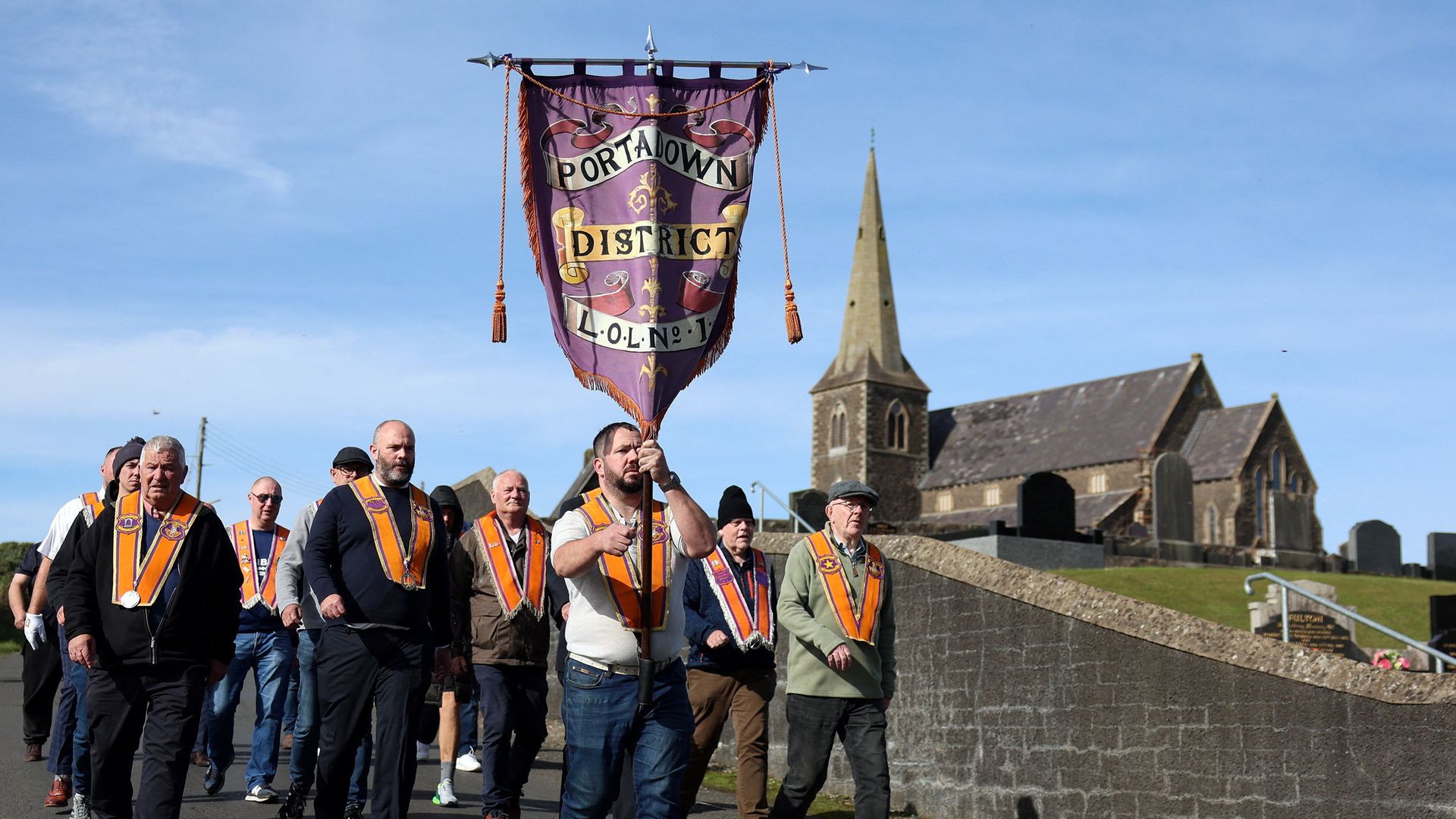
The standoff at Drumcree Parish Church is not merely a historical footnote from the 1990s; it remains a live wire in Northern Irish politics. When talks regarding the contentious Portadown Orange Order parade break down, the public narrative usually defaults to tired tropes about ancient tribal hatreds. That lazy framework misses the deeper mechanics of the dispute. This ongoing friction is an institutional failure of conflict management, a collision between rigid interpretations of civil liberties, and a persistent test of state authority that continues to cost millions in security operations.
To understand why negotiations hit a brick wall, one must look past the colorful sashes and examine the architecture of modern mediation in post-conflict societies. The core disagreement centers on an immovable object meeting an unstoppable force: the Orange Order’s demand to complete a traditional route down the Garvaghy Road versus the residents' coalition insistence on bodily and community consent regarding public space.
The Anatomy of a Breakdown
When formal negotiations collapse after days of intensive shuttle diplomacy, the blame game follows a predictable script. Political actors point fingers at intransigence on the opposite side of the table. Yet, structural analysis reveals a more systemic issue. Mediation fails when the mediators possess zero enforcement leverage.
Consider how the talks operate. Representatives are brought into closed rooms under high-stakes pressure, tasked with trading historical grievances for modern concessions. Without a shared baseline of what constitutes a legitimate compromise, both sides retreat to their respective ideological trenches. For the Portadown District Lodge, failing to march the historic route is framed as an existential surrender of cultural identity. For the residents of the Garvaghy Road, permitting an unwanted sectarian parade through their neighborhood is viewed as a capitulation of basic dignity and safety.
Neither community responds well to external coercion. When government ministers step in to impose bans or craft temporary administrative workarounds, they often treat the symptom while inflaming the disease. The state is caught between enforcing public order and upholding principles of equality. Every intervention becomes a precedent, weaponized by legal teams in subsequent judicial reviews and court challenges.
The Security Burden and Economic Realities
The financial cost of maintaining order around the annual impasse is staggering. Police operations surrounding the disputed march routinely drain millions from an already strained policing budget. Hundreds of officers are pulled from routine community policing across Northern Ireland to man barricades and steel fences in County Armagh.
This creates a perverse incentive structure. The heavy security footprint signals that the state takes the threat of public disorder seriously, but it also militarizes a civilian dispute. Intelligence reports frequently highlight threats from fringe elements on both sides—dissident republicans seeking to exploit security vacuums and loyalist factions showing dangerous signs of frustration. When the police operation becomes the primary management tool, political leaders offload their responsibilities onto the state's coercive apparatus.
Portadown itself bears an economic scar from these recurrent standoffs. Commercial investment shies away from areas perpetually framed by media outlets as powder kegs. Property values fluctuate based on the political temperature of July. The irony is stark: both communities claim to want economic vitality and community stability, yet the unresolved impasse acts as an anchor dragging down local prosperity.
The Illusion of Final Resolution
A common analytical error is treating the Drumcree conflict as a problem that can be solved with a single masterstroke agreement. Societies coming out of deep ethno-national conflict do not simply reach an equilibrium point where all historical memory is erased.
Instead, the challenge is learning how to institutionalize disagreement without resorting to physical confrontation or state-level crises. The legal appeals, the endless cycles of talks, and the interventions by the Parades Commission are mechanisms designed to contain friction rather than eliminate it. When those mechanisms stall, it demonstrates the fragility of the broader political settlement.
The underlying tension will not vanish through wishful thinking or tactical fatigue. Until political leadership develops a vocabulary that transcends zero-sum calculations of victory and defeat, the ghost of Drumcree will continue to haunt every summer season in Northern Ireland, a permanent reminder of how difficult it is to build a shared future on contested ground.
Drumcree Explained: Threats from paramilitaries
This video provides important context regarding the intelligence and security threats surrounding the recent legal challenges and police operations tied to the ongoing Drumcree dispute.