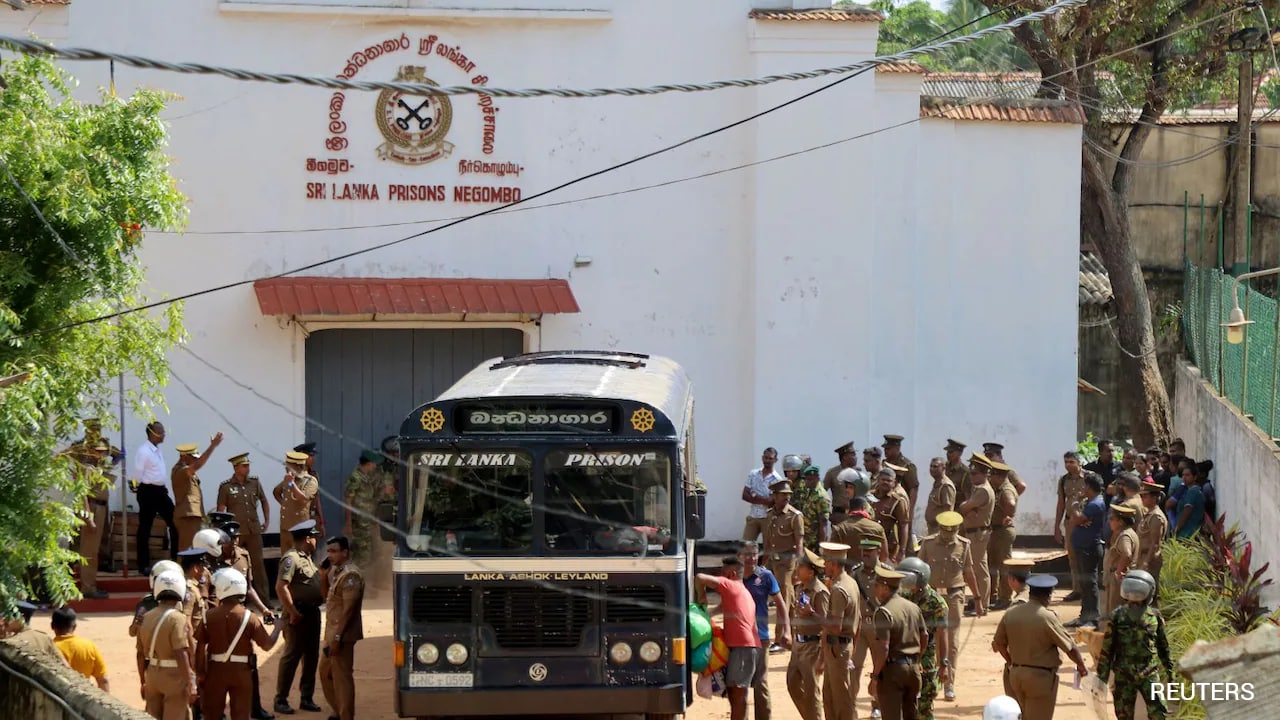
An Indian national detained thousands of miles from home was quietly laid to rest under heavy police protection in Sri Lanka, bringing a grim administrative closure to one of the deadliest correctional facility uprisings in recent regional history.
The burial of 73-year-old Unnikrishnan S, a native of Kerala who had spent decades residing in Chennai, took place on September 2, funded entirely by the state under strict judicial orders. Officials from the Indian High Commission in Colombo stood watch as local security forces maintained a tight perimeter, ensuring that the final rites for a foreign inmate caught in a catastrophic system failure passed without public disturbance. Yet, this quiet burial masks a sprawling international tragedy rooted in the chaotic architecture of Sri Lanka's penal institutions. Unnikrishnan had arrived in the country on March 2, only to be swept into the legal system following allegations of possessing ganja. Months later, he was dead—one of dozens of casualties in a July prison riot that exposed systemic vulnerabilities far worse than official initial reports suggested.
The Anatomy of a Correctional Collapse
The violence that claimed Unnikrishnan's life erupted on the evening of July 5 and stretched into July 6 inside the coastal facility at Negombo. What began as a localized dispute between rival factions trafficking narcotics within the cell blocks quickly cascaded into an all-out war for institutional survival. Inmates managed to breach internal storage and secure weapons, turning correctional officers back toward the main gates.
The arithmetic of the facility made catastrophe inevitable. Sri Lanka's correctional facilities operate at nearly four times their designed capacity, holding tens of thousands of inmates in spaces meant for a fraction of that number. When the riot peaked, Negombo was a pressure cooker of unsegregated suspects, violent offenders, and low-level detainees like Unnikrishnan, who found themselves trapped in the crossfire of turf wars dictated by organized crime syndicates running drug rings from behind bars.
The death toll ultimately climbed to over thirty lives lost, encompassing both inmates and prison officials, alongside roughly one hundred injuries. Military commandos, riot units, and air assets were deployed to restore order, but the physical destruction of the facility was merely a symptom of a deeper rot.
The Judicial Aftermath and Forensic Scrutiny
Months after the smoke cleared over the coastal town, the legal machinery began the arduous task of assigning accountability. During hearings before Chief Magistrate Shilani Perera at the Negombo Magistrate's Court, the Criminal Investigation Department detailed the handling of evidence tied to the elderly Indian national's death. The victim's personal effects, including the clothes and footwear he wore during his final hours, were formally handed over to the court for independent forensic analysis.
Identification parades have become the primary battleground for prosecutors attempting to piece together the chaotic sequence of events. Dozens of suspects face trial as authorities struggle to separate opportunistic rioters from the primary instigators of the violence. For foreign families navigating consular channels, however, the legal proceedings offer cold comfort. The reality of transnational detention means that minor drug offenses can abruptly intersect with systemic lethal violence, leaving relatives continents away to deal with repatriation hurdles, bureaucratic delays, and state-managed burials.
The state-funded funeral under armed guard was designed to prevent public outrage, but it serves as a stark reminder of the perils foreign nationals face within collapsing penal infrastructures. As identification parades continue and courts sift through mountains of forensic evidence, the underlying conditions of overcrowding and unchecked internal cartel dominance remain largely unaddressed, leaving future detainees vulnerable to the exact same structural decay.



